

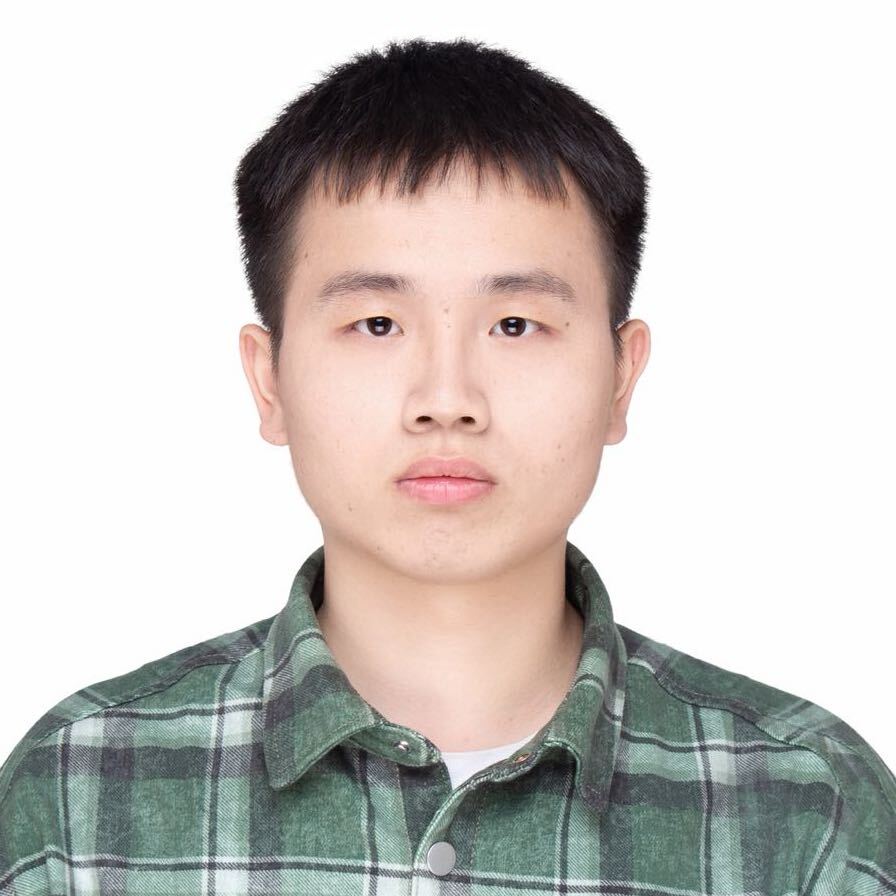
 Chunyang Cheng
· 1 previous affiliation
- Jiangnan UniversitySince 2020
- Postdoc · 2026–2028
- Current
- PhD student · 2020–2025
Research Overview
Chunyang Cheng focuses on computational imaging and computer vision, specifically addressing multi-modality image fusion and robust feature learning in degraded environments. His trajectory spans the development of lightweight, unified architectures for combining infrared, visible, and multi-exposure data into cohesive visual representations. Recently, his work emphasizes task-agnostic fusion frameworks that leverage low-level task interactions to generalize across diverse imaging scenarios.
Research Trajectory
Cheng’s early research addressed the fragmentation of image fusion methodologies, seeking to build single systems capable of handling diverse subtasks like visible-infrared, multi-focus, and multi-exposure fusion. In 2021, he introduced UNIFusion: A Lightweight Unified Image Fusion Network, an architecture designed to balance multi-level information across different channels and layers while maintaining a small model footprint for practical applications. He expanded on this unified approach with MUFusion: A general unsupervised image fusion network based on memory unit (2023). This work proposed an end-to-end unsupervised model that utilizes memory units based on intermediate fusion results and incorporates activity level maps into its loss function to generalize across various fusion tasks.
Continuing the theme of computational efficiency, Cheng collaborated on MMDRFuse: Distilled Mini-Model with Dynamic Refresh for Multi-Modality Image Fusion in 2024. Recognizing that image fusion often serves as a low-level preprocessing step for downstream observation tasks, this research utilized a dynamic refresh strategy and knowledge distillation to create an extremely compact convolutional network, minimizing storage and computational overhead. In the same year, his work extended to robust feature representation in degraded visual environments. He contributed to Learning Feature Restoration Transformer for Robust Dehazing Visual Object Tracking, which addressed the performance drop of visual object trackers in changing weather conditions. Rather than focusing solely on image-level visual quality, this method adaptively enhanced the discriminative capability of features between a target and its background in hazy scenarios.
More recently, Cheng's research has advanced toward highly generalized and continuous fusion paradigms. In 2025, he co-authored Conti-Fuse: A novel continuous decomposition-based fusion framework for infrared and visible images, which captures a richer spectrum of features to improve fused image quality. This work contributes to the broader research direction of Complementary Fusion of Infrared and Visible Imagery. Building on the goal of a universal fusion architecture, he also presented One Model for ALL: Low-Level Task Interaction Is a Key to Task-Agnostic Image Fusion. This framework, known as GIFNet, leverages interactions among low-level vision tasks to enable a single model to perform a wide array of fusion tasks—and even single-image enhancement—without requiring task-specific training. This comprehensive approach intersects with several broader areas, including the research direction of Shared Representations for Multi-Task Learning, the area of Multi-Task Synergy for Robust Feature Learning, and work in the area of Bridging the Gap Between Pixels and Semantic Meaning.
Current Directions
The most recent papers in the evidence indicate a strong focus on task-agnostic architectures and continuous feature representation in computational imaging. Current work investigates how low-level vision tasks can interact to train universal models capable of handling diverse image fusion and enhancement problems without task-specific retraining. Additionally, recent methodologies explore continuous decomposition techniques to extract richer feature spectra from multi-modal inputs, such as infrared and visible light data. A parallel theme in these recent contributions is the prioritization of discriminative feature restoration over mere visual quality enhancement, ensuring that fused or restored images effectively support downstream applications like visual object tracking in degraded or hazy environments.
Profile updated
| Paper | Venue | Year |
|---|---|---|
| One Model for ALL: Low-Level Task Interaction Is a Key to Task-Agnostic Image FusionGitHubAWCXV/ | arXiv | 2025 |
| MUFusion: A general unsupervised image fusion network based on memory unitGitHubAWCXV/ | Information Fusion | 2023 |
| UNIFusion: A Lightweight Unified Image Fusion NetworkGitHubAWCXV/ | IEEE Trans. Instrumentation & Measurement | 2021 |
Loading new papers…
Other researchers whose papers cluster into the same research directions — a proxy for overlapping technical interests and shared intellectual neighborhoods.
See something wrong? Report a mistake