

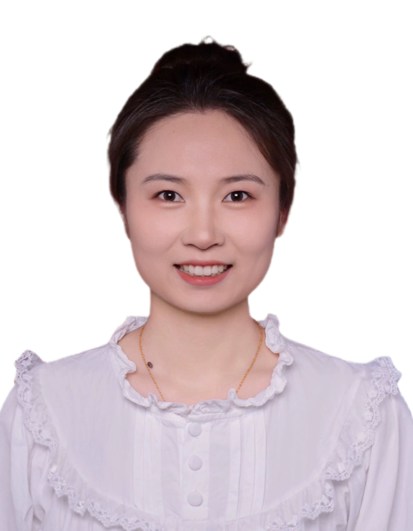
 Chunxu Zhang
· 1 previous affiliation
- Jilin UniversitySince 2013
- Postdoc · Since 2024
- PhD student · 2019–2024
- MS student · 2017–2019
- Undergrad student · 2013–2017
Research Overview
Chunxu Zhang focuses on federated learning, recommender systems, and the integration of foundation models into privacy-preserving architectures. His trajectory spans from early work in graph neural networks to developing decentralized frameworks that personalize recommendations without compromising user data. Most recently, his research investigates multimodal enhancements and federated low-rank adaptation for foundation model-based recommendation systems.
Research Trajectory
His early research focused on graph neural networks and embedding techniques. He collaborated on methods to prevent topological distortion in ambient Euclidean spaces by enforcing flatness on embedding manifolds (Curvature Regularization to Prevent Distortion in Graph Embedding). He also developed techniques for learning robust graph convolutional networks through label propagation in LaenNet: Learning robust GCNs by propagating labels.
By 2023, his focus shifted toward the broader area of Decentralized Model Training via Federated Learning, specifically targeting recommender systems. To address the challenge of deploying models to end-users without relying on heavyweight server architectures, he introduced a framework for Decentralized Architectures for Privacy Preserving Personalization that learns user-specific lightweight models directly on smart devices (Dual personalization for federated recommendation on devices). He subsequently tackled the area of Solving Cold Start in Personalized Federated Recommendation by designing a method that separates item attributes from user interactions to maintain quality service for new items in federated settings (When Federated Recommendation Meets Cold-Start Problem: Separating Item Attributes and User Interactions).
Continuing to refine personalized federated systems, he integrated user-relation graphs into the recommendation process. By constructing similarity graphs based on shared item embeddings rather than raw interaction data, he advanced techniques in Local Differential Privacy for Federated Learning with GPFedRec: Graph-Guided Personalization for Federated Recommendation. As large language models gained prominence, he explored the research direction of Federated Low-Rank Adaptation of Foundation Models. This work enabled foundation models to capture shifting user preferences through lightweight, personalized adapters while preserving privacy (Federated Adaptation for Foundation Model-based Recommendations). He further enhanced foundation model-based recommenders by designing specialized Transformer layers for multifaceted user modeling, capturing complex sequential interactions (Multifaceted User Modeling in Recommendation: A Federated Foundation Models Approach).
In 2025, his work expanded to address systemic challenges in federated architectures, such as the distortion of local user profiles caused by global aggregation. He guided the development of a calibration framework utilizing a low-rank buffer matrix to correct skewed embeddings (Beyond Personalization: Federated Recommendation with Calibration via Low-rank Decomposition). To synthesize the rapid developments in the field, he authored a comprehensive survey charting the evolution of privacy-aware recommendation architectures (Personalized Recommendation Models in Federated Settings: A Survey) and presented a tutorial mapping advances in Similarity Weighted Aggregation for Personalized Federated Learning and related client-side adaptation strategies (A Tutorial of Personalized Federated Recommender Systems: Recent Advances and Future Directions).
His recent trajectory incorporates multimodal data and advanced generative techniques into federated systems. He introduced a group-wise fusion approach to integrate text and image features into federated recommendations while offloading complex computations to the server (Multimodal-enhanced Federated Recommendation: A Group-wise Fusion Approach). To bridge the gap between cluster-specific experts and global models, he utilized data-free knowledge distillation to extract shared knowledge across diverse groups (Distilling A Universal Expert from Clustered Federated Learning). Moving beyond deterministic representations, he proposed modeling user preferences as distributions using diffusion models, significantly improving recommendation stability in sparse federated environments (Beyond Single Embedding: Modeling User Preferences as Distribution in Federated Recommendation). Additionally, he collaborated on modular approaches to heterogeneous federated learning, treating neural network layers as reassemblable components to optimize global consensus across devices with varying capacities (LEGO-FL: Learning Heterogeneous Federated Models as a LEGO Assembly Games).
Current Directions
Recent work investigates the integration of rich modalities and generative models into federated recommendation architectures. The most recent papers in the evidence address the limitations of deterministic user representations by modeling preferences as distributions via diffusion models, enhancing robustness against sparse data. Additionally, current research explores heterogeneous federated learning environments, developing modular, training-free neural architecture search methods to assemble optimal global models across devices with varying computational capacities. Other active areas include data-free knowledge distillation to synthesize universal experts from clustered federated networks and the incorporation of multimodal item features into privacy-preserving recommendation frameworks.
Profile updated
Loading new papers…
Other researchers whose papers cluster into the same research directions — a proxy for overlapping technical interests and shared intellectual neighborhoods.
See something wrong? Report a mistake