

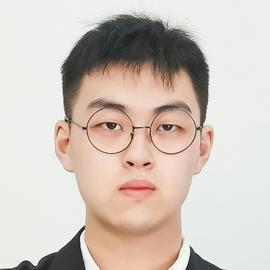
 Chunming He
· 2 previous affiliations
- Duke UniversitySince 2024
- PhD student · 2024–2027
- Current
- Tsinghua UniversityCurrent
- Current
- MS student · 2021–2024
Research Overview
Chunming He focuses on low-level computer vision, concealed object segmentation, and medical image analysis. His early work addressed foundational thresholding and feature decomposition techniques for identifying visually blended objects. More recently, his research investigates the integration of deep unfolding networks and diffusion models to enhance image restoration and segmentation under complex, real-world degradations.
Research Trajectory
He's early research began with foundational image processing techniques, developing a two-dimensional histogram method using gray level and local entropy for robust thresholding in Image Threshold Segmentation Based on GLLE Histogram. This interest in distinguishing objects from complex backgrounds naturally evolved into a sustained focus on Camouflaged Object Detection (COD) and concealed object segmentation. To address the intrinsic similarity between camouflaged objects and their environments, he introduced a feature decomposition and edge reconstruction model in Camouflaged Object Detection with Feature Decomposition and Edge Reconstruction. Recognizing the bottleneck of dense annotations in this domain, he subsequently explored weakly-supervised approaches, utilizing multi-scale feature grouping and pseudo-labeling in Weakly-Supervised Concealed Object Segmentation with SAM-based Pseudo Labeling and Multi-scale Feature Grouping.
Parallel to his work in segmentation, He began investigating image restoration under severe degradations. He proposed a degradation-resistant deep unfolding network for heterogeneous image fusion in Degradation-Resistant Unfolding Network for Heterogeneous Image Fusion, aiming to preserve structural properties even when sensor data is compromised. This focus on enhancement extended to the medical domain with HQG-Net: Unpaired Medical Image Enhancement With High-Quality Guidance, which modeled the joint distribution of low- and high-quality images to reduce artifacts without requiring paired training data. Returning to the challenges of real-world visibility, he contributed to dehazing research in Real-world Image Dehazing with Coherence-based Pseudo Labeling and Cooperative Unfolding Network, addressing the non-uniform nature of physical haze. He also explored adversarial training dynamics for COD, demonstrating that generating synthetic camouflaged objects could yield more robust detectors in Strategic Preys Make Acute Predators: Enhancing Camouflaged Object Detectors by Generating Camouflaged Objects.
By 2025, He's trajectory increasingly integrated deep unfolding networks (DUNs) and diffusion models to solve complex inverse problems in low-level vision, a synthesis he detailed in the comprehensive survey Diffusion Models in Low-Level Vision: A Survey. He advanced the mathematical interpretability of these systems with UnfoldIR: Rethinking Deep Unfolding Network in Illumination Degradation Image Restoration, which embedded high-order differential equation solvers into a multi-stage framework for low-light and underwater environments. He applied similar unfolding principles to segmentation in RUN: Reversible Unfolding Network for Concealed Object Segmentation, formulating the task as a mathematical foreground-background separation process.
To further bridge interpretable modeling with generative priors, he developed UnfoldLDM: Deep Unfolding-based Blind Image Restoration with Latent Diffusion Priors. This work contributes to the research direction of Restoring Images with Unknown Complex Degradations and addresses challenges in the area of Controlling Hallucinations in Generative Image Restoration by using diffusion priors to correct over-smoothed textures. He continued to refine generative approaches for physical degradation in Reti-Diff: Illumination Degradation Image Restoration with Retinex-based Latent Diffusion Model. By generating compact reflectance and illumination priors rather than predicting full-resolution pixels, this framework advanced methods in Generative Diffusion in Compressed Latent Spaces and explored techniques for Overcoming Low Frequency Bias with Spectral Losses.
In the domain of concealed object detection, his recent work emphasizes refinement and learning under incomplete supervision. He introduced a unified framework leveraging the Segment Anything Model for pseudo-label generation in Segment Concealed Objects With Incomplete Supervision. To improve boundary precision, he guided the development of Uncertainty-Masked Bernoulli Diffusion for Camouflaged Object Detection Refinement, which selectively repairs poorly segmented regions, contributing to the broader area of Uncertainty Guided Spatial Refinement for Efficient Vision.
Moving into 2026, He's research explores novel training paradigms to reduce reliance on dense annotations. He proposed a dual-phase training framework in Refining Context-Entangled Content Segmentation via Curriculum Selection and Anti-Curriculum Promotion, utilizing noise-resistant sample selection and spectral filtering to stabilize and accelerate training. Additionally, he contributed to unsupervised methodologies with Unsupervised Camouflaged Object Detection with Dual-Eigenvector Spectral Pseudo-Labeling and Contrastive Refinement, combining graph-based spectral clustering with contrastive learning to isolate camouflaged objects without human-annotated labels.
He expanded curriculum and data-selection strategies for dense prediction with PaceShift in Supervision-Adaptive Curriculum and Guarded Anti-Curriculum Learning for Dense Prediction, decoupling supervision reliability from update value and applying spectral challenges to refine segmentation. To optimize synthetic supervision, He formulated Task-Conditioned Detail Allocation for Synthetic Segmentation Data, which assesses feature response changes under blurring to rank candidates and direct local image editing for camouflaged and degraded scene segmentation. In concealed object detection, He also proposed Retinex-informed decoupling to expose hidden targets in RIDE: Retinex-Informed Decoupling for Exposing Concealed Objects.
Concurrently, He advanced real-world restoration by contributing to PRISM: Rethinking Atmospheric Scattering Reconstruction as a Unified Understanding and Restoration Model for Real-world Dehazing, which addresses The Synthetic-to-Real Gap in Atmospheric Restoration by coupling physical atmospheric scattering reconstruction with online haze synthesis and self-distillation. He also collaborated on quality-conditioned pseudo-labeling for restoration pipelines in QualiTeacher: Quality-Conditioned Pseudo-Labeling for Real-World Image Restoration. Continuing to advance deep unfolding architectures across diverse restoration tasks, He contributed to GRUN: Generalized Retinex Unfolding Network for Image Restoration, which extends Retinex theory into a content-environment factorization network alternating reflectance restoration and degradation inference. In camouflaged object detection, He participated in introducing CamoBreak in Look Where Camouflage Breaks: Concealment-Guided Observation for Camouflaged Object Detection, an active observation framework guided by multi-scale concealment measurements to iteratively resolve regional ambiguity.
Current Directions
Recent work investigates advanced training paradigms and generative refinement for context-entangled segmentation and complex image restoration. The most recent papers in the evidence address the challenge of detecting camouflaged or concealed objects with minimal or no human supervision. This includes developing unsupervised frameworks that rely on spectral pseudo-labeling and contrastive refinement, as well as curriculum learning strategies that filter out fine textures to force models to learn robust structural features. Concurrently, ongoing research in low-level vision focuses on marrying the mathematical interpretability of deep unfolding networks with the generative capabilities of latent diffusion models. These hybrid architectures are being applied to blind image restoration and illumination degradation, aiming to preserve physical constraints like Retinex theory while mitigating generative hallucinations in compressed latent spaces.
Profile updated
Loading new papers…
Other researchers whose papers cluster into the same research directions — a proxy for overlapping technical interests and shared intellectual neighborhoods.
See something wrong? Report a mistake