

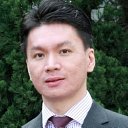
 Chung Shue Chen
· 1 previous affiliation
- Nokia (Germany)Since 2011
- Researcher · Since 2011
Research Overview
Chung Shue Chen focuses on the optimization, management, and algorithmic design of complex communication systems, with a primary emphasis on resource allocation and intelligent networking. His work spans the evolution of wireless standards from 3G and 4G to 5G and the emerging 6G landscape, addressing fundamental challenges in scheduling, mobility management, and network automation. Currently, his research explores the integration of artificial intelligence and machine learning into network operations, specifically through the use of reinforcement learning and large language models (LLMs) to achieve autonomous, intent-based network control.
Research Trajectory
The trajectory of Chen’s research reflects the broader shift in telecommunications from rigid, centralized architectures to flexible, software-defined, and AI-driven systems. In the early 2000s, his work addressed the fundamental constraints of multirate wireless systems, focusing on how to efficiently share bandwidth among diverse multimedia services. During this period, he investigated channel assignment efficiency in Multi-Carrier Code Division Multiple Access (MC-CDMA) systems, utilizing combinatorial methods such as the most regular binary sequence (MRBS) to achieve evenly spaced traffic scheduling.
As wireless networks moved toward higher densities, Chen’s focus shifted to the challenges of small cell networks and decentralized management. This era of his work emphasized Decentralized Coordination for Massive Scale Wireless Networks, where the goal was to manage interference and signal quality without the overhead of a global controller. He developed analytical frameworks to study the asymptotic properties of signal quality in these dense environments, providing theoretical foundations for mobility management and handover procedures. This work often addressed the Two Timescale Optimization for Distributed Resource Allocation, balancing long-term strategic decisions like base station placement with millisecond-level adjustments in power and frequency.
With the advent of 5G, Chen’s research deepened its focus on non-orthogonal multiple access (NOMA) and multi-carrier systems. He addressed the computational complexity of maximizing data rates under cellular power constraints, developing algorithms that decompose NP-hard optimization problems into manageable sub-problems. This period also saw an increased interest in Continuous Relaxation for Wireless Resource Allocation, a technique used to transform discrete assignment problems into continuous ones that are more amenable to efficient numerical solvers. He also explored Closed-Form Optimization for Real-Time Wireless Resource Allocation, seeking to replace iterative algorithms with direct mathematical solutions to meet the latency requirements of modern networks.
In recent years, Chen has pivoted toward the "AI-native" paradigm for 6G. This involves not only applying machine learning to existing problems but also rethinking network architecture to support autonomous operations. His recent work includes the development of hybrid frameworks that combine the reasoning capabilities of LLMs with the efficiency of reinforcement learning for traffic signal control and network scheduling. He has also contributed to the field of log analytics, specifically Transforming Unstructured Logs into Structured Event Streams, which is critical for the automated debugging and security of cloud-native network functions. Additionally, his work has touched upon specialized statistical methods, such as Beyond Ranking in Survival Analysis, to improve time-to-event predictions in complex systems.
Current Directions
Chen’s current research is centered on operationalizing AI within future network infrastructures. This includes addressing the practical barriers to deploying machine learning in production environments, such as data scarcity, model interpretability, and the need for robust performance under non-stationary conditions. He is actively involved in the development of "Agentic AI" and autonomous network suites that sense, think, and act with minimal human intervention.
A significant portion of his current focus is on the 5G-powered Metaverse and the associated communication overhead. He is developing dynamic split learning schemes that use gating mechanisms and autoencoders to compress data between devices and servers without sacrificing model accuracy. Furthermore, he is investigating novel coding frameworks for sensor networks, such as multiset codes that allow for efficient object tracking even when spatial order cannot be determined. His work also continues to address the intersection of robotics and vision systems, exploring passive enhancement techniques to increase the reliability of fiducial markers in automated environments.
Representative Work
Channel allocation for multirate MC-CDMA systems with the most regular binary sequence (2005) This early work addresses the problem of providing flexible data rates for integrated multimedia services in 3G and future wireless systems. Chen proposes a time-code scheduling approach for multirate operation in MC-CDMA systems. By employing the most regular binary sequence (MRBS), the research demonstrates a method for scheduling traffic in an evenly spaced manner, which optimizes channel splitting and improves overall bandwidth sharing efficiency.
Best Signal Quality in Cellular Networks: Asymptotic Properties and Applications to Mobility Management in Small Cell Networks (2010) In this paper, Chen (as senior author) investigates the technical challenges posed by the high density and randomness of small cell networks. The study provides a rigorous mathematical analysis of signal quality, proving that as the number of sites in a region tends toward infinity, the maximum signal strength and the interference follow specific asymptotic distributions. These findings are applied to improve mobility management and handover algorithms, which are critical for maintaining service continuity in dense urban deployments.
Weighted Sum-Rate Maximization in Multi-Carrier NOMA with Cellular Power Constraint (2019) This research introduces the Joint Subcarrier and Power Allocation (JSPA) algorithm, designed to maximize data rates in 5G Non-Orthogonal Multiple Access (NOMA) systems. The paper addresses the NP-hard nature of the sum-rate maximization problem by decomposing it into two polynomial-time solvable sub-problems. The resulting algorithm achieves near-optimal performance while significantly reducing the computational overhead compared to traditional benchmarks, making it suitable for real-time network optimization.
iLLM-TSC: Integration reinforcement learning and large language model for traffic signal control policy improvement (2024) Chen explores the intersection of generative AI and traditional control theory in this work. The iLLM-TSC framework combines the efficiency of Reinforcement Learning (RL) with the reasoning power of Large Language Models. By using the LLM as a "common sense" filter, the system can correct RL errors caused by sensor noise or unexpected events, such as the arrival of emergency vehicles. The hybrid approach demonstrated a 17.5% reduction in average waiting times in simulated real-world conditions.
Color Multiset Codes based on Sunmao Construction (2025) This paper introduces a novel coding framework known as Sunmao construction to create "Color Multiset Codes." Unlike traditional codes that rely on ordered sequences of symbols, these codes store information in unordered sets. This approach is particularly useful for object tracking and localization in sensor networks where an observer can identify the presence of specific "colors" (or symbols) but cannot determine their spatial order. The research introduces Braid codes as a specific class within this framework to enable efficient localization.
C 2 -SeqRL: Reinforcement Learning for Conflict-Constrained Sequence Construction (2026) Addressing the persistent challenge of constructing sequences that satisfy complex structural constraints, Chen proposes a deep reinforcement learning framework called C2-SeqRL. The framework formulates sequence construction as an episodic decision-making problem, where an agent fills positions while adhering to strict constraints. This method overcomes the exponential growth of the search space that typically renders conventional rule-driven or search-based approaches computationally infeasible in large-scale communication and scheduling applications.
Profile updated
Loading new papers…
Other researchers whose papers cluster into the same research directions — a proxy for overlapping technical interests and shared intellectual neighborhoods.
See something wrong? Report a mistake