

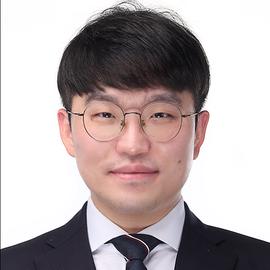
 Chulhee Yun
· 3 previous affiliations
- Google (United States)Since 2025
- Researcher · Since 2025
- Research Intern · 2020
- Associate Professor · Since 2026
- Current
- Assistant Professor · 2022–2026
- Postdoc · 2021–2022
- PhD student · 2016–2021
Research Overview
Chulhee Yun focuses on the theoretical principles underlying optimization and deep learning, aiming to bridge the gap between mathematical theory and the practical behavior of modern neural networks. His trajectory spans foundational work on the expressivity of ReLU networks and Transformers to rigorous analyses of stochastic optimization algorithms. Recently, his research investigates the implicit bias of optimizers, continual learning dynamics, and length generalization in sequence models.
Research Trajectory
Yun’s early research investigated the foundational properties of neural network expressivity and optimization landscapes. In 2018, he explored the non-convex error landscapes of deep learning, examining the conditions under which local minima found during training correspond to global minima in Global Optimality Conditions for Deep Neural Networks. Building on this theoretical foundation, he analyzed the finite sample expressivity of neural architectures. In Small ReLU networks are powerful memorizers: a tight analysis of memorization capacity (2019), he proved that three-layer ReLU networks with $\Omega(\sqrt{N})$ hidden nodes can perfectly memorize datasets of $N$ points, establishing tight bounds on memorization capacity. This line of inquiry culminated in Minimum Width for Universal Approximation (2021), which characterized the exact critical width required for universal approximation in $L^p$ functions, a key contribution to the broader area of The Minimum Width Threshold for Universal Approximation.
Concurrently, Yun made significant contributions to the theoretical understanding of Transformer architectures. He participated in identifying structural constraints within self-attention mechanisms in Low-Rank Bottleneck in Multi-head Attention Models (2020). He then established that Transformers are universal approximators of continuous permutation-equivariant sequence-to-sequence functions in Are Transformers universal approximators of sequence-to-sequence functions? (2020). This work provided a rigorous mathematical grounding for areas such as Breaking Permutation Invariance in Transformer Attention and How Attention Heads Specialize into Algorithmic Circuits.
A major and sustained theme in Yun’s trajectory is the rigorous analysis of stochastic optimization algorithms, particularly those employing sampling without replacement. In SGD with shuffling: optimal rates without component convexity and large epoch requirements (2020), he established minimax optimal convergence rates for RandomShuffle and SingleShuffle algorithms. He later advanced the research direction of Understanding Gradient Bias in Random Reshuffling by providing convergence lower bounds that perfectly match existing upper bounds across all parameters in Tighter Lower Bounds for Shuffling SGD: Random Permutations and Beyond (2023). Continuing this focus on permutation-based optimization, he provided a rigorous proof that updating coordinates using random permutations strictly outperforms uniform random sampling for specific quadratic functions in Provable Benefit of Random Permutations over Uniform Sampling in Stochastic Coordinate Descent (2025).
In recent years, Yun has addressed practical challenges in model training, including continual learning and data efficiency. To combat the loss of plasticity when warm-starting models on new data—a problem central to the area of Maintaining Plasticity through Parameter Resetting—he introduced a method to selectively forget memorized noise while preserving useful features in DASH: Warm-Starting Neural Network Training in Stationary Settings without Loss of Plasticity (2024). He further explored continual learning dynamics in Convergence and Implicit Bias of Gradient Descent on Continual Linear Classification (2025), proving that unregularized gradient descent can overcome catastrophic forgetting by naturally aligning with the global max-margin solution when cycling through tasks. Additionally, he developed a difficulty and uncertainty-aware score to identify important samples early in training, reducing the computational burden of dataset pruning in Lightweight Dataset Pruning without Full Training via Example Difficulty and Prediction Uncertainty (2025).
Yun has also focused on the limitations of sequence models, particularly addressing the research direction of Length Generalization Failure in Transformer Models. In Position Coupling: Improving Length Generalization of Arithmetic Transformers Using Task Structure (2024), his group demonstrated that assigning shared position IDs to semantically related tokens allows Transformers to solve arithmetic problems far longer than those seen during training. This approach was significantly expanded in Arithmetic Transformers Can Length-Generalize in Both Operand Length and Count (2025), which combined task-specific scratchpads with multi-level position coupling to achieve massive leaps in length generalization.
Most recently, Yun’s work has delved into the implicit bias and scaling behaviors of modern optimizers. In Implicit Bias of Per-sample Adam on Separable Data: Departure from the Full-batch Regime (2026), he revealed that mini-batch Adam adapts its implicit bias based on the dataset and batching scheme, departing from the behavior of full-batch Adam. He also derived theoretical scaling laws for sign-based optimizers in Scaling Laws of SignSGD in Linear Regression: When Does It Outperform SGD? (2026), demonstrating regimes where signSGD achieves a steeper compute-optimal scaling slope than standard SGD. Finally, in Minor First, Major Last: A Depth-Induced Implicit Bias of Sharpness-Aware Minimization (2026), he showed that Sharpness-Aware Minimization prioritizes learning weaker features early in training before shifting to dominant ones, a phenomenon termed sequential feature amplification.
Current Directions
The most recent papers in the evidence indicate a strong ongoing focus on the theoretical properties of modern optimization algorithms and their implicit biases in deep learning. Recent work investigates how specific optimizers—such as Adam, signSGD, and Sharpness-Aware Minimization (SAM)—shape the learning trajectory and generalization of neural networks. This includes analyzing the adaptive implicit bias of per-sample Adam, deriving scaling laws for sign-based gradient methods in noise-bottleneck regimes, and understanding the sequential feature amplification induced by SAM. Additionally, Yun continues to explore architectural interventions that enable robust length generalization in Transformer models, particularly for complex algorithmic and arithmetic tasks.
Profile updated
Loading new papers…
Other researchers whose papers cluster into the same research directions — a proxy for overlapping technical interests and shared intellectual neighborhoods.
See something wrong? Report a mistake