

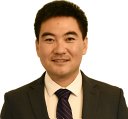
 Chuang Niu
· 2 previous affiliations
- Current
- Postdoc · 2020–2023
- Xidian University2016–2020
- PhD student · 2016–2020
Research Overview
Chuang Niu focuses on deep learning for medical image reconstruction, unsupervised image clustering, and the stability of neural networks in tomographic applications. His trajectory spans from early work in computed tomography artifact reduction to broader investigations of representation learning and network stabilization. Recently, his research addresses simultaneous denoising and deblurring in 3D medical imaging using transformer architectures.
Research Trajectory
Chuang Niu’s research trajectory initially centered on improving the fidelity of medical image reconstruction, particularly in the presence of severe artifacts. In 2020, as first author, he proposed the Low-dimensional Manifold Constrained Disentanglement Network for Metal Artifact Reduction. This work addressed the limitations of using synthesized paired images for training computed tomography (CT) artifact reduction models. By introducing a disentanglement network that could operate directly on unpaired clinical images, constrained by a low-dimensional manifold, the approach improved the recovery of structural details that are often lost when relying solely on adversarial losses.
During the same period, Niu participated in collaborative research evaluating the fundamental reliability of deep learning in clinical settings. He was a co-author on Stabilizing Deep Tomographic Reconstruction Networks, a study that highlighted critical instabilities in deep reconstruction networks for CT and magnetic resonance imaging (MRI). The research demonstrated that these networks could suffer from strong image artifacts triggered by tiny perturbations and the omission of small structural features, contrasting them with more stable, kernel-aware compressed sensing methods. This investigation into network fragility aligns with the broader research direction of Adversarial Robustness for Trustworthy Machine Learning, emphasizing the need for models that behave predictably under real-world conditions.
In 2022, Niu expanded his methodological focus into fundamental computer vision and representation learning. As first author, he developed SPICE: Semantic Pseudo-Labeling for Image Clustering. This framework tackled the dual challenges of measuring instance-level similarity and identifying cluster-level semantic discrepancy. By separating the network into a feature model and a clustering head, and introducing semantics-aware algorithms like prototype and reliable pseudo-labeling, the work provided a more robust mechanism for self-supervised image clustering.
Concurrently, Niu continued to advance medical imaging techniques, often taking a leading role in developing specialized neural network architectures. He was the second author of Convolutional Neural Network to Restore Low-Dose Digital Breast Tomosynthesis Projections in a Variance Stabilization Domain, which integrated traditional model-based restoration priors into a deep learning framework to maintain diagnostic image quality at lower radiation doses. He also contributed to further collaborative efforts in artifact reduction, such as the FD-MAR: Fourier Dual-domain Network for CT Metal Artifact Reduction. This project extended existing dual-domain networks into a quad-domain architecture, synergizing features across sinogram, image, and their corresponding Fourier domains to eliminate high-density streaking artifacts without compromising structural subtleties.
Current Directions
The most recent papers in the evidence indicate a shift toward utilizing transformer architectures for complex, multi-dimensional medical imaging tasks. In 2023, Niu co-authored LIT-Former: Linking In-plane and Through-plane Transformers for Simultaneous CT Image Denoising and Deblurring. Rather than treating low-dose denoising and super-resolution deblurring as separate sequential problems, this work investigates simultaneous in-plane and through-plane processing to improve 3D clinical CT images, avoiding the prohibitive computational costs and data requirements of standard end-to-end 3D networks.
This ongoing focus on extracting clean, generalizable signals from noisy or artifact-heavy data connects to broader themes such as Robust Representation Learning via Stochastic Noise Injection. Furthermore, as these architectures grow in complexity to handle 3D medical data, Niu's work increasingly intersects with the area of Regularization Strategies for Deep Learning Generalization, ensuring that high-capacity models learn underlying structural realities rather than memorizing idiosyncratic noise in the training data.
Profile updated
| Paper | Venue | Year |
|---|---|---|
| SPICE: Semantic Pseudo-Labeling for Image ClusteringGitHubniuchuangnn/ | IEEE TIP | 2022 |
Loading new papers…
Other researchers whose papers cluster into the same research directions — a proxy for overlapping technical interests and shared intellectual neighborhoods.
See something wrong? Report a mistake