

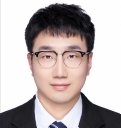
 Chuanchen Luo
· 2 previous affiliations
- Shandong UniversitySince 2024
- Assistant Professor · Since 2024
- Chinese Academy of Sciences2017–2024
- PhD student · 2017–2024
Research Overview
Chuanchen Luo focuses on large-scale 3D scene reconstruction, generative human motion synthesis, and procedural environment generation. His early work addressed cross-domain person re-identification and temporal action localization in video. More recently, his research has shifted toward scalable 3D Gaussian splatting and the orchestration of complex, embodied simulation environments using large language models.
Research Trajectory
His early research focused on computer vision challenges in surveillance and video analysis, particularly person re-identification (Re-ID). This work began with Spectral Feature Transformation for Person Re-Identification (2019). Recognizing that fully-supervised Re-ID models degrade significantly when deployed to unseen domains, he investigated cross-domain generalization in Generalizing Person Re-Identification by Camera-Aware Invariance Learning and Cross-Domain Mixup (2020). By enforcing consistency between nearest-neighbors in the embedding space, this work sought to mitigate the severe shifts between source and target domains. This line of inquiry culminated in Learning to Adapt Across Dual Discrepancy for Cross-Domain Person Re-Identification (2023). Concurrently, he contributed to video understanding through DDG-Net: Discriminability-Driven Graph Network for Weakly-supervised Temporal Action Localization (2023), which rethought how video snippets interact within graph-based models to improve action localization on standard benchmarks.
In 2024, his research scope expanded significantly into large-scale 3D scene reconstruction and rendering. He introduced CityGaussian: Real-Time High-Quality Large-Scale Scene Rendering with Gaussians (2024), a framework that combined a divide-and-conquer training scheme with a block-wise Level-of-Detail strategy to achieve real-time rendering of city-scale environments. He subsequently developed CityGaussianV2: Efficient and Geometrically Accurate Reconstruction for Large-Scale Scenes (2024), which adopted 2D surfels as primitives to improve the geometric accuracy of thin and intricate structures while reducing memory usage and training time. Moving beyond static reconstruction, he collaborated on SceneX: Procedural Controllable Large-scale Scene Generation via Large-language Models (2024). This framework leveraged large language models to turn text prompts into high-fidelity 3D worlds, advancing the research direction of Neural Orchestration of Procedural 3D Scene Generation.
Parallel to his work in scene generation, he addressed data scarcity and domain gaps in human motion capture. He helped establish HardMo: A Large-Scale Hardcase Dataset for Motion Capture (2024), utilizing automatic crawling and hardcase mining to capture unusual poses found in martial arts and dance. Building on this foundation, he participated in the development of RoleMotion: A Large-Scale Dataset towards Robust Scene-Specific Role-Playing Motion Synthesis with Fine-grained Descriptions (2025). By providing thousands of motion sequences paired with fine-grained text, this work enabled models to synthesize complex, scene-specific social behaviors, contributing to the broader area of Open Vocabulary Motion Synthesis through Semantic Alignment.
His most recent work integrates these threads into embodied AI simulation and dense novel view synthesis. He contributed to MarketGen: A Scalable Simulation Platform with Auto-Generated Embodied Supermarket Environments (2025), an agent-based procedural generation framework designed for long-horizon robotic tasks, which aligns with the area of Modular Task Decomposition for Multi-Agent LLM Pipelines. To further scale 3D foundation models, he proposed VGGT-X: When VGGT Meets Dense Novel View Synthesis (2025), a memory-efficient framework that achieves high-quality reconstruction on dense image sets without requiring traditional preprocessing pipelines like COLMAP. Continuing his focus on high-fidelity environments, recent work includes FurniScene: A Large-scale 3D Room Dataset with Intricate Furnishing Scenes (2026), which introduced a massive dataset of detailed indoor scenes and a Two-Stage Diffusion Scene Model to generate realistic furnishings.
Current Directions
The most recent papers in the evidence address the intersection of generative 3D environments, dense novel view synthesis, and embodied AI simulation. Work investigates scalable, memory-efficient architectures for 3D foundation models, enabling high-quality reconstruction and rendering without traditional, computationally expensive preprocessing pipelines. Concurrently, there is a strong emphasis on procedural generation for embodied AI, utilizing large language models and diffusion models to auto-generate complex, interactive environments. These generated environments—ranging from supermarkets to intricately furnished rooms—serve as challenging new benchmarks for long-horizon robotic tasks and scene-specific human motion synthesis.
Profile updated
Loading new papers…
Other researchers whose papers cluster into the same research directions — a proxy for overlapping technical interests and shared intellectual neighborhoods.
See something wrong? Report a mistake