

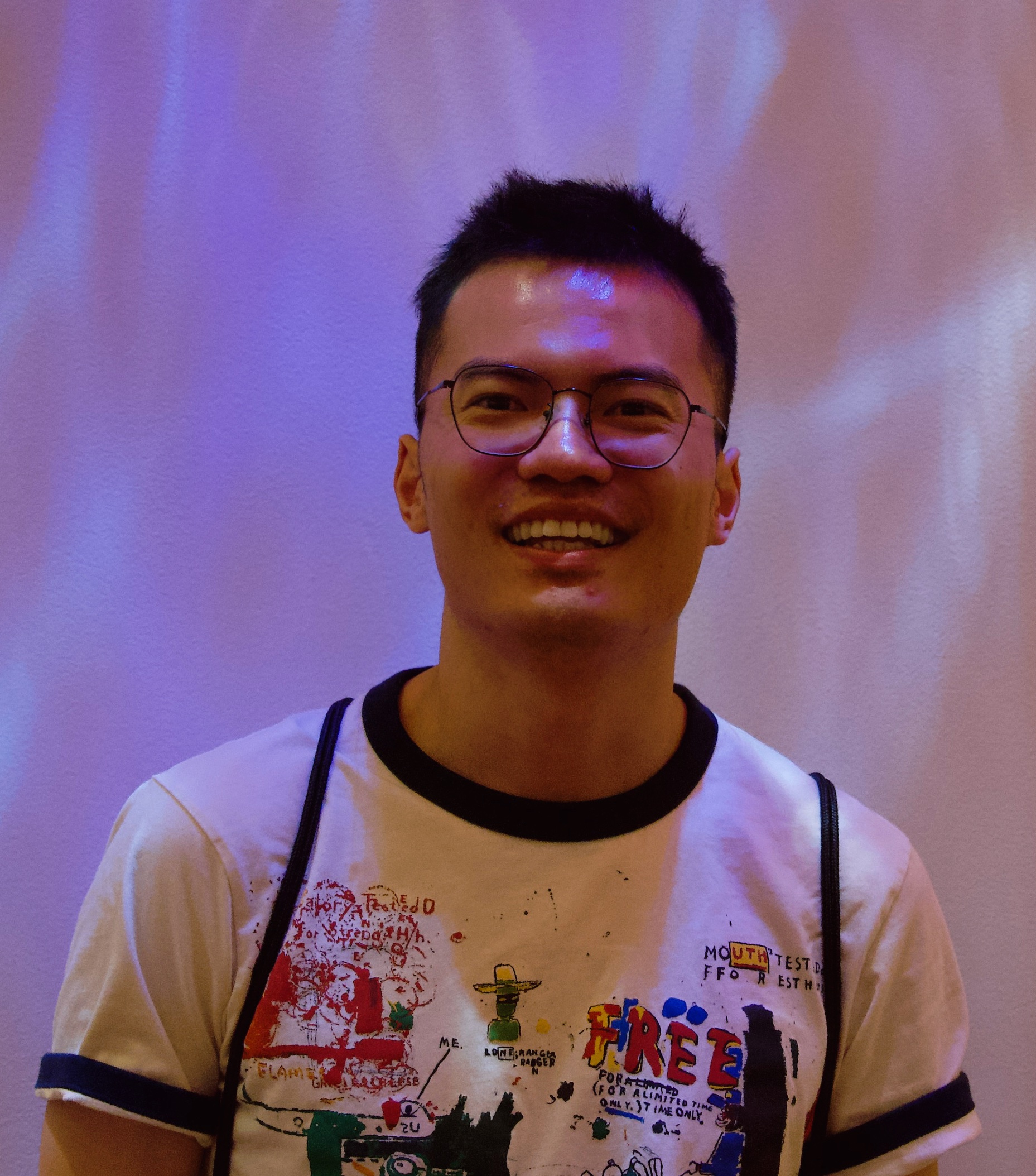
 chuan guo
· 5 previous affiliations
- Meta (United States)Since 2025
- Researcher · Since 2025
- Snap Inc.2024–2025
- Researcher · 2024–2025
- University of Alberta2019–2024
- Research Assistant · 2019–2024
- Huawei Technologies (Canada)2021–2023
- Associate Researcher in Noah's Ark Lab · 2022–2023
- Associate Researcher, Intern · 2021–2022
- Jilin University2013–2017
- Undergrad student · 2013–2017
1 other author named chuan guo: Chuan Guo (Meta (United States) · OpenAI (United States) · 55 papers)
Research Overview
Chuan Guo focuses on generative AI for digital humans, 3D embodied intelligence, and human-world interactions. His trajectory spans from early work in action-conditioned 3D motion synthesis to advanced frameworks for text-driven character animation and multi-person coordination. Currently, he investigates physically grounded motion modeling and environment-aware embodied agents.
Research Trajectory
Following his early education at Jilin University and the Chinese Academy of Sciences, and during his doctoral studies at the University of Alberta, Guo's research initially centered on foundational 3D motion and pose estimation. He introduced Action2Motion: Conditioned Generation of 3D Human Motions, a framework leveraging Lie algebra and temporal variational autoencoders to synthesize diverse motion sequences from action categories. This early contribution laid the groundwork for his subsequent involvement in the area of Multi-Person Coordination in Generative Human Motion. Concurrently, he explored neuromorphic vision techniques with EventHPE: Event-based 3D Human Pose and Shape Estimation, which reconstructed high-fidelity 3D human kinematics from event camera streams using unsupervised optical flow.
By 2022, Guo's focus expanded to the intersection of natural language and 3D animation. He developed a two-stage approach for Generating Diverse and Natural 3D Human Motions from Text, separating length sampling from motion generation to better capture text-grounded semantics. He also extended action-conditioned synthesis into the visual domain with Action2video: Generating Videos of Human 3D Actions, which rendered stochastically generated 3D poses into realistic 2D video sequences. A pivotal methodological shift occurred with TM2T: Stochastic and Tokenized Modeling for the Reciprocal Generation of 3D Human Motions and Texts. By introducing discrete motion tokens, this work established a shared latent space for motion and language, advancing the research direction of Bridging Discrete Tokens and Continuous Human Motion and addressing the broader area of Stochastic Generation for Audio Driven Motion Synthesis.
Transitioning to roles as a Research Scientist at Snap Research and later Meta Reality Labs, Guo continued to refine generative motion models using advanced quantization and diffusion techniques. In 2024, he presented MoMask: Generative Masked Modeling of 3D Human Motions, which combined hierarchical residual vector quantization with bidirectional masked transformers to achieve high-fidelity text-to-motion synthesis. He also explored the direction of Latent Diffusion for Efficient Human Motion Synthesis and contributed to work in Physically Plausible Generative Human Motion through his research on Generative Human Motion Stylization in Latent Space.
In 2025, his research scaled significantly in both dataset complexity and interaction modeling. He introduced SnapMoGen: Human Motion Generation from Expressive Texts, pairing a massive new dataset of nuanced text descriptions with a multi-scale tokenization model. With collaborators, he developed MotionDreamer: One-to-Many Motion Synthesis with Localized Generative Masked Transformer, which recombined discrete motion building blocks to generate infinite animation variations from a single reference clip. Addressing the area of Scene Aware 3D Human Motion Synthesis, he proposed Ponimator: Unfolding Interactive Pose for Versatile Human-human Interaction Animation, a framework that anchors generation on a single moment of physical contact to predict preceding and subsequent interactive movements. He also investigated lightweight model adaptation in Dance Like a Chicken: Low-Rank Stylization for Human Motion Diffusion and co-developed InterMask: 3D Human Interaction Generation via Collaborative Masked Modeling to synthesize spatially coordinated two-person interactions.
Most recently, Guo's collaborative efforts have tackled the complexities of multi-entity scenes without relying on external classifiers. He participated in the development of Unleashing Guidance Without Classifiers for Human-Object Interaction Animation, which uses pace-induced diffusion guidance to ensure physically plausible human-object contacts. He also contributed to Text2Interact: High-Fidelity and Diverse Text-to-Two-Person Interaction Generation, a synthesis-by-composition pipeline that leverages word-level attention to precisely coordinate multi-agent behaviors based on complex textual prompts.
Current Directions
Recent work investigates the synthesis of complex, multi-entity interactions, moving beyond single-character animation to encompass human-human and human-object dynamics. The most recent papers in the evidence address the challenge of generating physically plausible contacts and coordinated movements using collaborative masked modeling and pace-induced diffusion guidance. Additionally, there is an ongoing focus on fine-grained stylization and expressive control, allowing generative models to adapt to nuanced textual prompts and environmental constraints without sacrificing physical realism.
Profile updated
Loading new papers…
Other researchers whose papers cluster into the same research directions — a proxy for overlapping technical interests and shared intellectual neighborhoods.
See something wrong? Report a mistake