

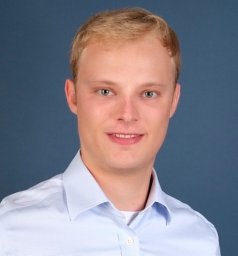
 Christian Schlarmann
· 4 previous affiliations
- Doctoral Student · Since 2022
- University of Tübingen2022–2026
- Doctor of Philosophy - PhD, Machine Learning · 2026
- Master of Science - MSc, Machine Learning · 2022
- OpenAI (United States)2023–2025
- Red Teaming Network · 2023–2025
- Daimler (Germany)2018–2019
- Internship · 2018–2019
Research Overview
Christian Schlarmann focuses on the adversarial robustness of vision-language models, multimodal representation learning, and the security of foundation models. His early work demonstrated critical vulnerabilities in large multimodal systems and developed unsupervised fine-tuning methods to harden visual encoders against imperceptible attacks. Currently, he investigates early fusion architectures for discrete tokens and the symmetric robustness of both text and image modalities in contrastive models.
Research Trajectory
Schlarmann’s early research investigated the security vulnerabilities of emerging foundation models, demonstrating that multi-modal systems are highly susceptible to imperceptible adversarial image perturbations. In On the Adversarial Robustness of Multi-Modal Foundation Models, he showed that attackers could manipulate models like OpenFlamingo to generate malicious links or output phishing prompts by altering a fraction of pixel values. This work highlighted significant security risks for deployed AI systems and contributed to the broader research area of Cross-Modality Safety Alignment for Vision-Language Models.
Building on these findings, his focus shifted toward developing methods to harden these models against such attacks. He introduced FARE, an unsupervised method for adversarial fine-tuning of vision embeddings, in Robust CLIP: Unsupervised Adversarial Fine-Tuning of Vision Embeddings for Robust Large Vision-Language Models. By replacing a standard CLIP encoder with a FARE-tuned version, large vision-language models gained resistance to stealth attacks without requiring retraining of the language components or sacrificing clean data performance. This advanced the research area of Synchronized Cross-Modal Alignment for Vision-Language Model Adaptation. Concurrently, he collaborated on evaluating how these hardened models perform in downstream tasks. In Adversarially Robust CLIP Models Induce Better (Robust) Perceptual Metrics, he and his co-authors established that adversarially robust CLIP models yield superior perceptual metrics in zero-shot settings, enabling applications such as robust sensitive content detection.
In 2025, Schlarmann expanded his research to address fundamental architectural limitations in multimodal representation learning and domain-specific applications. To overcome the constraints of late-fusion dual-encoder models, he developed FuseLIP: Multimodal Embeddings via Early Fusion of Discrete Tokens. This work explores how combining image and text modalities at earlier stages using discrete tokens can improve joint representations, contributing to the research direction of Sigmoid Loss for Scalable Contrastive Learning. He also participated in applying advanced reconstruction techniques to medical imaging, as seen in Mind the Detail: Uncovering Clinically Relevant Image Details in Accelerated MRI with Semantically Diverse Reconstructions.
Finally, returning to the theme of adversarial robustness, he collaborated on Robustness in Both Domains: CLIP Needs a Robust Text Encoder. This research addressed the often-overlooked vulnerability of CLIP's text encoder to character-level attacks and typos. The authors introduced LEAF, a fast adversarial fine-tuning method that hardens the text encoder to protect downstream zero-shot classifiers and text-to-image generators. This contribution intersects with several research areas, including Modality Sensitivity Asymmetry in Vision Language Models, Optimization in Discrete Text Input Spaces, and the broader field of End-to-End Optimization for Multimodal Representation Learning.
Current Directions
The most recent papers in the evidence indicate a dual focus on architectural innovations for multimodal fusion and comprehensive robustness across all input modalities. Recent work investigates how early fusion mechanisms and discrete tokenization can create more unified embedding spaces, moving beyond the limitations of traditional dual-encoder architectures. Simultaneously, there is an ongoing effort to ensure that foundation models are symmetrically robust. While earlier research primarily hardened vision encoders, current directions address the vulnerabilities of text encoders to discrete adversarial optimization and character-level perturbations. This ensures that downstream systems, ranging from retrieval models to generative text-to-image pipelines, maintain their integrity against a wider spectrum of adversarial threats.
Profile updated
Loading new papers…
Other researchers whose papers cluster into the same research directions — a proxy for overlapping technical interests and shared intellectual neighborhoods.
See something wrong? Report a mistake