

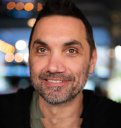
 Chris van der Heide
· 2 previous affiliations
- The University of MelbourneSince 2023
- Researcher · Since 2023
- The University of Queensland2019–2022
- Postdoc · 2019–2022
Research Overview
Chris van der Heide focuses on Bayesian deep learning, uncertainty quantification, and the theoretical properties of overparameterized neural networks. His trajectory spans foundational work in sampling methods and infinite-width networks to recent advances in scalable spectral estimation and empirical neural tangent kernels. Current efforts address the computational bottlenecks of uncertainty quantification in large-scale models.
Research Trajectory
Early in his career, van der Heide explored complex sampling techniques and continuous-time models. He developed methods for the area of Sampling Pathological Geometries in High Dimensional Inference with Shadow Manifold Hamiltonian Monte Carlo (2021), introducing techniques tailored for Riemannian manifolds. Concurrently, he collaborated on Stochastic continuous normalizing flows: training SDEs as ODEs, contributing to the direction of Reformulating Stochastic Differential Equations as Ordinary Differential Equations. Shifting toward the theoretical properties of neural networks, he participated in research investigating the area of Why Parameter Maps Favor Simple Functions. This work included analyzing infinite-width architectures in Avoiding Kernel Fixed Points: Computing with ELU and GELU Infinite Networks, which demonstrated how ELU and GELU activations avoid the information-loss bottlenecks common to ReLU networks, thereby mitigating the simplicity bias that causes underfitting in deep models.
In 2023, his focus expanded to the generalization behavior of models that perfectly fit their training data. He introduced the Interpolating Information Criterion (IIC) via a novel concept called Bayesian Duality to rank overparameterized models, as detailed in The Interpolating Information Criterion for Overparameterized Models. This provided a mathematical framework for explaining the double descent phenomenon. He subsequently grounded this criterion theoretically in A PAC-Bayesian Perspective on the Interpolating Information Criterion, providing generalization bounds that connect implicit regularization, the spectrum of the Neural Tangent Kernel, and loss landscape curvature. This work contributed to the broader area of Optimization and Generalization with Non-Smooth Activations. Alongside this theoretical work, he collaborated on Monotonicity and Double Descent in Uncertainty Estimation with Gaussian Processes, which examined the area of Proportional Limit Scaling in High Dimensional Learning. The study showed how optimally tuned marginal likelihood can bypass the curse of dimensionality even when cross-validation metrics exhibit double descent, cautioning against relying solely on posterior predictive loss for uncertainty quantification.
Continuing his work on Gaussian processes and Bayesian methods in 2024, he developed Gradient-enhanced deep Gaussian processes for multifidelity modeling. This research integrated multi-source data, using dense low-fidelity samples to reduce interpolation error and sparse high-fidelity samples to compensate for bias, effectively capturing nonlinear relationships across fidelities. He also addressed persistent challenges in Bayesian deep learning, specifically targeting the research direction of The Cold Posterior Effect by proposing new temperature tuning strategies in Temperature Optimization for Bayesian Deep Learning.
In 2025, his collaborative work shifted toward overcoming computational bottlenecks in large-scale machine learning. He contributed to Determinant Estimation under Memory Constraints and Neural Scaling Laws, which derived a hierarchical algorithm for log-determinant calculation in memory-constrained settings where even storing matrices is prohibitive. Similarly, he participated in developing methods for massive matrix eigenvalue estimation in Spectral Estimation with Free Decompression, utilizing free probability theory to extrapolate spectral distributions from small, randomly sampled sub-matrices. Returning to uncertainty quantification, he co-authored Uncertainty Quantification with the Empirical Neural Tangent Kernel, which introduced NUQLS, a post-hoc method for estimating neural network uncertainty via linearized sampling that scales effectively to tasks like ImageNet.
Most recently, this line of inquiry culminated in Is the Last Layer Sufficient for Uncertainty Quantification? (2026). Through random matrix theory and extensive benchmarking, the research demonstrated that linearizing only the final layer of a deep network achieves comparable uncertainty quantification to full-network linearization at a fraction of the computational and memory cost.
Current Directions
The most recent papers in the evidence address the computational scalability of uncertainty quantification and matrix operations in large-scale deep learning. Recent work investigates how to perform reliable uncertainty estimation without the prohibitive costs of deep ensembles or full-network linearization, demonstrating that last-layer approximations can be sufficient for robust performance. Additionally, current research explores memory-efficient algorithms for fundamental linear algebra tasks, such as determinant and spectral estimation for massive matrices, leveraging techniques from free probability and hierarchical decomposition to bypass traditional memory bottlenecks in modern machine learning applications.
Profile updated
| Paper | Venue | Year |
|---|---|---|
| Temperature Optimization for Bayesian Deep LearningGitHubweiyaw/ | ICLR | 2025 |
Loading new papers…
Other researchers whose papers cluster into the same research directions — a proxy for overlapping technical interests and shared intellectual neighborhoods.
See something wrong? Report a mistake