

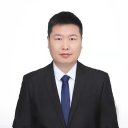
 Chongsheng ZHANG
· 6 previous affiliations
- Henan UniversitySince 2012
- Full Professor · Since 2012
- Current
- Ludwig-Maximilians-Universität MünchenSince 2025
- Researcher · Since 2025
- Postdoc · 2012–2013
- PhD student · 2008–2012
- Discover2010–2011
- PhD student · 2010–2011
- Renmin University of China2005–2008
- MS student · 2005–2008
Research Overview
Chongsheng ZHANG focuses on data mining, machine learning, and computer vision, with a particular emphasis on scene text recognition and robust learning from imbalanced or evolving data. His work bridges classical information-theoretic approaches with modern deep learning architectures to solve problems in intelligent transportation systems, urban scene understanding, and data-driven analytics. By developing specialized datasets and novel neural network modules, he addresses the challenges of extracting meaningful information from noisy, high-dimensional, and scarce data environments.
Research Trajectory
The early phase of Zhang’s research was characterized by a focus on fundamental data mining challenges, specifically within the domains of data stream processing and high-dimensional feature selection. In 2012, he addressed the complexities of dynamic data environments in Modeling and Clustering Users with Evolving Profiles in Usage Streams. This work challenged the traditional assumption that user profiles remain static once they enter a data stream, proposing instead that profiles evolve over time. By developing models that account for both the streaming of new transactions and the internal evolution of existing records, Zhang provided a more accurate framework for exploring long-term user behavior in web usage mining.
During the same period, Zhang investigated the efficiency of feature selection in high-dimensional, unlabeled datasets. In Discovering Highly Informative Feature Set over High Dimensions, he applied information theory to identify succinct yet highly informative feature subsets. This research introduced a heuristic theory for feature selection and optimized data structures to compute entropies more efficiently, addressing the computational bottlenecks inherent in processing large-scale textual collections.
By 2017, Zhang’s work transitioned toward the empirical evaluation of machine learning algorithms and the exploration of hybrid modeling strategies. In An up-to-date comparison of state-of-the-art classification algorithms, he conducted a comprehensive analysis of eleven classification algorithms, including then-emerging methods like Gradient Boosted Decision Trees (GBDT) and Random Forests. The study provided rigorous benchmarks for accuracy and efficiency, noting that GBDT often outperformed Support Vector Machines (SVM) in both accuracy and testing speed. This interest in the practical performance of classifiers aligns with a broader thematic investigation into Decoupling Neural Feature Extraction from Final Classifiers, where deep learning is utilized as a feature engine for classical decision-making models.
Computer Vision and Scene Understanding
In the late 2010s and early 2020s, Zhang shifted his focus toward computer vision, specifically the problem of Robust Scene Text Recognition in Uncontrolled Environments. Moving beyond traditional Optical Character Recognition (OCR) for scanned documents, he addressed the difficulties of reading text in "wild" urban settings, such as street signs and shopfronts, which are often obscured by motion blur, varying lighting, and complex backgrounds.
A significant contribution to this field was the development of the ShopSign dataset, introduced in Street View Text Recognition With Deep Learning for Urban Scene Understanding in Intelligent Transportation Systems. This large-scale dataset of Chinese shop signs provided a critical resource for training models to understand urban environments in the absence of digital maps. Zhang’s work in this area emphasizes the utility of text as a primary clue for precise scene understanding in autonomous driving and intelligent transportation systems. He further refined these techniques in Character-Level Street View Text Spotting Based on Deep Multisegmentation Network for Smarter Autonomous Driving, proposing a multi-segmentation approach to improve the accuracy of text detection and recognition at the character level.
Parallel to his work on scene text, Zhang’s research during this period touched upon affective computing and facial analysis. This included exploring methods for Disentangling Identity and Expression in Facial Analysis, which seeks to separate permanent physiological features from transient muscular deformations. His work in this domain also addressed the limitations of laboratory-trained models when applied to real-world data, contributing to Generalizing Emotion Recognition to Unconstrained Environments and Personalized Affective Computing and Subject Adaptation. These themes highlight a consistent effort to move computer vision models from sterile, controlled environments to the complexity of the real world, often utilizing Hierarchical Patch Decomposition for Multi-Scale Visual Representation to balance global context with fine-grained detail.
Robustness and Imbalance Learning
Zhang’s most recent work focuses on the inherent limitations of data-driven analytics when faced with data scarcity, class imbalance, and privacy concerns. In 2023, he introduced a quality-aware self-training scheme in Quality-Aware Self-Training on Differentiable Synthesis of Rare Relational Data. This research addresses the "overfitting" and "information loss" problems common in traditional data-balancing approaches by using Generative Adversarial Networks (GANs) to synthesize rare relational data while maintaining strict quality control over the generated samples.
Continuing this trajectory into 2024, Zhang has explored the integration of fuzzy set theory and prototypical learning to mitigate the effects of insufficient feature representation. As the senior author of imFTP: Deep imbalance learning via fuzzy transition and prototypical learning, he proposed a framework consisting of an adaptive smooth sampling module and a fuzzy transition module. This approach ensures that minority classes are adequately represented during the training process without falling into the trap of overfitting, thereby improving the robustness of deep learning models in imbalanced classification tasks.
Collaborative and Interdisciplinary Work
Beyond his primary research programs, Zhang has participated in several interdisciplinary projects that apply data mining and machine learning to diverse domains. His collaborative work includes the study of big data architectures in ubiquitous wireless sensor networks and the development of parallel algorithms for high utility itemset mining, which aims to discover patterns that yield high revenue rather than just high frequency.
In the realm of medical imaging, he contributed to the development of the RCAR-UNet, a network designed for retinal vessel segmentation. This work addresses the ambiguity of vessel boundaries and obscured lesion areas by introducing a rough channel attention mechanism to handle feature uncertainty. Additionally, he has participated in research regarding data privacy, specifically mask-based image set desensitization, which seeks to protect sensitive information in training data without significantly degrading the performance of recognition models. His recent collaborative efforts also extend to dynamic heterogeneous attributed networks, focusing on neighbor-enhanced representation learning for link prediction. These contributions demonstrate a broad engagement with the technical challenges of modern data science across various industrial and scientific applications.
Profile updated
Loading new papers…
Loading research neighbors…
See something wrong? Report a mistake