

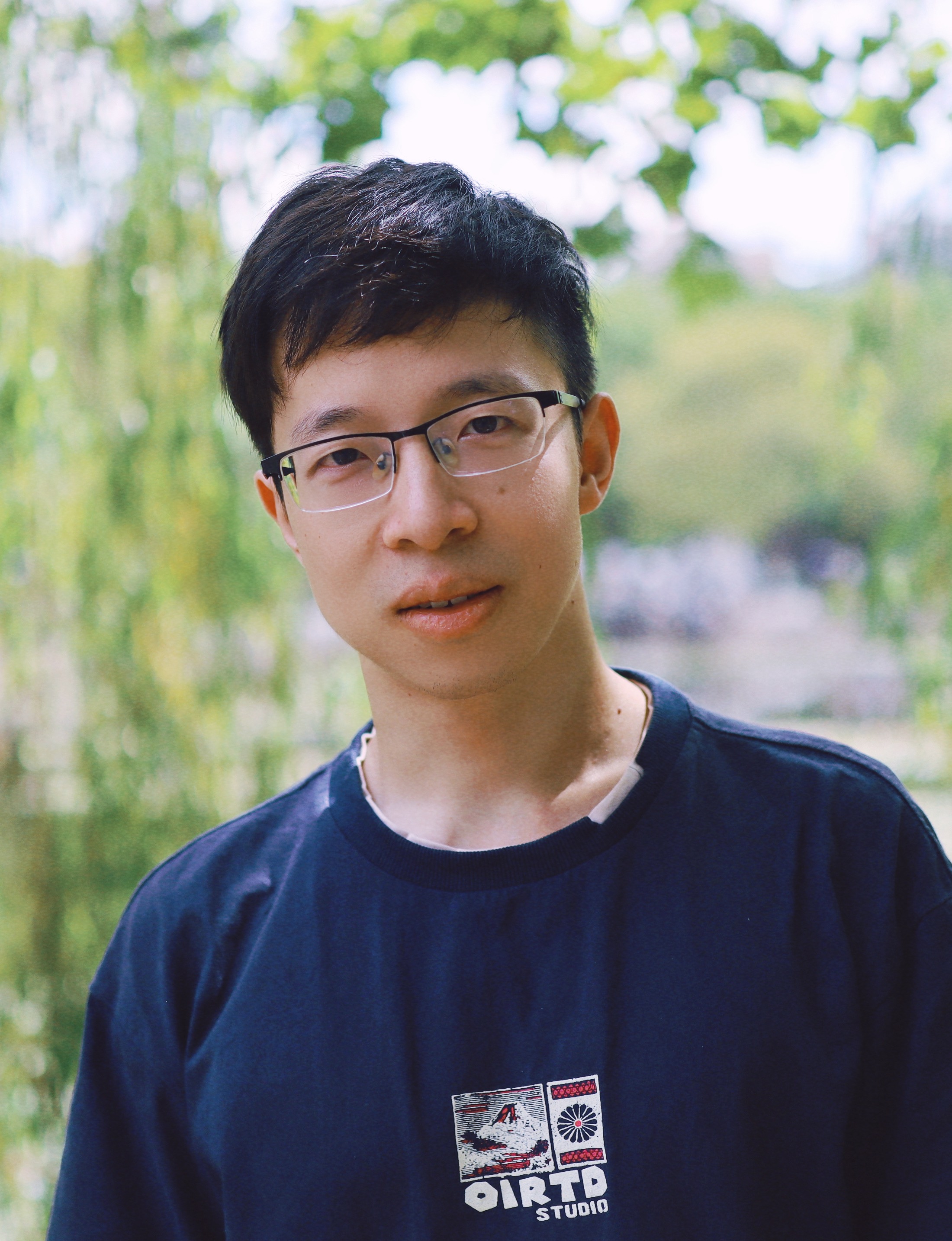
 Chongming Gao
· 1 previous affiliation
- Current
- Postdoc · 2023–2026
- PhD student · 2020–2023
Research Overview
Chongming Gao focuses on information retrieval, recommender systems, and the integration of large language models with reinforcement learning. His trajectory spans from addressing representation degeneration in language models to building unbiased, fully-observed datasets for recommendation evaluation. Currently, his work investigates agentic feedback loops, multi-objective alignment, and cost-effective prompt migration for personalized generative recommendation.
Research Trajectory
Gao's early research addressed foundational challenges in natural language processing and interactive systems. He investigated representation collapse in language models, introducing Laplacian Regularization to preserve semantic relationships and prevent embeddings from degenerating into narrow vector spaces in Revisiting Representation Degeneration Problem in Language Modeling. Concurrently, he explored the shift from static to interactive user modeling, mapping the landscape of dynamic natural language interactions in Advances and challenges in conversational recommender systems: A survey.
A major bottleneck in evaluating recommender systems is the reliance on partially observed, biased interaction logs. To advance the area of Unbiased Learning from Selection Biased Interaction Data, Gao led the development of large-scale, rigorously controlled datasets. He introduced KuaiRand: An Unbiased Sequential Recommendation Dataset with Randomly Exposed Videos, which provided millions of interactions based on random item exposure to capture missing-at-random data. He subsequently released KuaiRec: A Fully-observed Dataset and Insights for Evaluating Recommender Systems, a fully-observed matrix from a live environment that allowed researchers to accurately measure how missing data impacts offline evaluation.
Building on these empirical foundations, Gao's focus expanded to offline reinforcement learning (RL) for interactive recommendation. A persistent challenge in this domain is the amplification of popularity bias. He addressed this in Alleviating Matthew Effect of Offline Reinforcement Learning in Interactive Recommendation, proposing methods to prevent RL policies from disproportionately promoting popular items at the expense of the long tail. To lower the barrier to entry and standardize evaluation in the field, he developed EasyRL4Rec: An Easy-to-use Library for Reinforcement Learning Based Recommender Systems. This work directly contributed to the broader research direction of Mitigating Short-Term Engagement Bias in Recommender Systems. Further tackling exposure bias, he introduced a counterfactual framework in CIRS: Bursting Filter Bubbles by Counterfactual Interactive Recommender System, which disentangles genuine user interest from item overexposure to advance the area of Breaking Filter Bubbles in Personalized Recommendation.
As large language models (LLMs) became central to recommendation architectures, Gao investigated techniques to align and control these models for complex retrieval tasks. He developed frameworks to maintain recommendation variety without sacrificing accuracy, such as the genre-aware generation pipeline in DLCRec: A Novel Approach for Managing Diversity in LLM-Based Recommender Systems. To improve how LLMs handle top-heavy retrieval, he proposed K-order Ranking Preference Optimization for Large Language Models, a curriculum-based alignment technique that fine-tunes models to prioritize the most relevant items in a list. He also explored autoregressive sequence generation for balancing conflicting business goals in Future-Conditioned Recommendations with Multi-Objective Controllable Decision Transformer, treating desired objectives as prompts to avoid costly model retraining. Similarly, he applied Direct Preference Optimization to related search queries in Consistency-Aware Online Multi-Objective Alignment for Related Search Query Generation, achieving significant performance gains in real-world deployments.
His recent work continues to refine generative recommendation paradigms, contributing to the research direction of Bridging User Interests with Coherent Recommendation Paths. In MindRec: A Diffusion-driven Coarse-to-Fine Paradigm for Generative Recommendation, he moved away from standard left-to-right token generation, instead using a masked diffusion language model to emulate human reasoning by identifying core concepts before refining details. He also investigated flow-guided tuning mechanisms in Process-Supervised LLM Recommenders via Flow-guided Tuning. To address inherent biases in LLM outputs, he proposed self-play debiasing techniques in SPRec: Self-Play to Debias LLM-based Recommendation. This research intersects with the areas of Autonomous Bias Mitigation through Iterative Model Self-Correction and Feedback Loops and Popularity Bias in Recommender Systems.
Most recently, Gao has addressed the practical costs of maintaining personalized LLMs and the application of LLMs to academic evaluation. In 170 - Don’t Start Over: A Cost-Effective Framework for Migrating Personalized Prompts Between LLMs, he introduced a lightweight adapter framework to migrate user-specific soft prompts across incompatible foundation models, eliminating the need for full-scale retraining. He also developed PaperEval, a framework detailed in 416 - Navigating Through Paper Flood: Advancing LLM-Based Paper Evaluation Through Domain-Aware Retrieval and Latent Reasoning, which uses domain-aware retrieval and latent reasoning to automate the assessment of academic publications.
Expanding into multi-agent systems and agentic recommendation, Gao contributed to AutoRSE: Evaluating LLM Agents as Recommendation Engineers for Self-Evolving Recommender Systems, which benchmarks LLM agents functioning as recommendation engineers and reveals idea generation as a key performance bottleneck. In Locating and Closing Information Gaps in Multi-Agent Systems, Gao helped develop SPLICE, a method that dynamically detects information gaps in multi-agent workflows and selectively inserts communication links based on process-level edit features. Additionally, Gao participated in developing PFMAR: A multi-agent conversational recommender system for high-involvement products and supervised research on Sequence-aware Large Language Models for Explainable Recommendation to strengthen interpretability in sequential recommender systems.
Current Directions
The most recent papers in the evidence address the efficiency and reasoning capabilities of LLM-based systems in specialized domains. A primary focus is on cost-effective personalization, specifically developing parameter-efficient methods to migrate user profiles and soft prompts across evolving foundation models without requiring extensive retraining. Additionally, recent work investigates the use of LLMs for complex, knowledge-intensive tasks like automated paper evaluation. This involves designing frameworks that combine domain-aware retrieval with latent reasoning to contextualize novelty and contributions against concurrent literature, moving beyond the limitations of static, outdated domain knowledge in foundation models. Furthermore, Gao continues to explore generative and multi-agent recommendation paradigms, examining agentic recommendation engineering, dynamic communication gaps in multi-agent workflows, and sequence-aware explainable recommendation.
Profile updated
Loading new papers…
Other researchers whose papers cluster into the same research directions — a proxy for overlapping technical interests and shared intellectual neighborhoods.
See something wrong? Report a mistake