

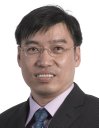
 Chip Hong Chang
· 1 previous affiliation
- Nanyang Technological UniversitySince 1999
- Full Professor · Since 2022
- Associate Professor · 2005–2022
- Assistant Professor · 1999–2005
Research Overview
Chip Hong Chang focuses on hardware security and trust, residue number systems (RNS), and the design of low-power arithmetic circuits. His research addresses the fundamental challenges of efficient digital signal processing, cryptographic hardware acceleration, and the development of robust hardware primitives for secure computing. Currently, his work explores the intersection of trustworthy sensing, physical unclonable functions (PUFs), and neuromorphic architectures for event-based vision.
Research Trajectory
The early stages of Chang’s research in the early 1990s were concentrated on digital logic design and its application to intelligent transport systems. This period involved the development of randomized time division multiplexing (TDM) techniques for automatic vehicle identification in multi-lane environments, addressing the complexities of non-lane-disciplined traffic and simultaneous signal detection. By the late 1990s and early 2000s, his focus shifted toward the theoretical and practical aspects of digital logic, specifically spectral techniques and device-level modeling. This included investigations into the spherical harmonic method for MOSFET substrate current modeling, providing a computationally efficient alternative to Monte Carlo simulations for nanometer-scale devices.
In the mid-2000s, Chang established a significant research program in Residue Number Systems (RNS), a non-weighted numbering system that enables high-speed, parallel, and carry-free arithmetic. His work during this decade focused on the design of efficient reverse converters and modular multipliers. He introduced novel algorithms for four-moduli sets, such as {2ⁿ-1, 2ⁿ, 2ⁿ+1, 2ⁿ⁺¹-1}, which significantly improved the speed and VLSI efficiency of converting RNS representations back to binary. This period also saw his entry into cryptographic hardware, where he developed programmable Montgomery modular multipliers for elliptic curve cryptography (ECC), specifically targeting trinomial reduction polynomials in finite fields.
By the 2010s, Chang’s research evolved to address the "difficult" operations in RNS, such as sign detection and magnitude comparison. While RNS is inherently efficient for addition and multiplication, sign detection has traditionally been a bottleneck. He contributed new algorithms for signed integer comparison and fast, area-efficient sign detectors for the popular {2ⁿ-1, 2ⁿ, 2ⁿ+1} moduli set. Concurrently, his interests expanded into the burgeoning field of hardware security. He began developing Physical Unclonable Functions (PUFs), which leverage inherent manufacturing variations in integrated circuits to generate unique, tamper-evident digital signatures.
In the current decade, Chang has integrated his expertise in hardware security with sensor design and emerging computing paradigms. His recent work introduces the concept of "trustworthy sensing," where hardware roots of trust are embedded directly into image sensors. This involves using metal-wire-grid structures to serve dual purposes: polarization sensing and PUF-based authentication. Furthermore, he has moved into the domain of neuromorphic computing, developing models for saliency detection in event-based visual scenes inspired by biological visual attention mechanisms. This trajectory reflects a transition from fundamental arithmetic components to complex, secure, and bio-inspired systems.
Current Directions
Chang’s current research is characterized by three primary pillars: hardware-intrinsic security, the acceleration of privacy-preserving computations, and neuromorphic engineering.
In hardware security, he continues to refine PUF architectures to enhance reliability and energy efficiency across varying environmental conditions. This includes the development of current comparator-based PUFs that utilize positive feedback mechanisms to stabilize outputs against temperature and voltage fluctuations. His work in this area aims to provide robust authentication primitives for the Internet of Things (IoT) and edge devices.
A second major focus is the hardware acceleration of homomorphic encryption (HE). As HE allows for computation on encrypted data without decryption, it is a critical technology for privacy-preserving cloud computing. Chang’s research evaluates the practicality of HE and seeks to overcome its significant computational overhead through specialized hardware architectures, potentially leveraging his long-standing expertise in RNS to handle the large-word arithmetic required by HE schemes.
Finally, Chang is exploring neuromorphic visual attention models. By moving away from traditional frame-based processing toward event-based sensing, his work aims to optimize saliency detection. This involves the detection of "proto-objects"—salient regions where objects are likely to exist—using perceptual grouping mechanisms. This direction seeks to achieve the stability and adaptability of biological vision in artificial systems.
Representative Work
Chang’s contributions to Residue Number Systems are exemplified by the development of Efficient reverse converters for four-moduli sets { 2n−1, 2n, 2n+1, 2n+1−1} and {2n−1, 2n, 2n+1, 2n−1−1}. This work addressed the limitations of the standard three-moduli set by extending the dynamic range through a fourth modulus. The proposed architecture achieved a three-fold speed-up over existing implementations, demonstrating a significant advancement in the VLSI realization of RNS-to-binary conversion.
In the domain of cryptographic hardware, he developed a Programmable Montgomery Modular Multiplier for Trinomial Reduction Polynomials in GF(2m). This research provided a flexible architecture capable of operating across different extended binary fields, which is essential for cryptosystems that must adapt to evolving security requirements. The design specifically optimized Montgomery multiplication, a core operation in elliptic curve cryptography, for trinomial reduction polynomials.
Addressing the fundamental challenges of RNS arithmetic, Chang introduced A New Fast and Area-Efficient Adder-Based Sign Detector for RNS {$2^{n}-1, 2^{n}, 2^{n}+1$ }. Sign extraction is a critical yet complex operation for magnitude comparison and division in RNS. This work provided a streamlined algorithm that reduced the hardware overhead and latency associated with sign detection, facilitating the broader use of RNS in general-purpose digital signal processing.
In the field of hardware security, his work on A Current Comparator Based Physical Unclonable Function with High Reliability and Energy Efficiency represents a significant effort to stabilize hardware primitives. By converting process variations in internal transistors into digital outputs and employing proportional-to-absolute-temperature (PTAT) mechanisms, the design achieved high reliability (99.05%) across a wide temperature range. This contribution is vital for ensuring that PUFs remain consistent identifiers in real-world deployment.
The integration of security and sensing is further explored in A Dual-Mode Polarization Image Sensor Design Based on In-Pixel Dual-Band Metal Wire Grid for Trustworthy Sensing. This research introduced an on-chip hardware root of trust (RoT) within a CMOS image sensor. By utilizing a metal-wire-grid structure that functions as both a polarization filter for visible light and a PUF for near-infrared light, the design enables secure authentication of the sensor data at the point of capture.
Most recently, Chang has contributed to neuromorphic vision with the Performance Evaluation of Neuromorphic Visual Attention Based on Proto-Objects. This work introduces "protoNVA," a model for end-to-end saliency detection in event-based scenes. By drawing on perceptual grouping mechanisms, the model provides a bio-inspired approach to optimizing visual attention, marking a shift toward more autonomous and efficient neuromorphic computer vision systems.
Profile updated
Loading new papers…
Other researchers whose papers cluster into the same research directions — a proxy for overlapping technical interests and shared intellectual neighborhoods.
See something wrong? Report a mistake