

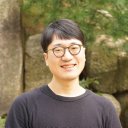
 Chiheon Kim
3 previous affiliations
- Runway2024–2025
- Researcher · 2024–2025
- Kakao Brain (South Korea)2018–2024
- Researcher · 2018–2024
- PhD student · 2012–2018
Research Overview
Chiheon Kim focuses on generative visual modeling, implicit neural representations, and the mathematical foundations of higher-order networks. His early work explored computational limits in hypergraphs and combinatorial structures before shifting toward scalable machine learning systems and data augmentation. Most recently, his research addresses high-resolution image and video synthesis, emphasizing efficient transformer architectures and novel view generation.
Research Trajectory
Kim’s early research investigated theoretical computer science and discrete mathematics, with a particular emphasis on the structural properties of complex networks. In Community Detection in Hypergraphs, Spiked Tensor Models, and Sum-of-Squares, he explored the mathematical limits of identifying hidden communities within hypergraphs. This work demonstrated that while hypergraph community detection shares similarities with tensor Principal Component Analysis, it presents a distinct computational-to-statistical gap, contributing to the broader research direction of Modeling Higher Order Interactions with Hypergraphs. He expanded on these theoretical foundations in Stochastic Block Model for Hypergraphs: Statistical limits and a semidefinite programming approach, establishing exact information-theoretic thresholds for community recovery and introducing a computationally efficient semidefinite programming relaxation. This advanced the study of Graph Reductions for Higher Order Relational Learning. Concurrently, he investigated pure combinatorial problems, establishing exponential bounds for dense bipartite graphs in Maximum Size of a Family of Pairwise Graph-Different Permutations and classifying previously uncharacterized graph structures in New classes of set-sequential trees.
Transitioning toward applied machine learning and systems optimization, Kim began addressing the computational bottlenecks of training deep neural networks. With collaborators, he developed techniques to improve the training and evaluation of conditional generative adversarial networks in Mining GOLD Samples for Conditional GANs, utilizing a gap of log-densities measure for example re-weighting and active learning. He also contributed to Fast AutoAugment, which framed data augmentation as a density matching problem to drastically reduce the search time for optimal augmentation policies compared to prior reinforcement learning approaches. To support the training of increasingly large models, he developed torchgpipe: On-the-fly Pipeline Parallelism for Training Giant Models, a PyTorch library enabling efficient micro-batch pipeline parallelism. He further addressed large-scale training challenges in Automated Learning Rate Scheduler for Large-batch Training, proposing scheduling algorithms optimized for constrained epoch budgets.
By 2022, Kim’s focus had shifted heavily toward generative visual modeling and transformer architectures. He co-developed a two-stage framework for high-resolution image synthesis in Autoregressive Image Generation using Residual Quantization, which utilized a Residual-Quantized VAE (RQ-VAE) to shorten discrete code sequences without sacrificing image fidelity. Building on this, he addressed the limitations of unidirectional generation in Draft-and-Revise: Effective Image Generation with Contextual RQ-Transformer. By training a model to infill masked code stacks based on unmasked contexts, this work integrated global image context into the generation process, advancing research in Bidirectional Context for Generative Visual Transformers and the broader effort of Unifying Visual Perception and Generation.
Most recently, Kim has focused on the flexibility and efficiency of spatial representations. He introduced novel approaches to Implicit Neural Representations (INRs) in Generalizable Implicit Neural Representations via Instance Pattern Composers, designing a framework that modulates a small set of early-layer weights to allow a single coordinate-based MLP to generalize across unseen data instances. He extended this concept in Locality-Aware Generalizable Implicit Neural Representation, combining transformer encoders with cross-attention to capture fine-grained, localized details across diverse instances. Expanding into temporal and three-dimensional domains, he participated in the development of Towards End-to-End Generative Modeling of Long Videos with Memory-Efficient Bidirectional Transformers, which decodes spatio-temporal volumes in parallel to mitigate the quadratic complexity of self-attention. He also contributed to NVS-Adapter: Plug-and-Play Novel View Synthesis from a Single Image, an adaptation module that leverages pre-trained text-to-image models for multi-view generation without requiring extensive fine-tuning, aligning with emerging techniques in the area of Feed-Forward Acceleration of 3D Generation and Editing.
Current Directions
Kim’s most recent work investigates the intersection of generative modeling, 3D vision, and efficient neural representations. A primary focus is on adapting large-scale, pre-trained 2D diffusion models for complex spatial tasks, such as novel view synthesis, while avoiding the computational overhead of full-model fine-tuning. This involves designing plug-and-play modules that enforce geometric consistency across multiple generated views. Additionally, he continues to refine generalizable Implicit Neural Representations, developing architectures that can efficiently memorize and reconstruct high-fidelity spatial details across diverse datasets. His ongoing research also addresses the scalability of transformer models for high-dimensional data, exploring memory-efficient bidirectional decoding strategies to enable the end-to-end generation of long-form video and complex 3D environments.
Profile updated
| Paper | Venue | Year |
|---|---|---|
| Automated Learning Rate Scheduler for Large-batch TrainingGitHubkakaobrain/ | AutoML @ ICML | 2021 |
Loading new papers…
Other researchers whose papers cluster into the same research directions — a proxy for overlapping technical interests and shared intellectual neighborhoods.
See something wrong? Report a mistake