

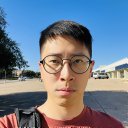
 Chia-Yuan Chang
· 5 previous affiliations
- Amazon (United States)Since 2024
- Applied Scientist · Since 2025
- Applied Scientist Intern · 2024–2025
- Texas A&M University2021–2025
- PhD student · 2021–2025
- Graduate Research Assistant · 2021–2024
- Research Intern · 2024
- Academia Sinica2019–2020
- Research Assistant · 2019–2020
- National Cheng Kung University2013–2015
- Master's degree, Civil Engineering · 2013–2015
Research Overview
Chia-Yuan Chang focuses on long-context extension, retrieval-augmented generation, and the efficient application of generative models. His research trajectory spans from optimizing physics-informed neural networks and mitigating algorithmic bias to developing scalable techniques for large language models and time series forecasting. Currently, his work addresses multi-agent filtering for retrieval-augmented generation and temporal domain generalization.
Research Trajectory
Chang’s early research addressed the optimization and robustness of complex neural architectures. In 2022, he contributed to the area of Hybrid First and Second Order Optimization with Auto-PINN: Understanding and Optimizing Physics-Informed Neural Architecture. This framework automates the design of Physics-Informed Neural Networks (PINNs) by sequentially optimizing hyperparameters, demonstrating that training loss can serve as a reliable proxy for actual error to significantly reduce the architectural search space.
Building on themes of model robustness, his 2023 work explored domain generalization without explicit environment labels. He developed DISPEL: Domain Generalization via Domain-Specific Liberating, a post-processing framework that utilizes an instance-specific mask generator to filter out domain-specific noise, thereby improving generalization to new environments. Concurrently, his research addressed algorithmic fairness and bias mitigation. He introduced Towards Assumption-free Bias Mitigation, detailing a framework that employs a pseudo-sensitive reconstructor to automatically identify and suppress biased feature interactions, even in the absence of demographic data during inference. He also applied fairness constraints to clinical settings in Towards Fair Patient-Trial Matching via Patient-Criterion Level Fairness Constraint, designing a deep learning approach that accounts for complex inclusion and exclusion criteria to reduce demographic bias in clinical trial matching.
A significant portion of his mid-trajectory work focuses on the research direction of Low-Latency Interpretability for Real-Time Machine Learning. He led a comprehensive review, Efficient XAI Techniques: A Taxonomic Survey, which categorized methods optimizing explanation speed for real-time deployment into non-amortized and amortized approaches. This theoretical foundation translated into practical architectures, such as his collaborative work on TVE: Learning Meta-attribution for Transferable Vision Explainer. TVE operates as a plug-and-play meta-explainer that interprets vision models across various tasks without requiring task-specific training. Expanding explainability to generative models, he co-authored Large Language Models As Faithful Explainers, which utilizes "contrary hints" to iteratively measure and optimize the alignment between a language model's natural language rationale and its internal decision-making process.
As large language models became central to his research, Chang focused on efficiency and context scaling. He explored prompt compression in Learning to Compress Prompt in Natural Language Formats, introducing a framework that condenses lengthy prompts into highly transferable, human-readable formats to reduce computational overhead. Addressing the limitations of context windows, he contributed to LLM Maybe LongLM: SelfExtend LLM Context Window Without Tuning. This inference-time method employs a bi-level attention mechanism to process long-range dependencies without additional fine-tuning, advancing the broader areas of Mitigating Length Extrapolation Failure in Transformers and Staged Context Extension for Large Language Models.
Parallel to his natural language processing research, Chang participated in developing methods in the area of Foundation Models for Heterogeneous Time Series. This effort is detailed in Understanding Different Design Choices in Training Large Time Series Models and the subsequent LTSM-Bundle: A Toolbox and Benchmark on Large Language Models for Time Series Forecasting. These papers systematically evaluate tokenization and prompting strategies, establishing best practices for training large time series models to achieve strong zero-shot and few-shot performance across diverse datasets.
In 2025, his research expanded into temporal robustness and retrieval-augmented generation. He developed CODA: Temporal Domain Generalization via Concept Drift Simulator, a data-centric framework that simulates future feature correlations to help standard machine learning models generalize against concept drift. Additionally, he advanced the area of Positional Reranking for Long Context Retrieval Augmented Generation with MAIN-RAG: Multi-Agent Filtering Retrieval-Augmented Generation. This training-free framework utilizes a committee of LLM agents and adaptive thresholding to filter irrelevant documents prior to generation, significantly improving reasoning accuracy.
Current Directions
The most recent papers in the evidence indicate a strong focus on enhancing the reliability and efficiency of large-scale generative systems and foundation models. Current work investigates training-free architectures for Retrieval-Augmented Generation (RAG), utilizing multi-agent consensus mechanisms to filter contextual noise and improve reasoning accuracy over long contexts. Additionally, Chang is addressing temporal domain generalization by developing data-centric simulators that predict feature correlations to combat concept drift in evolving data streams. His ongoing research also encompasses the standardization and optimization of large time series models, exploring how specific tokenization and prompting strategies can maximize forecasting performance across heterogeneous datasets.
Profile updated
Loading new papers…
Other researchers whose papers cluster into the same research directions — a proxy for overlapping technical interests and shared intellectual neighborhoods.
See something wrong? Report a mistake