

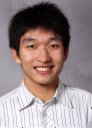
 Chi Wang
· 5 previous affiliations
- Google (United States)Since 2024
- Senior Staff Research Scientist · Since 2024
- Google DeepMind (United Kingdom)Since 2024
- Senior Staff Research Scientist · Since 2024
- Microsoft (United States)2011–2024
- Principal Researcher · 2020–2024
- Researcher · 2014–2020
- Research Intern · 2011
- Research assistant · 2009–2014
- Tsinghua University2005–2009
- B.E, Computer Sciences and Technology · 2005–2009
3 other authors named Chi Wang: Chi Wang (42 papers), Chi Wang (Zhejiang University · 19 papers), Chi Wang (1 paper)
Research Overview
Chi Wang focuses on hyperparameter optimization, automated machine learning, and multi-agent systems for large language models. His early work addressed scalability in social network analysis and database query optimization before shifting toward cost-effective methods for model tuning. Recently, his research centers on orchestrating autonomous language agents and developing frameworks that enhance reasoning, efficiency, and collaboration in complex generative AI applications.
Research Trajectory
Wang’s early research addressed scalability and relationship extraction in large information networks. In 2010, he developed a heuristic algorithm for influence maximization designed to scale to millions of nodes in social networks (Scalable influence maximization for prevalent viral marketing in large-scale social networks). Concurrently, he explored bibliographic data to extract hidden hierarchical structures, proposing methods to identify likely advisor-advisee relationships from co-authorship networks (Mining advisor-advisee relationships from research publication networks).
A decade later, his focus expanded to include systems optimization, specifically addressing the area of Mitigating Cardinality Estimation Errors in Database Query Optimizers. He introduced low-overhead regression models to accurately approximate selectivity functions in database systems, tackling a persistent challenge in query optimization (Efficiently Approximating Selectivity Functions using Low Overhead Regression Models).
Around 2021, Wang’s work concentrated heavily on automated machine learning (AutoML) and hyperparameter optimization (HPO), with a distinct emphasis on computational efficiency. He contributed to the development of FLAML: A Fast and Lightweight AutoML Library, which optimized for low computational cost while maintaining model accuracy, advancing the broader research direction of Cost-Normalized Acquisition for Multi-Fidelity Optimization. Building on this theme of resource efficiency, he introduced Cost-Frugal Optimization (CFO) to minimize the total computational cost of finding optimal model configurations by cautiously moving from cheap evaluations to more expensive ones (Frugal Optimization for Cost-related Hyperparameters). He further expanded on heterogeneous evaluation costs by proposing a blended search strategy that dynamically prioritizes global and local search based on resource constraints (ECONOMIC HYPERPARAMETER OPTIMIZATION WITH BLENDED SEARCH STRATEGY). Extending HPO to production environments, he also developed methods for constraint-aware early stopping, ensuring models met latency, storage, and fairness requirements during the tuning process rather than only after training (ACE: Adaptive Constraint-aware Early Stopping in Hyperparameter Optimization).
As large language models (LLMs) became prominent, Wang applied his expertise in cost-effective optimization to generative AI. He designed the EcoOptiGen framework to optimize inference hyperparameters—such as temperature and token limits—maximizing the utility of text generation under strict financial budgets (Cost-Effective Hyperparameter Optimization for Large Language Model Generation Inference). This focus on LLM utility naturally evolved into structuring how these models solve complex, multi-step tasks. He participated in conceptualizing task-solving as state machines, separating process grounding from sub-task execution to improve interpretability and control (StateFlow: Enhancing LLM Task-Solving through State-Driven Workflows).
In 2024, Wang’s research fundamentally shifted toward multi-agent systems, contributing to the area of Automated Discovery of Multi-Agent Workflows. He led the development of AutoGen: Enabling Next-Gen LLM Applications via Multi-Agent Conversations, an open-source framework allowing customizable agents to collaborate, use tools, and converse to solve complex tasks. Within this multi-agent paradigm, he explored specific applications and efficiency improvements. He developed EcoAssistant, a framework enabling LLMs to iteratively refine code for external API calls more affordably (EcoAssistant: Using LLM Assistants More Affordably and Accurately), and MathChat, which pairs an LLM agent with a user proxy to collaboratively solve challenging mathematical competition problems (MathChat: Converse to Tackle Challenging Math Problems with LLM Agents).
Most recently, Wang has investigated advanced reasoning and orchestration strategies for language models. Contributing to the direction of Semantic Speculative Reasoning for Large Language Models, he proposed Interactive Speculative Planning (ISP), which uses a fast approximation model to draft plans while a larger model verifies them, integrating real-time human feedback to reduce latency (Interactive Speculative Planning: Enhance Agent Efficiency through Co-design of System and User Interface). He also examined the tension between textual reasoning and code execution, identifying an "inverse scaling" trend where smaller models sometimes avoid the overconfidence of larger ones, and introduced a multi-agent approach combining code, text, and summarization (Steering Large Language Models between Code Execution and Textual Reasoning). Continuing to push the boundaries of multi-agent orchestration, his work demonstrated that coordinating multiple LLMs can match or exceed the performance of a single frontier model on complex benchmarks by structuring consensus dynamics (Beyond the Strongest LLM: Multi-Turn Multi-Agent Orchestration vs. Single LLMs on Benchmarks). Finally, he participated in optimizing autonomous agents specifically for Small Language Models (SLMs) through prompt compression and hierarchical memory systems, proving that smaller models can operate highly capable workflows when constraints are respected (EffGen: Enabling Small Language Models as Capable Autonomous Agents).
Current Directions
Recent work investigates the orchestration and optimization of autonomous language agents, focusing on both multi-agent collaboration and the efficiency of individual models. The most recent papers in the evidence address how multi-turn, multi-agent frameworks can surpass the reasoning capabilities of single frontier models by structuring consensus dynamics and debate. Concurrently, this research explores methods to reduce the latency and computational overhead of agentic workflows. This includes interactive speculative planning—where fast approximation models draft actions for larger models to verify—and the development of specialized frameworks that enable Small Language Models (SLMs) to function as capable autonomous agents through prompt compression and optimized memory architectures.
Profile updated
Loading new papers…
Other researchers whose papers cluster into the same research directions — a proxy for overlapping technical interests and shared intellectual neighborhoods.
See something wrong? Report a mistake