

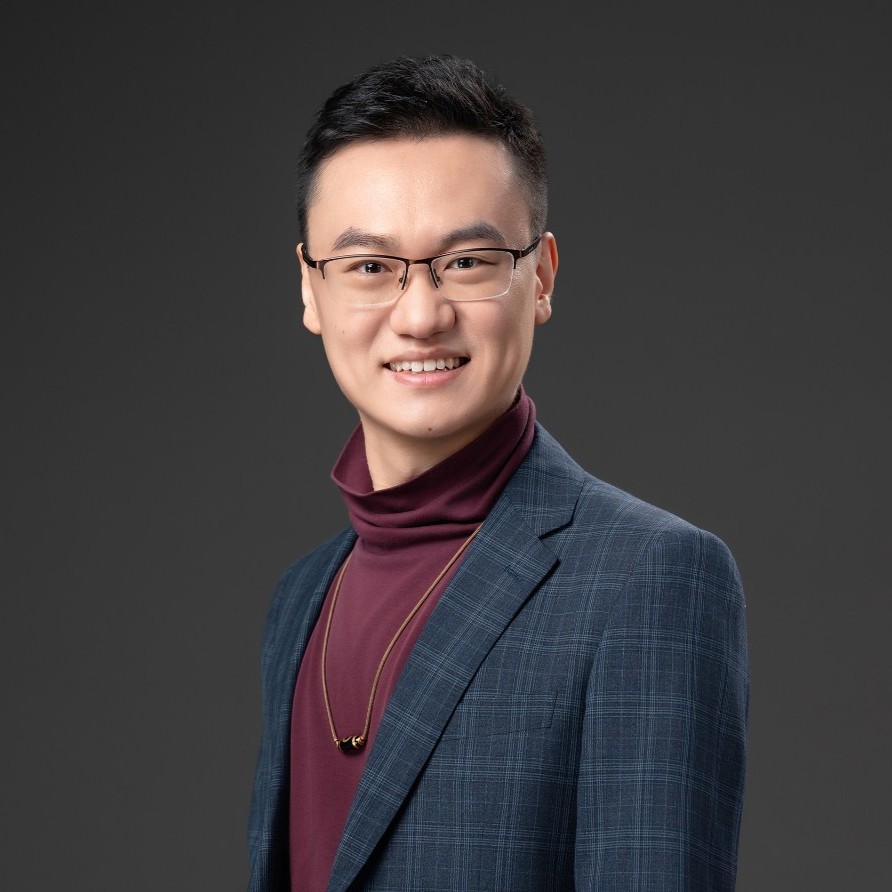
 Chenye Wu
· 4 previous affiliations
- Shenzhen Research Institute of Big DataSince 2020
- Assistant Professor · Since 2020
- Current
- Tsinghua University2017–2020
- Assistant Professor · 2017–2020
- Postdoc · 2014–2016
Research Overview
Chenye Wu focuses on power system optimization, energy storage integration, and data-driven grid operations. His trajectory spans from distributed frequency control and risk-limiting economic dispatch to the theoretical foundations of electricity market pricing and privacy-preserving smart grid analytics. Recently, his work has expanded to include scalable reinforcement learning and lightweight neural architectures for edge computing.
Research Trajectory
Wu’s early research addressed the operational challenges of modernizing power grids, particularly the need for rapid, decentralized control mechanisms. In 2014, he introduced distributed peer-to-peer communication frameworks designed to stabilize grid frequencies. This work is detailed in Cost Effective Distributed Secondary Frequency Control: A Consensus + Innovations Approach and Enhanced Secondary Frequency Control via Distributed Peer-to-Peer Communication. By combining local neighbor-to-neighbor consensus protocols with global innovation signals, these methods allow distributed energy resources to restore grid stability significantly faster than traditional centralized systems while maintaining cost-effective generation dispatch.
Building on this focus on grid reliability, Wu tackled the complexities introduced by unpredictable wind and solar energy. In Risk-Limiting Economic Dispatch for Electricity Markets With Flexible Ramping Products, he developed a parametric analysis technique to map the relationship between generation costs and ramping requirements. This approach significantly outperformed standard greedy algorithms, cutting operational costs in certain scenarios and contributing to the broader research direction of Managing Volatile Renewable Energy Production.
By 2019, Wu’s research group heavily emphasized the economics and operation of energy storage, advancing the area of Optimal Sizing for Energy Storage and Renewable Integration. He established a rigorous algorithmic framework for storage systems operating under complex Time-of-Use pricing in An Algorithmic View on Optimal Storage Sizing, utilizing dynamic programming and a virtual reservation strategy to maximize arbitrage profits despite demand uncertainty. This focus on temporal dynamics continued in Optimal Storage Control for Dynamic Pricing, where his team introduced a one-shot load decomposition technique. This resulted in both a simple threshold-based algorithm and a data-driven variant that learns price distributions online, achieving performance remarkably close to offline optimal solutions.
Further exploring the systemic impact of storage, Wu quantified its economic value under strict environmental mandates in Value of Storage for Renewable Portfolio Standard. By modeling the trade-offs between utilizing batteries for price arbitrage versus reserving capacity to manage renewable uncertainty, this work provided a framework for calculating the true costs of high green energy targets and the diminishing marginal returns of battery capacity. Collectively, these studies deepened the field's understanding of Temporal Coupling in Power System Optimization.
In 2020, Wu investigated the theoretical underpinnings of electricity markets, specifically addressing non-convexities such as the massive startup costs of power plants. His paper Market Power in Convex Hull Pricing examined how traditional pricing schemes often fail to provide correct incentives and evaluated Convex Hull Pricing as a mechanism to minimize uplift payments and improve market efficiency.
Concurrently, he explored the intersection of grid analytics and consumer privacy. In Privacy Preserving in Non-Intrusive Load Monitoring: A Differential Privacy Perspective, his team provided a theoretical bridge between abstract differential privacy parameters and the real-world accuracy of appliance disaggregation. By framing the problem through compressive sensing, they derived mathematical bounds predicting exactly how privacy-preserving noise degrades the ability to monitor household energy usage. Expanding his methodological scope, Wu also applied data-driven techniques to broader societal datasets, such as mapping cause-and-effect relationships in noisy data to analyze shifts in global investment preferences during the COVID-19 pandemic in Mining human preference via self-correction causal structure learning.
In recent years, Wu has participated in collaborative research advancing core machine learning algorithms and efficient neural architectures. In the domain of reinforcement learning (RL), he contributed to Overcoming the Curse of Dimensionality in Reinforcement Learning Through Approximate Factorization, which introduced a framework for breaking down high-dimensional problems using a graph-coloring-based sampling strategy. He also co-authored Reinforcement Learning with Imperfect Transition Predictions: A Bellman-Jensen Approach, which developed a Bayesian value function to help RL agents efficiently leverage imperfect, high-dimensional forecasts. Additionally, his work on efficient computer vision models includes LE-HRNet: A Lightweight High-Resolution Network for Efficient Human Pose Estimation, a novel architecture that utilizes 3D cross-dimensional attention mechanisms to drastically reduce computational overhead for mobile and edge devices.
Current Directions
The most recent papers in the evidence indicate a broadening of Wu’s research scope into foundational machine learning and efficient artificial intelligence. A primary focus is on scaling reinforcement learning to handle high-dimensional, complex environments. This includes developing approximate factorization techniques and Bayesian approaches to value functions that allow autonomous agents to operate effectively even when future state predictions are noisy or imperfect. Alongside these algorithmic advancements, current work investigates lightweight convolutional architectures for real-time edge computing, designing spatially sensitive neural networks that maintain high precision for tasks like dense prediction and human pose estimation while operating under strict computational constraints.
Profile updated
Loading new papers…
Other researchers whose papers cluster into the same research directions — a proxy for overlapping technical interests and shared intellectual neighborhoods.
See something wrong? Report a mistake