

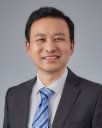
 Chentao Wu
· 1 previous affiliation
- Shanghai Jiao Tong UniversitySince 2019
- Full Professor · Since 2019
- Current
Research Overview
Chentao Wu focuses on distributed storage systems, hardware reliability, and the intersection of machine learning with decentralized architectures. His early research addressed erasure coding and I/O optimization in large-scale storage arrays. More recently, he investigates federated learning systems, blockchain-enabled edge computing, and memory management for large language models.
Research Trajectory
Wu’s early research primarily addressed the reliability and performance bottlenecks of large-scale storage systems, with a particular focus on RAID-6 architectures and erasure codes. In 2011, he introduced H-Code: A Hybrid MDS Array Code to Optimize Partial Stripe Writes in RAID-6, which mitigated the unbalanced I/O distribution typical of horizontal parity codes during partial stripe writes. That same year, his work addressed I/O load balancing limitations in Maximum Distance Separable (MDS) codes with HDP code: A Horizontal-Diagonal Parity Code to Optimize I/O load balancing in RAID-6. Expanding into caching strategies, he proposed Hint-K: An Efficient Multilevel Cache Using K-Step Hints (2014), a system that manages block promotion and demotion based on K-step historical operations to improve distributed I/O performance. With collaborators, he later developed TIP-Code: A Three Independent Parity Code to Tolerate Triple Disk Failures with Optimal Update Complextiy (2015), an XOR-based coding scheme designed to maintain high fault tolerance while minimizing the write overhead associated with triple disk failures.
In the late 2010s and early 2020s, Wu’s focus expanded to emerging memory technologies and complex update operations in distributed environments. His research group designed Dapper: An Adaptive Manager for Large-Capacity Persistent Memory (2019) to integrate DRAM-comparable persistent memory into NUMA architectures without requiring extensive system software modifications. Continuing his work on erasure-coded storage, he led the development of A Graph-Assisted Out-of-Place Update Scheme for Erasure Coded Storage Systems (2021), a novel approach to mitigating the high I/O latency and load imbalance caused by complex data-parity relationships during update operations.
By 2023, Wu’s trajectory broadened significantly into distributed machine learning, edge computing, and privacy-preserving systems. He investigated the research directions of Incentivizing Participation in Federated Learning and Federated Learning for Non-Stationary Data Environments with Adaptive incentive for cross-silo federated learning: A multi-agent reinforcement learning approach, modeling cross-silo interactions as a weighted potential game. He also explored blockchain scalability in edge networks, modeling throughput and security trade-offs via Markov decision processes in Sharding for Blockchain based Mobile Edge Computing System: A Deep Reinforcement Learning Approach. Addressing privacy compliance in the area of Measuring Machine Unlearning via Distributional Equivalence, he developed SecureCut: Federated Gradient Boosting Decision Trees with Efficient Machine Unlearning, enabling targeted data removal in vertical federated learning architectures.
In 2024, Wu contributed to graph neural networks and hardware-level memory optimizations. Advancing the areas of Progressive Difficulty Schedules for Graph Neural Networks and Self-Supervised Graph Representation Learning with Contrastive Augmentations, he co-authored LocalGCL: Local-aware Contrastive Learning for Graphs, a framework combining global contrastive learning with local masking-based modeling. He also returned to hardware reliability, forecasting storage failures in Exploit both SMART Attributes and NAND Flash Wear Characteristics to Effectively Forecast SSD-based Storage Failures in Clusters. Additionally, he designed a highly efficient hardware prefetcher in Gaze into the Pattern: Characterizing Spatial Patterns with Internal Temporal Correlations for Hardware Prefetching, contributing to the broader area of Dynamic Resource Partitioning for Shared Memory Hierarchies.
Wu’s most recent work in 2025 and 2026 spans advanced SSD wear leveling, federated learning security, and infrastructure for Large Language Models (LLMs). His team developed PS-WL: A Probability-Sensitive Wear Leveling scheme for SSD array scaling, which shifts the focus of wear leveling from raw write counts to actual failure risk, advancing the areas of Modeling Non-linear Degradation for Predictive Maintenance, Feedback Scheduling for Real-Time Resource Management, and Dynamic Workload Redistribution for Uniform Hardware Aging. In the security domain, he participated in research exploring vulnerabilities within the area of Personalized Federated Learning for Heterogeneous Data via BAPFL: Exploring Backdoor Attacks Against Prototype-based Federated Learning. He also collaborated on BLOCKS: Blockchain-supported Cross-Silo Knowledge Sharing for Efficient LLM Services, a decentralized framework contributing to Low Latency Blockchain for Real Time Systems. Most recently, he contributed to E-mem: Multi-Agent Based Episodic Context Reconstruction for LLM Agent Memory (2026), replacing traditional lossy memory compression with a hierarchical multi-agent architecture to improve reasoning performance and reduce token costs.
Current Directions
The most recent papers in the evidence address the infrastructure, security, and memory management of large-scale AI systems, alongside continued advancements in storage hardware reliability. Recent work investigates decentralized frameworks for cross-silo knowledge sharing to support Large Language Model (LLM) services, as well as multi-agent architectures for episodic context reconstruction in LLM memory. Additionally, ongoing research explores vulnerabilities in distributed machine learning—specifically backdoor attacks against prototype-based federated learning—and predictive maintenance strategies for SSD arrays using probability-sensitive wear leveling.
Profile updated
Loading new papers…
Other researchers whose papers cluster into the same research directions — a proxy for overlapping technical interests and shared intellectual neighborhoods.
See something wrong? Report a mistake