

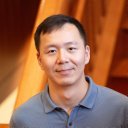
 Chenkai Weng
· 5 previous affiliations
- Arizona State UniversitySince 2024
- Assistant Professor · Since 2024
- Northwestern University2019–2024
- Research Assistant · 2020–2024
- PhD student · 2019–2024
- JPMorgan Chase & Co (United States)2022–2023
- Summer Associate · 2023
- AI Research Summer Associate · 2022
- Chainlink Labs2022–2023
- Research Intern · 2022–2023
- Xidian University2015–2019
- Bachelor of Engineering - BE, Information Security · 2015–2019
Research Overview
Chenkai Weng focuses on applied cryptography, specifically developing privacy-preserving solutions through zero-knowledge proofs, secure multi-party computation, and homomorphic encryption. His trajectory spans foundational improvements in cryptographic protocols to scalable systems for secure collaborative analytics and machine learning inference. Recently, his work addresses the intersection of cryptography and artificial intelligence, including continual unlearning frameworks for large language models.
Research Trajectory
The temporal evolution of Chenkai Weng’s research demonstrates a sustained focus on improving the efficiency, scalability, and practical applicability of cryptographic protocols. His early work addressed foundational bottlenecks in secure computation. In 2020, he contributed to Ferret: Fast Extension for Correlated OT with Small Communication, which introduced a protocol for generating correlated oblivious transfer (COT) correlations with significantly reduced time and communication overhead. Concurrently, he investigated garbled circuits in Better Concrete Security for Half-Gates Garbling (in the Multi-instance Setting), refining the security guarantees of multi-instance deployments.
In 2021, Weng’s focus expanded to zero-knowledge proofs (ZKPs), yielding highly scalable solutions for both Boolean and arithmetic circuits. This included the development of Wolverine: Fast, Scalable, and Communication-Efficient Zero-Knowledge Proofs for Boolean and Arithmetic Circuits and QuickSilver: Efficient and Affordable Zero-Knowledge Proofs for Circuits and Polynomials over Any Field. Alongside these theoretical advancements, he applied secure computation to real-world privacy challenges. He guided the design of the Precio protocol in Aggregate Measurement via Oblivious Shuffling, a secure aggregation system for measuring ad campaign performance without invasive tracking. This work advanced the research direction of Linear Scaling for Secure Collaborative Computation and contributed to the broader area of Securing Collaborative Learning Against Malicious Participants.
Moving into 2023, Weng continued to optimize secure multi-party computation (MPC) for complex environments. He co-authored SuperPack: Dishonest Majority MPC with Constant Online Communication, which achieved constant online communication per multiplication gate in settings where a majority of parties may be corrupted. He also led research into specialized privacy-preserving operations, presenting a suite of protocols in Privacy-Preserving Regular Expression Matching using Nondeterministic Finite Automata that leveraged the structural properties of Thompson Nondeterministic Finite Automata to drastically improve communication efficiency.
By 2024, Weng’s trajectory increasingly intersected with machine learning and advanced cryptographic architectures. He explored the application of ZKPs to machine learning models in Scalable Zero-knowledge Proofs for Non-linear Functions in Machine Learning. To support these computationally intensive applications, he collaborated on AES-based CCR Hash with High Security and Its Application to Zero-Knowledge Proofs, constructing high-security correlation robust hash functions from standard AES to provide substantial speedups over traditional hashing. He also addressed complex trust models in Dishonest Majority Multi-Verifier Zero-Knowledge Proofs for Any Constant Fraction of Corrupted Verifiers, designing proofs capable of convincing a group of verifiers even when a fraction of them are colluding.
In 2024 and 2025, Weng began addressing the privacy and safety challenges of large language models (LLMs) through machine unlearning. He participated in developing the $O^3$ framework, detailed in Practical Unlearning for Large Language Models and formalized in On Large Language Model Continual Unlearning. This framework enables LLMs to forget specific data streams without requiring access to the original training data, utilizing orthogonal parameter updates and out-of-distribution detectors. These contributions significantly advanced the research areas of Orthogonal Subspace Projection for Interference Free Parameter Updates, Parameter Efficient Machine Unlearning for Large Models, and Continual Machine Unlearning for Streaming Data Removal.
Concurrently, his 2025 research continues to push the boundaries of cryptographic primitives and secure systems. He contributed to Committed Vector Oblivious Linear Evaluation and Its Applications, introducing C-VOLE to improve the efficiency of non-interactive commitments across multiple parties. He also oversaw optimizations to garbled circuits in BitGC Made (More) Efficient, utilizing SIMD and free-XOR techniques to achieve massive speedups. Furthermore, he explored memory and network privacy through Efficient Mixed-Mode Oblivious RAMs, which integrates Private Information Retrieval (PIR) to handle mixed public and private memory accesses, and Collusion Resistant DNS With Private Information Retrieval, which leverages PIR to guarantee user privacy against colluding DNS proxies and resolvers.
Current Directions
The most recent papers in the evidence highlight two primary research directions. First, Weng is actively investigating the practical deployment of advanced cryptographic systems, focusing on reducing the overhead of oblivious RAM, garbled circuits, and private information retrieval to secure critical infrastructure like DNS. Second, his work addresses the intersection of cryptography and artificial intelligence, specifically focusing on continual machine unlearning for large language models. This involves designing parameter-efficient frameworks that allow foundation models to dynamically unlearn targeted information without catastrophic forgetting or the need to retain original training datasets.
Profile updated
| Paper | Venue | Year |
|---|---|---|
| Scalable Zero-knowledge Proofs for Non-linear Functions in Machine LearningGitHubCryptMatrix/ | IACR ePrint | 2025 |
Loading new papers…
Other researchers whose papers cluster into the same research directions — a proxy for overlapping technical interests and shared intellectual neighborhoods.
See something wrong? Report a mistake