

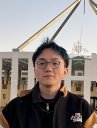
 Chenhui Gou
· 2 previous affiliations
- Monash UniversitySince 2023
- PhD student · 2023–2027
- Current
- Australian National University2020–2023
- MS student · 2020–2023
Research Overview
Chenhui Gou focuses on multimodal foundation models, long-form video understanding, and efficient neural architectures. His trajectory spans from hardware-aware vision transformers to the development of robust evaluation benchmarks and unified architectures for visual reasoning and generation. Recently, his work addresses token efficiency in large multimodal models and the integration of understanding and generation capabilities in specialized domains like medical artificial intelligence.
Research Trajectory
Gou's early work addressed the computational bottlenecks of deploying vision transformers in real-time applications. With collaborators, he developed RTFormer: Efficient Design for Real-Time Semantic Segmentation with Transformer, a dual-resolution architecture that balances performance and inference speed on GPU-like devices by leveraging linear-complexity attention mechanisms rather than traditional multi-head designs.
By 2024, his focus expanded to the capabilities and limitations of multimodal large language models (MLLMs). He investigated the granular visual perception of these models in How Well Can Vision Language Models See Image Details?, introducing a pixel value prediction task to demonstrate that standard VLMs struggle with precise, sub-semantic visual details. Concurrently, he contributed to standardized evaluation protocols through Evaluating and Advancing Multimodal Large Language Models in Ability Lens, a benchmark designed to systematically assess both the accuracy and stability of MLLMs across distinct vision perception abilities, uncovering critical ability conflicts during training.
A major theme in Gou's trajectory is the challenge of processing extended temporal contexts. He led the development of InfiniBench: A Comprehensive Benchmark for Large Multimodal Models in Very Long Video Understanding, which stress-tested models on hours-long video content. This work highlighted significant gaps in current architectures and established methods for the research direction of Visual Necessity Filtering for Multimodal Reasoning Benchmarks. To address these temporal challenges algorithmically, he co-developed DrVideo: Document Retrieval Based Long Video Understanding, a system that reframes long-video comprehension as a document retrieval task to better leverage large language models. His interest in complex environmental perception also extended to robotics, participating in the creation of JRDB-PanoTrack: An Open-World Panoptic Segmentation and Tracking Robotic Dataset in Crowded Human Environments to support open-world recognition in crowded settings.
Alongside multimodal understanding, Gou has explored generative vision models and image restoration. He contributed to the area of Semantic Priors for Large Scale Image Inpainting with Strong and Controllable Blind Image Decomposition, proposing a highly efficient network that allows users to selectively remove specific image degradations via text prompts. In the domain of personalized generation, he co-authored EZIGen: Enhancing zero-shot subject-driven image generation with precise subject encoding and decoupled guidance. This framework utilized a frozen diffusion UNet as a subject encoder, contributing to the research direction of Decoupling Guidance to Resolve Cross-Modal Conflicts by separating text and image guidance into distinct stages.
In 2025, Gou's research increasingly emphasized bridging the gap between open-source and proprietary multimodal models through high-quality data curation and unified architectures. He introduced VQ-VA World: Towards High-Quality Visual Question-Visual Answering, a data-centric framework and benchmark designed to teach open-source models to answer visual questions with generated images. This work directly addressed the Multimodal Reasoning Disparity in Open and Proprietary Models. He also participated in the development of BAGEL, detailed in Emerging Properties in Unified Multimodal Pretraining, a foundation model that scales pretraining on interleaved text, image, and video data to enable complex reasoning and free-form image manipulation.
Most recently, Gou's collaborative work has extended these unified multimodal paradigms into specialized domains and efficiency optimizations. He participated in the development of UniMedVL: Unifying Medical Multimodal Understanding and Generation through Observation-Knowledge-Analysis, a comprehensive architecture capable of both clinical report generation and medical image synthesis. This research advances the direction of Generalist Medical AI via Multimodal Foundation Models. Concurrently, he contributed to Sparsity Forcing: Reinforcing Token Sparsity of MLLMs, a reinforcement learning framework that trains models to minimize visual token usage without sacrificing accuracy, significantly reducing memory consumption and accelerating decoding.
Current Directions
The most recent papers in the evidence indicate a dual focus on unifying multimodal capabilities and optimizing the computational efficiency of large vision-language models. Recent work investigates how understanding and generation tasks can mutually reinforce one another within a single architecture, particularly in high-stakes domains like clinical reasoning and medical image synthesis. Additionally, there is an ongoing emphasis on algorithmic efficiency, exploring reinforcement learning frameworks to enforce token sparsity. By training models to rely on fewer visual tokens, this direction seeks to dramatically reduce memory consumption and accelerate decoding times while preserving complex reasoning capabilities.
Profile updated
Loading new papers…
Other researchers whose papers cluster into the same research directions — a proxy for overlapping technical interests and shared intellectual neighborhoods.
See something wrong? Report a mistake