

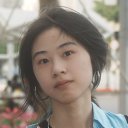
 Chenhan Jiang
· 3 previous affiliations
- Current
- PhD student · 2022–2026
- Huawei Technologies (China)2019–2022
- Researcher · 2019–2022
- Sun Yat-sen University2016–2019
- MS student · 2016–2019
Research Overview
Chenhan Jiang focuses on 3D generation, scene understanding, and representation learning. His early work addressed large-scale 2D object detection and neural architecture search before transitioning to 3D perception for autonomous driving. Currently, his research centers on text-to-3D generation, exploring methods to improve geometric consistency, semantic coherence, and structured modeling using large language models.
Research Trajectory
Jiang's early research concentrated on improving large-scale 2D object detection by integrating semantic reasoning and optimizing network architectures. He introduced Hybrid Knowledge Routed Modules for Large-scale Object Detection, which incorporated explicit structured constraints to address long-tail distribution problems in visual recognition. Building on this theme of global reasoning, he collaborated on Reasoning-RCNN: Unifying Adaptive Global Reasoning Into Large-Scale Object Detection., a framework designed to process potential objects collectively rather than in isolation. Concurrently, he investigated automated network design, proposing SP-NAS: Serial-to-Parallel Backbone Search for Object Detection to bridge the gap between classification-pretrained backbones and detection tasks. He also explored domain-specific architecture adaptation, developing ElixirNet: Relation-Aware Network Architecture Adaptation for Medical Lesion Detection to handle the unique challenges of medical imaging, such as high background similarity and severe class imbalance. During this period, he also participated in research on self-supervised methods for recovering spatial structures from monocular images in 3D Human Pose Machines with Self-Supervised Learning.
As his focus expanded into 3D environments, Jiang began addressing the data annotation bottleneck in LiDAR-based perception. He contributed to Exploring Geometry-aware Contrast and Clustering Harmonization for Self-supervised 3D Object Detection, adapting self-supervised learning pipelines to handle the complex geometric structures of 3D point clouds. To further support research in this domain, he helped develop the One Million Scenes for Autonomous Driving: ONCE Dataset, providing a massive collection of LiDAR and camera data to benchmark self-supervised and semi-supervised learning methods. His work in unsupervised representation learning continued with CO3: Cooperative Unsupervised 3D Representation Learning for Autonomous Driving, which advanced the research direction of Collaborative Perception for Networked Autonomy by utilizing vehicle-side point clouds for contrastive learning in dynamic outdoor scenes. Returning to fundamental detection pre-training, he also published Deeply Unsupervised Patch Re-Identification for Pre-Training Object Detectors, a method that learns discriminative local features by matching image patches across different views.
Most recently, Jiang's trajectory has shifted toward generative AI, specifically the synthesis of 3D assets from natural language. He authored A Survey On Text-to-3D Contents Generation In The Wild, which maps the algorithmic landscape of the field, including areas such as Optimizing 3D Representations via Score Distillation Sampling, Generative 3D Modeling with Artist-Like Topology, Lifting 2D Vision Models for 3D Shape Synthesis, and the broader area of Lifting 2D Generative Priors to 3D. To address common failure points in existing score distillation approaches, he developed JointDreamer: Ensuring Geometry Consistency and Text Congruence in Text-to-3D Generation via Joint Score Distillation, which models the joint distribution of multi-view images to improve geometric coherence. He further tackled the problem of semantic drift in multi-object generation with CoherenDream: Boosting Holistic Text Coherence in 3D Generation via Multimodal Large Language Models Feedback. Expanding beyond unstructured meshes, he collaborated on ShapeCraft: LLM Agents for Structured, Textured and Interactive 3D Modeling, a multi-agent framework that represents shapes as editable programs, contributing to the research direction of Closed Loop Visual Feedback for Multimodal Generation.
Current Directions
Jiang's current research is primarily focused on advancing text-to-3D generation and structured 3D modeling. His most recent work investigates methods to overcome the limitations of current generative pipelines, such as semantic drift and geometric inconsistency. By integrating multimodal large language models to provide feedback and represent 3D shapes as editable programs, he aims to create more coherent, interactive, and topologically sound 3D assets. This involves developing novel score distillation techniques and multi-agent frameworks that ensure generated models accurately reflect complex, multi-object text prompts while remaining editable for downstream applications.
Profile updated
Loading new papers…
Other researchers whose papers cluster into the same research directions — a proxy for overlapping technical interests and shared intellectual neighborhoods.
See something wrong? Report a mistake