

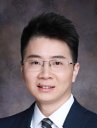
 Chengwen Luo
· 1 previous affiliation
- Shenzhen UniversitySince 2021
- Associate Professor · Since 2021
Research Overview
Chengwen Luo focuses on mobile sensing, pervasive computing, and applied machine learning for smart environments. His early work established self-calibrating indoor localization and activity recognition systems using ubiquitous devices. More recently, his research has expanded to encompass mobile edge computing optimization, multi-agent reinforcement learning for logistics, and foundation models for biometric analysis.
Research Trajectory
The evolution of Luo’s research begins with leveraging ubiquitous mobile devices to understand human behavior and context. Early work explored social dynamics through smartphone sensing, developing SocialWeaver: collaborative inference of human conversation networks using smartphones. This system utilized an adaptive speaker classification scheme to non-obtrusively cluster conversations and build social networks in situ.
Following this, his focus shifted significantly toward solving the challenges of indoor localization without relying on expensive, pre-deployed infrastructure. He introduced PiLoc: a self-calibrating participatory indoor localization system, which opportunistically merged user-contributed walking segments and signal strength data to automatically construct radio maps. This participatory sensing approach was later expanded to multi-floor environments in MPiLoc: Self-Calibrating Multi-Floor Indoor Localization Exploiting Participatory Sensing. Concurrently, he explored passive tracking methodologies, developing Pallas: Self-Bootstrapping Fine-Grained Passive Indoor Localization Using WiFi Monitors, which utilized off-the-shelf access points to infer smartphone locations without requiring active user cooperation.
As mobile crowd sensing and pervasive computing matured, Luo addressed the dual challenges of fine-grained activity recognition and user privacy. In the domain of health monitoring, he developed Brush like a Dentist: Accurate Monitoring of Toothbrushing via Wrist-Worn Gesture Sensing, an IMU-based system that applied novel signal preprocessing to handle the high variability in human brushing habits. Recognizing the privacy implications of widespread sensing, he also proposed the Salus algorithm in Predictable Privacy-Preserving Mobile Crowd Sensing: A Tale of Two Roles, providing a framework to quantify privacy risks against data reconstruction attacks while allowing users to predict utility loss.
Moving into the 2020s, Luo’s research integrated Internet of Things (IoT) infrastructure with novel sensing modalities for smart spaces. He investigated unobtrusive user identification using Radio Frequency Identification (RFID) technology. This included Gait Recognition as a Service for Unobtrusive User Identification in Smart Spaces, which framed gait analysis as a deployable service model, and RFaceID: Towards RFID-based Facial Recognition, which demonstrated the feasibility of using RFID tag matrices for facial recognition to overcome the lighting and privacy limitations of traditional vision-based systems.
In recent years, Luo has increasingly applied advanced machine learning techniques to complex systems optimization and large-scale data analysis. His work in mobile edge computing (MEC) includes RLCS: Towards a robust and efficient mobile edge computing resource scheduling and task offloading system based on graph neural network and An intelligent hybrid method: Multi-objective optimization for MEC-enabled devices of IoE, both of which address the computational and scheduling bottlenecks in the Internet of Everything (IoE).
His most recent work demonstrates a strong focus on deep learning architectures for specialized domains. In logistics, he contributed to Relational Trajectory-Entropy Augmented MADRL for Truck-Drone Collaborative Deliver With Mobile Charging Optimization, which utilizes multi-agent deep reinforcement learning and relational graph convolutional networks to coordinate heterogeneous vehicle routing. In industrial applications, he addressed incremental domain shifts in streaming process data with BiSDA: Bidirectional Self-Refining Domain Adaptation for Streaming-Evolving Industrial Soft Sensing. Returning to biometric analysis with modern deep learning paradigms, he also helped develop Silhouette-based Gait Foundation Model, a scalable, self-supervised foundation model for gait analysis that utilizes a part-aware training strategy to prevent feature homogenization across diverse tasks.
Current Directions
Luo’s most recent research investigates the application of advanced machine learning frameworks—such as foundation models, multi-agent reinforcement learning, and domain adaptation—to complex, dynamic environments. The latest papers in the evidence indicate a focus on scaling self-supervised representation learning for biometrics, optimizing collaborative autonomous systems (such as truck-drone delivery networks), and ensuring the robustness of soft sensors in industrial processes that experience continuous environmental fluctuations. Across these domains, a unifying theme is the development of intelligent, adaptive systems capable of handling real-world variability and resource constraints.
Profile updated
Loading new papers…
Other researchers whose papers cluster into the same research directions — a proxy for overlapping technical interests and shared intellectual neighborhoods.
See something wrong? Report a mistake