

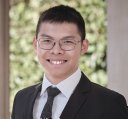
 Chengpiao Huang
· 2 previous affiliations
- Columbia UniversitySince 2022
- PhD student · Since 2022
- Undergrad student · 2018–2022
Research Overview
Chengpiao Huang focuses on statistical machine learning, data-driven decision-making, and learning under non-stationarity. His early work addresses the challenges of temporal distribution shifts, developing methods to adaptively select historical data in evolving environments. More recently, he investigates uncertainty quantification for generative artificial intelligence, particularly evaluating the reliability of large language models when used to simulate human survey responses.
Research Trajectory
Huang’s research initially concentrated on the theoretical and practical challenges of evaluating machine learning models in environments where data distributions change over time. In 2024, he contributed to research exploring the research direction of Adaptive Windowing for Non-Stationary Data Streams. The resulting paper, Model Assessment and Selection under Temporal Distribution Shift, addresses the reality that real-world environments—such as consumer preferences or financial markets—are rarely static. With collaborators, he investigated how to reliably identify trustworthy models when the underlying data generation process is evolving, contributing to the broader area of Balancing Sample Size and Relevance in Shifting Environments.
Continuing this focus on temporal drift, Huang investigated online learning methodologies for changing environments. In A Stability Principle for Learning Under Nonstationarity, he and his co-authors introduced a framework that adaptively selects relevant historical data by balancing bias and variance. By employing a novel function similarity measure and segmentation technique, the method achieves near-optimal performance without requiring prior knowledge of the non-stationarity. This approach demonstrated practical utility in complex, real-world domains such as electricity demand forecasting and hospital staffing.
In 2025, Huang's research expanded to address the intersection of generative artificial intelligence and decision-making. As large language models are increasingly deployed to simulate human responses in social science and market research, he led work examining the reliability of these "silicon subjects." His paper Uncertainty Quantification for LLM-Based Survey Simulations evaluates the statistical validity of replacing human participants with prompted personas. This research intersects with the area of Saturation Limits of Synthetic Data Scaling, as well as the research direction of Large Language Models as Silicon Subjects and the broader field of The Sim-to-Real Gap in Human Behavior Modeling.
Building directly on this evaluation of synthetic respondents, Huang further explored the statistical equivalence between human and machine data. The 2026 paper How Many Human Survey Respondents is a Large Language Model Worth? An Uncertainty Quantification Perspective formalizes the trade-offs and confidence intervals associated with LLM-generated survey data, providing a rigorous uncertainty quantification framework for researchers considering synthetic alternatives to traditional human polling.
Current Directions
The most recent papers in the evidence indicate a strong focus on the statistical foundations of generative AI, particularly when used as a proxy for human behavior. Recent work investigates uncertainty quantification for large language models deployed in survey simulations and social science research. A central open problem in this agenda is determining the exact statistical value and reliability of synthetic data compared to traditional human respondents. By developing rigorous frameworks to measure confidence and error in LLM-generated outputs, this research aims to establish principled guidelines for integrating artificial intelligence into empirical research, aligning with work in the area of Efficient Conformal Prediction for Tight Uncertainty Bounds.
Profile updated
Loading new papers…
Other researchers whose papers cluster into the same research directions — a proxy for overlapping technical interests and shared intellectual neighborhoods.
See something wrong? Report a mistake