

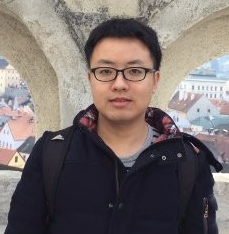
 Cheng Wang
· 3 previous affiliations
- Amazon (United States)Since 2020
- Senior Applied Scientist · Since 2023
- Applied Scientist · 2020–2023
- NEC2017–2020
- Research Scientist · 2017–2020
- Hasso Plattner Institute2013–2017
- PhD student · 2013–2017
12 other authors named Cheng Wang: Cheng Wang (Xiamen University · 440 papers), Cheng Wang (Huawei Technologies (China) · 91 papers), Cheng Wang (76 papers), Cheng Wang (7 papers), Cheng Wang (National University of Singapore · 5 papers), and 7 more
Research Overview
Cheng Wang focuses on multimodal representation learning, semantic feature extraction, and the reliability of large-scale neural architectures. His work has evolved from developing specialized convolutional and recurrent models for computer vision and natural language processing to addressing fundamental challenges in model calibration, uncertainty estimation, and the efficiency of reasoning agents. By integrating cross-modal data—including text, images, and audio—Wang’s research seeks to improve how machines interpret complex semantic environments while ensuring the resulting models are both robust and computationally efficient.
Research Trajectory
The early phase of Wang’s research, beginning around 2015, was characterized by an intensive focus on multimodal learning and semantic space modeling. During this period, he developed methods to bridge the gap between disparate data types, such as visual and textual information, to improve high-level understanding tasks. This included the development of concept-based models for topic generation that could handle missing modalities and the exploration of multilevel semantic features to enhance text categorization. His work in this era also extended to real-time computer vision, where he participated in the development of systems for scene text recognition and action recognition in surveillance contexts. These efforts often utilized Convolutional Neural Networks (CNNs) and Maximally Stable Extremal Regions (MSERs) to achieve high recall and precision in dynamic environments.
By 2016, Wang’s focus shifted toward the temporal dynamics of multimodal data, specifically through the use of Long Short-Term Memory (LSTM) networks. He led the development of bidirectional LSTM architectures for image captioning, which leveraged both historical and future context to generate more descriptive and accurate textual representations of visual scenes. This period also saw an expansion into video analysis, where he proposed frameworks for action recognition that fused spatial, temporal, and audio clues. This interest in complex, multi-layered data systems also touched upon broader societal applications, such as exploring Culturally Resonant Strategies for Effective Public Health Communication, where the alignment of messaging with diverse global contexts mirrors the technical challenge of aligning multimodal data features.
In the late 2010s and early 2020s, Wang’s work transitioned toward the optimization and reliability of decentralized and adversarial systems. He addressed the practical challenges of data sparsity and imbalance in recommender systems by applying adversarial learning and domain adaptation techniques. This work aimed to learn transferable latent representations across different domains, ensuring that recommendation engines remained effective even with limited user-item interaction data. This period also reflects an engagement with the theoretical foundations of Contract Menus for Overcoming Information Asymmetry, which provides a framework for managing information asymmetry in decentralized networks. Furthermore, he explored the mathematical constraints of physical systems, such as Projection Methods for Unit Sphere Constrained Dynamics, which are critical for maintaining consistency in micromagnetics and geometric processing simulations.
Recently, Wang has turned his attention to the reliability and efficiency of modern Large Language Models (LLMs) and reasoning agents. His current research addresses the critical issue of model calibration—ensuring that a model’s confidence scores accurately reflect its actual predictive accuracy. This work is closely tied to the broader problem of Reliability and Bias Propagation in Evidence Synthesis, where the stability of high-level conclusions depends on the integrity of the underlying data and model behavior. His most recent contributions involve developing nonlinear steering methods for LLMs to reduce output verbosity and improve reasoning efficiency, directly addressing the emerging threat of Adversarial Overthinking and Computational Denial of Service.
Current Directions
Wang’s current research program is centered on three primary pillars: model calibration, uncertainty estimation, and efficient reasoning. As machine learning models are increasingly deployed in high-stakes domains like medical diagnosis and autonomous systems, understanding the certainty of their predictions has become paramount. Wang is developing meta-regularization techniques and stochastic attention mechanisms to provide unbiased calibration and robust uncertainty estimates without sacrificing predictive performance.
Additionally, he is investigating the application of dynamic management principles to large-scale infrastructure, similar to the strategies used in Dynamic Capacity Management for Modern Power Grids. This involves moving beyond static limits toward more adaptive, input-dependent control mechanisms. In the context of LLMs, this manifests as "steering" models toward concise and accurate reasoning paths, preventing the computational waste associated with "overthinking" and protecting systems from Model Denial of Service (MDoS) attacks.
Representative Work
Concept-Based Multimodal Learning for Topic Generation In this 2015 paper, Wang introduced the Concept-Based Multimodal Learning model (CMLM) to address the challenge of generating document topics from heterogeneous data sources. The model is specifically designed to handle scenarios where one modality (such as images) might be missing, by extracting semantic concepts from unlabeled data and combining them with text. This work demonstrated that CMLM could produce more representative topics than traditional Latent Dirichlet Allocation (LDA) by leveraging cross-modal concept similarities.
Does Multilevel Semantic Representation Improve Text Categorization? Wang explored the fusion of traditional "Bag-of-words" features with multilevel semantic features to improve text categorization. By extending Online LDA into a multilevel topic model, he enabled the learning of semantic spaces with varying levels of granularity. The research, evaluated on large-scale datasets like Wikipedia, showed that different topic levels capture distinct semantic scopes, which collectively enhance the accuracy of categorization tasks.
Image Captioning with Deep Bidirectional LSTMs This work presented an end-to-end trainable deep bidirectional LSTM model for generating image descriptions. By combining a CNN with two separate LSTM networks, the model learns long-term visual-language interactions by utilizing both history and future context within a high-level semantic space. Wang also introduced data augmentation techniques to prevent overfitting, establishing a robust framework for hierarchical visual-language embeddings.
RecSys-DAN: Discriminative Adversarial Networks for Cross-Domain Recommender Systems Addressing the persistent issues of data sparsity and imbalance in recommendation engines, Wang proposed RecSys-DAN. This method leverages adversarial learning and domain adaptation to learn transferable latent representations for users and items. Unlike existing approaches, this model focuses on alleviating both cross-domain and within-domain sparsity, facilitating more accurate interactions in decentralized recommendation environments.
Towards Unbiased Calibration using Meta-Regularization In this 2024 paper, Wang tackled the problem of model miscalibration in deep neural networks. He proposed a meta-regularization approach consisting of a "gamma-net" (a meta-learner that outputs sample-wise regularization values) and a Smooth Expected Calibration Error (SECE) surrogate. SECE provides a Gaussian-kernel-based, unbiased, and differentiable alternative to standard ECE, allowing for the smooth optimization of better-calibrated models.
Nonlinear Steering for Token-Efficient Reasoning in LLMs via Flow Matching As the senior author of this 2026 study, Wang introduced FlowSteer, a method for improving the efficiency of Large Reasoning Models (LRMs). Moving beyond the linear representation hypothesis, FlowSteer uses Flow Matching to learn a nonlinear transformation between verbose and concise reasoning distributions. This allows for precise, input-dependent control over the model's reasoning process, significantly reducing token usage while maintaining reasoning quality.
Profile updated
Loading new papers…
Other researchers whose papers cluster into the same research directions — a proxy for overlapping technical interests and shared intellectual neighborhoods.
See something wrong? Report a mistake