

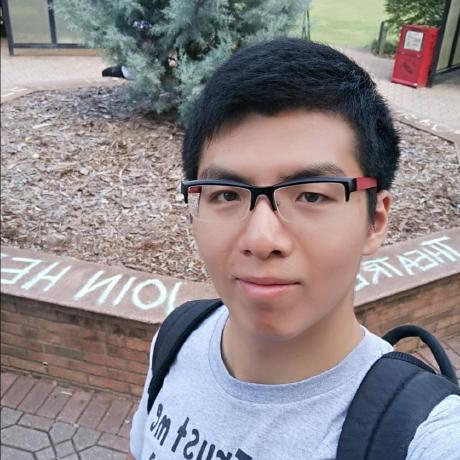
 Cheng Meng
· 1 previous affiliation
- Renmin University of ChinaSince 2020
- Assistant Professor · Since 2020
Research Overview
Cheng Meng focuses on high-dimensional data analysis, optimal transport, and scalable subsampling methodologies. His early work developed space-filling basis selection and projection pursuit techniques to overcome the curse of dimensionality in large-scale statistical estimation. More recently, his research addresses the efficient computation of optimal transport maps and the optimization of sparse mixture-of-experts models.
Research Trajectory
Beginning his active publication record around the completion of his doctoral studies, Meng’s early research addressed the computational bottlenecks of high-dimensional statistical learning. In 2020, he participated in the development of LowCon: A design-based subsampling approach in a misspecified linear modeL, a method for strategic sample selection that contributed to the broader area of Approximate Nearest Neighbor Search in High Dimensions and the research direction of Latin Hypercube Sampling for High-Dimensional Parameter Spaces. Concurrently, he developed techniques for More efficient approximation of smoothing splines via space-filling basis selection, demonstrating that strategically selecting basis functions spread across the data space could achieve full-sample prediction accuracy with drastically reduced computational cost. He expanded on this approach in Smoothing Splines Approximation Using Hilbert Curve Basis Selection (2021), utilizing space-filling curves to intelligently select basis functions even when data is non-uniformly distributed, thereby advancing work in the area of Low Discrepancy Sampling for High Dimensional Problems.
In 2021, Meng’s focus expanded significantly into optimal transport (OT) and dimension reduction. To overcome the curse of dimensionality in estimating large-scale optimal transport maps, he introduced a novel projection pursuit regression method in Large scale optimal transport map approximation using projection pursuit. This approach adaptively selects informative projection directions rather than relying on random selection, improving convergence in practical applications. He also applied OT to supervised dimension reduction in Sufficient dimension reduction for classification using principal optimal transport direction (2021), estimating subspace bases by leveraging the principal directions of the optimal transport coupling between data from different response categories.
Continuing his work on scalable estimation, Meng guided the development of deterministic subsampling techniques for sparse data in Core-Elements for Large-Scale Least Squares Estimation (2022). By selecting the most significant individual elements from a predictor matrix rather than entire rows, the method improved both accuracy and efficiency, particularly in the presence of outliers. That same year, he merged optimal transport with space-filling designs to create SPARTAN, detailed in An optimal transport approach for selecting a representative subsample with application in efficient kernel density estimation. This model-free subsampling method preserves underlying probability distributions more effectively than traditional random sampling, contributing to several research directions including Repulsive Sampling for Uniform Space Filling, Multivariate Ranking and Quantiles via Optimal Transport, and Scaling Optimal Transport via One-Dimensional Projections. To further scale OT to massive datasets, he directed the creation of SPAR-SINK in Importance Sparsification for Sinkhorn Algorithm (2023), which intelligently sparsifies the kernel matrix to reduce the Sinkhorn algorithm's computational complexity from quadratic to linear per iteration.
In his most recent work (2025–2026), Meng has applied optimal transport and efficient sampling methodologies to complex machine learning systems and computer vision. He participated in research applying OT to 3D scene rendering in Gaussian Herding across Pens: An Optimal Transport Perspective on Global Gaussian Reduction for 3DGS (2025), addressing the massive memory footprints of 3D Gaussian Splatting. He also contributed to Iterative optimal transport for multimodal image registration (2026). In the domain of large-scale model architectures, he oversaw the development of MP-MoE in Breaking the Echo Chamber: A Dynamic Ensemble Pruning Perspective on MoE (2026), using Mahalanobis distance to penalize redundant expert activations and improve performance without adding inference latency. Finally, he led the design of SEINT in An Efficient SE(p)-Invariant Transport Metric Driven by Polar Transport Discrepancy-based Representation (2026), a highly efficient metric for comparing probability distributions that maintains rotation and translation invariance while drastically reducing the computational cost associated with the Gromov-Wasserstein distance.
Current Directions
The most recent papers in the evidence indicate a strong focus on applying optimal transport and statistical efficiency to modern machine learning architectures and spatial computing. Recent work investigates the optimization of 3D scene representations, specifically reducing the memory footprint of Gaussian splatting for real-time rendering. Concurrently, Meng is addressing architectural inefficiencies in large language models, focusing on dynamic ensemble pruning to mitigate expert homogenization in sparse Mixture-of-Experts (MoE) models. His ongoing methodological research also includes the development of highly efficient, rotation- and translation-invariant transport metrics for comparing complex probability distributions in high-dimensional spaces.
Profile updated
Loading new papers…
Other researchers whose papers cluster into the same research directions — a proxy for overlapping technical interests and shared intellectual neighborhoods.
See something wrong? Report a mistake