

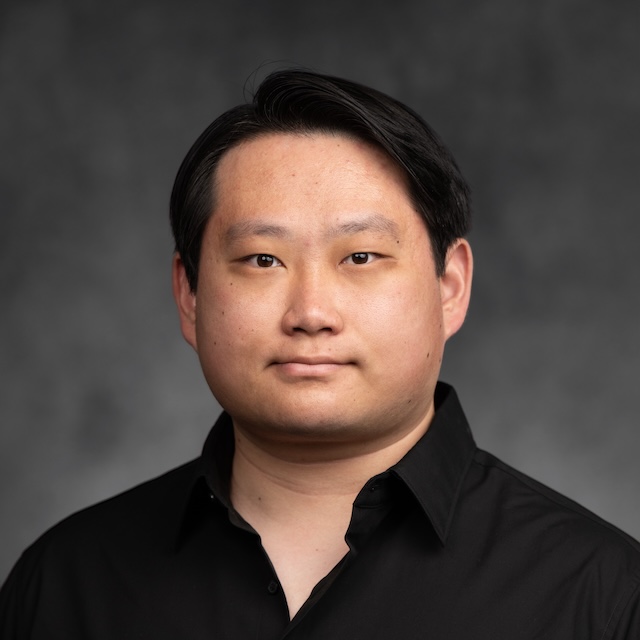
 Cheng Jiang
· 3 previous affiliations
- University of MichiganSince 2015
- PhD student · Since 2021
- MS student · 2019–2021
- Undergrad student · 2015–2019
- Intern · 2025
- Genentech2025
- Intern · 2025
1 other author named Cheng Jiang: Cheng Jiang (Shenzhen Research Institute of Big Data · 6 papers)
Research Overview
Cheng Jiang focuses on computational pathology, medical image analysis, and the integration of biological knowledge into genomic discovery. His early work addresses the challenges of real-time surgical decision support and gigapixel whole-slide image representation using self-supervised learning. More recently, his research investigates interpretable machine learning methods for genome-wide association studies.
Research Trajectory
Jiang’s research initially concentrated on advancing computational methods for clinical diagnostics, particularly in the context of neurosurgery and digital pathology. In 2022, he developed a novel workflow combining stimulated Raman histology (SRH) with deep learning to facilitate intraoperative brain tumor diagnosis. This work culminated in OpenSRH: optimizing brain tumor surgery using intraoperative stimulated Raman histology, which introduced the first public dataset of clinical SRH images, comprising over 1,300 unique whole-slide optical images from more than 300 patients. By providing a foundation for the automated interpretation of SRH images, this research significantly advanced the research direction of Virtual Histology for Real-Time Surgical Guidance. The project also intersected with several broader methodological challenges in medical machine learning, contributing to areas such as Multiple Instance Learning for Weakly Supervised Image Classification and Cross-Institutional Generalization in Medical Deep Learning. Furthermore, the technical infrastructure of this work touched upon the area of Supervised Contrastive Learning for Robust Representation, while addressing the practical difficulties inherent to the research direction of Mitigating Long Tailed Distributions in Medical Imaging and exploring the area of The Role of Convolutional Inductive Biases in Low Data Regimes.
Building on this foundation in gigapixel image analysis, Jiang subsequently collaborated on methods to extract meaningful features from massive pathology images without relying on exhaustive manual annotations. He contributed to A self-supervised framework for learning whole slide representations, which introduced Slide Pre-trained Transformers (SPT). This framework effectively learns transferable representations from whole-slide images (WSIs) using self-supervised techniques, demonstrating broad applicability across different patch encoders and improving performance on various downstream diagnostic tasks.
More recently, Jiang’s methodological focus has expanded from medical imaging to computational genomics, specifically targeting the interpretability of Genome-Wide Association Studies (GWAS). He introduced a context-aware approach in Incorporating contextual information into KGWAS for interpretable GWAS discovery. This research integrates cell-type-specific biological knowledge and data from Perturb-seq experiments to prune large, general knowledge graphs. By doing so, the method reduces model complexity while simultaneously improving the identification of disease-associated genetic loci and uncovering robust biological mechanisms.
Current Directions
The most recent papers in the evidence indicate a shift toward integrating structured biological knowledge into large-scale genomic models. Current work investigates how context-aware graph-based methods can enhance the discovery power of Genome-Wide Association Studies. By leveraging cell-type-specific data and experimental modalities like Perturb-seq, this research addresses the challenge of maintaining model interpretability and reducing complexity while identifying robust, disease-associated genetic mechanisms.
Profile updated
| Title | Venue | Year |
|---|---|---|
| AI-driven label-free Raman spectromics for intraoperative spinal tumor assessment | Npj Digit. Medicine | 2026 |
| Incorporating contextual information into KGWAS for interpretable GWAS discovery | LMRL @ ICLR | 2026 |
| A self-supervised framework for learning whole slide representations | AIM-FM @ NeurIPS | 2024 |
| OpenSRH: optimizing brain tumor surgery using intraoperative stimulated Raman histology | NeurIPS | 2022 |
Loading new papers…
Other researchers whose papers cluster into the same research directions — a proxy for overlapping technical interests and shared intellectual neighborhoods.
See something wrong? Report a mistake