

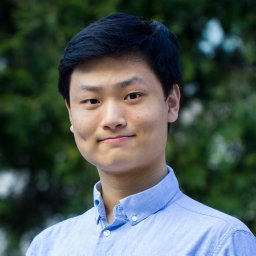
 Cheng-Hao Liu
· 5 previous affiliations
- California Institute of TechnologySince 2025
- Postdoctoral Fellow · Since 2025
- Future House, Inc.Since 2025
- FutureHouse Postdoctoral Fellow · Since 2025
- Dreamfold2022–2025
- Co-founder · 2022–2025
- Research Assistant · 2019–2024
- McGill University2016–2024
- Research Assistant · 2017–2024
- PhD student · 2019–2024
- Graduate Teaching Assistant · 2019–2020
- Undergraduate Teaching Assistant · 2018–2019
- Undergrad student · 2016–2019
1 other author named Cheng-Hao Liu: Cheng Hao Liu (1 paper)
Research Overview
Cheng-Hao Liu focuses on the intersection of machine learning and chemical sciences, with a primary emphasis on Navigating the Stability Novelty Frontier in Generative Chemistry. Currently a FutureHouse postdoctoral fellow at Caltech supervised by Prof. Frances Arnold, his research investigates how emergent physical properties arise from molecular and supramolecular structures. His work spans the development of generative models, active learning frameworks, and Geometric Generative Models for Biomolecular Design, particularly for electronically or catalytically functional systems. Liu completed his Ph.D. at McGill University under Prof. Dmytro Perepichka while concurrently studying at Mila with Prof. Yoshua Bengio.
Research Trajectory
Liu's early research addressed the fundamental challenge of chemical feasibility in de novo design. In 2020, he investigated how Graph Neural Networks (GNNs) could approximate retrosynthetic pathways to bias molecular search toward synthesizable candidates. This period marked a transition from purely generative approaches to those constrained by the practicalities of laboratory synthesis, addressing the tendency of models to propose chemically invalid structures.
Following this, his work at Mila and McGill focused on the development and evaluation of Generative Flow Networks (GFlowNets). This phase emphasized the importance of sampling diversity and thermodynamic accuracy in molecular design. By treating molecular generation as a sequential decision-making process, Liu and his collaborators sought to sample candidates proportionally to their reward—such as biological activity or potential energy—effectively balancing the discovery of novel structures with the requirement for physical stability.
More recently, his focus has shifted toward Scaling Generative Models for 3D Molecular Structures. This involves moving beyond 2D graph abstractions to capture the spatial arrangements, or conformations, that dictate molecular function. His work on organic crystals and protein design represents an integration of these generative frameworks with high-fidelity physical constraints, aiming to predict complex 3D arrangements directly from chemical graphs.
Current Directions
At Caltech, Liu is applying computational frameworks to protein design and catalytically functional systems. A central interest is the use of active learning to explore high-dimensional chemical spaces where experimental data is sparse. This includes Adaptive Decision Making Under Dynamic Cost Constraints, where the cost of evaluation—whether through high-throughput experimentation or expensive quantum simulations—must be balanced against the potential for scientific discovery.
He is also investigating Bypassing the Cubic Scaling Bottleneck in Quantum Chemistry to bypass the computational bottlenecks of traditional quantum chemistry. By developing models that can predict crystal structures and electronic properties rapidly, he aims to accelerate the discovery of organic electronics and battery materials. His leadership in the community is further evidenced by his role as the lead organizer of the GEM workshop series at ICLR, which focuses on integrating generative and experimental platforms for biomolecular design.
Representative Work
RetroGNN: Approximating Retrosynthesis by Graph Neural Networks for De Novo Drug Design (2020) represents Liu's early first-author work on ensuring the chemical feasibility of generated molecules. The paper investigates training deep GNNs to approximate the outputs of retrosynthesis planning software. By using this approximation as a proxy for synthetic accessibility, the research demonstrates a method to bias the search process toward drug-like molecules that are more likely to be successfully synthesized in a laboratory setting.
Towards equilibrium molecular conformation generation with GFlowNets (2023) details a collaborative effort to use GFlowNets for sampling molecular conformations from the Boltzmann distribution. This work is significant for its shift toward thermodynamic realism, showing that GFlowNets can discover a diverse set of low-energy conformations for flexible drug-like molecules. This approach allows for the reproduction of molecular potential energy surfaces by sampling proportionally to the thermodynamic reward.
Diffusion Generative Flow Samplers: Improving learning signals through partial trajectory optimization (2024) bridges the gap between diffusion-based sampling and GFlowNets. As a key contributor to this methodological advancement, Liu helped address the "credit assignment" problem in high-dimensional sampling. By parameterizing an additional flow function, the model learns from partial trajectory segments, leading to more stable training and more accurate estimates of normalization constants in complex distributions.
OXtal: An All-Atom Diffusion Model for Organic Crystal Structure Prediction (2025), where Liu serves as the senior author, introduces a 100M-parameter diffusion model for predicting the 3D arrangement of organic crystals. The model utilizes a novel "shell sampling" training scheme and a high-capacity Transformer architecture to predict crystal structures directly from 2D chemical graphs. This work achieves state-of-the-art accuracy while significantly reducing the computational cost compared to traditional quantum chemistry simulations.
Generating \pi-Functional Molecules Using STGG+ with Active Learning (2025) demonstrates Liu's senior-author leadership in integrating supervised learning with active learning loops. The research addresses the challenge of generating molecules with out-of-distribution properties, specifically for organic $\pi$-functional systems. By iteratively generating, evaluating, and fine-tuning the model, the approach expands its knowledge base into novel chemical spaces while maintaining synthesizability, avoiding the common "reward-hacking" pitfalls of reinforcement learning.
Navigating Ternary Doping in Li‐ion Cathodes With Closed‐Loop Multi‐Objective Bayesian Optimization (2026) showcases Liu's participation in applying machine learning to complex materials science problems. The study employs a multi-objective Bayesian optimization approach to navigate a search space of approximately 14 million unique combinations for Li-ion battery cathodes. This closed-loop workflow efficiently identifies optimal compositions for multiple properties simultaneously, demonstrating the scalability of these computational methods in experimental materials discovery.
Profile updated
Loading new papers…
Other researchers whose papers cluster into the same research directions — a proxy for overlapping technical interests and shared intellectual neighborhoods.
See something wrong? Report a mistake