

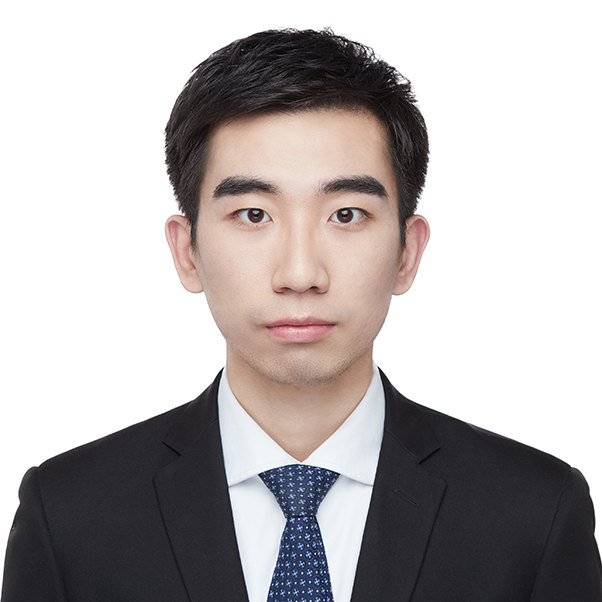
 Chenchen Jing
· 2 previous affiliations
- Zhejiang University of TechnologySince 2025
- Assistant Professor · 2025–2030
- Current
- Zhejiang University2022–2025
- Postdoc · 2022–2025
Research Overview
Chenchen Jing focuses on vision-language reasoning, compositional zero-shot learning, and the generalization capabilities of multimodal models. His trajectory spans early work in visual grounding and question answering to extensive research on how models compose known visual primitives to recognize unseen concepts. Currently, his research addresses continual learning and the temporal dynamics of diffusion language models.
Research Trajectory
Chenchen Jing’s early work centered on cross-domain retrieval and visual grounding. In 2019, he developed Heterogeneous Hashing Network for Face Retrieval Across Image and Video Domains, which projected face images and videos into a common space to generate compact binary hash representations. Moving into vision-language alignment, he formulated visual grounding as a graph matching problem in Visual-Semantic Graph Matching for Visual Grounding (2020), using cross-modal graph convolutional networks to align the structural layouts of sentences and images.
He subsequently addressed the pervasive issue of language priors in visual question answering (VQA). In Overcoming Language Priors in VQA via Decomposed Linguistic Representations, he introduced a modular attention mechanism to parse questions into distinct phrase representations, forcing the model to rely on visual evidence rather than statistical linguistic correlations. This focus on structured reasoning evolved into modeling the dynamic, step-by-step nature of cognitive processes. He cast visual relational reasoning as a path-routing task over structured visual graphs in Learning the Dynamics of Visual Relational Reasoning via Reinforced Path Routing (2022). Expanding on this logical framework, he tackled the challenge of coherence in Maintaining Reasoning Consistency in Compositional Visual Question Answering, proposing a dialog-like method to ensure models did not contradict themselves when answering complex compositional questions and their simpler sub-questions.
By 2023, during his affiliation with Zhejiang Lab, his research heavily emphasized compositional zero-shot learning (CZSL)—the ability of models to recognize novel combinations of known attributes and objects. He contributed to investigations into the role of semantic equivariance in the area of Compositional Generalization in Vision Language Models through Exploring the Effect of Primitives for Compositional Generalization in Vision-and-Language. This work also advanced the research direction Attribute Decomposition for Zero Shot Generalization. He further progressed CZSL by treating attributes as dynamic, context-dependent features rather than static labels. In Learning Conditional Attributes for Compositional Zero-Shot Learning, he co-developed a network that generates custom attribute embeddings on the fly, contributing to the broader area of Compositional Generalization for Zero-Shot Reasoning and work in Modeling Context-Dependent Visual Attributes.
Continuing this trajectory into 2024, he proposed explicitly retrieving knowledge of seen primitives from training databases in Retrieval-Augmented Primitive Representations for Compositional Zero-Shot Learning. As large vision-language models (LVLMs) became prominent, he investigated their in-context learning capabilities. In In-Context Compositional Generalization for Large Vision-Language Models, he and collaborators identified how redundant visual information can dominate similarity calculations, proposing methods to mitigate this and improve in-context compositional generalization.
In 2025, his work on CZSL expanded to handle complex interactions and distribution shifts. He participated in designing a dual-stream conditional network to model the mutual interactions between objects and attributes in Learning Dual-Stream Conditional Concepts in Compositional Zero-Shot Learning. He also addressed the challenge of recognizing unseen compositions when mixed with seen ones during testing, framing it as an outlier detection problem in Seeing the Unseen: Composing Outliers for Compositional Zero-Shot Learning.
Simultaneously, he began exploring continual learning paradigms. He co-proposed a new setting where models sequentially learn new attribute-object compositions in Composition-Incremental Learning for Compositional Generalization, utilizing pseudo-replay and linguistic distillation to prevent semantic drift. He further contributed to continual learning architectures by guiding the development of adaptive model ensembles in Adaptive Model Ensemble for Continual Learning. Most recently, his research has expanded into the mechanics of diffusion-based language models. In Time Is a Feature: Exploiting Temporal Dynamics in Diffusion Language Models (2026), he collaborated on analyzing the "temporal oscillation" phenomenon—where models generate correct answers during intermediate denoising steps but overwrite them later—and helped introduce strategies to harness the denoising timeline as a feature for improved reasoning.
Current Directions
The most recent papers in the evidence indicate a dual focus on continual learning frameworks and the internal dynamics of generative models. In the domain of compositional generalization, recent work investigates how models can sequentially acquire new attribute-object compositions without suffering from semantic drift, utilizing incremental learning and adaptive ensembles. Concurrently, his research addresses the temporal mechanics of diffusion language models, specifically exploring how intermediate denoising steps can be leveraged to stabilize and improve reasoning performance without requiring additional training.
Profile updated
Loading new papers…
Other researchers whose papers cluster into the same research directions — a proxy for overlapping technical interests and shared intellectual neighborhoods.
See something wrong? Report a mistake