

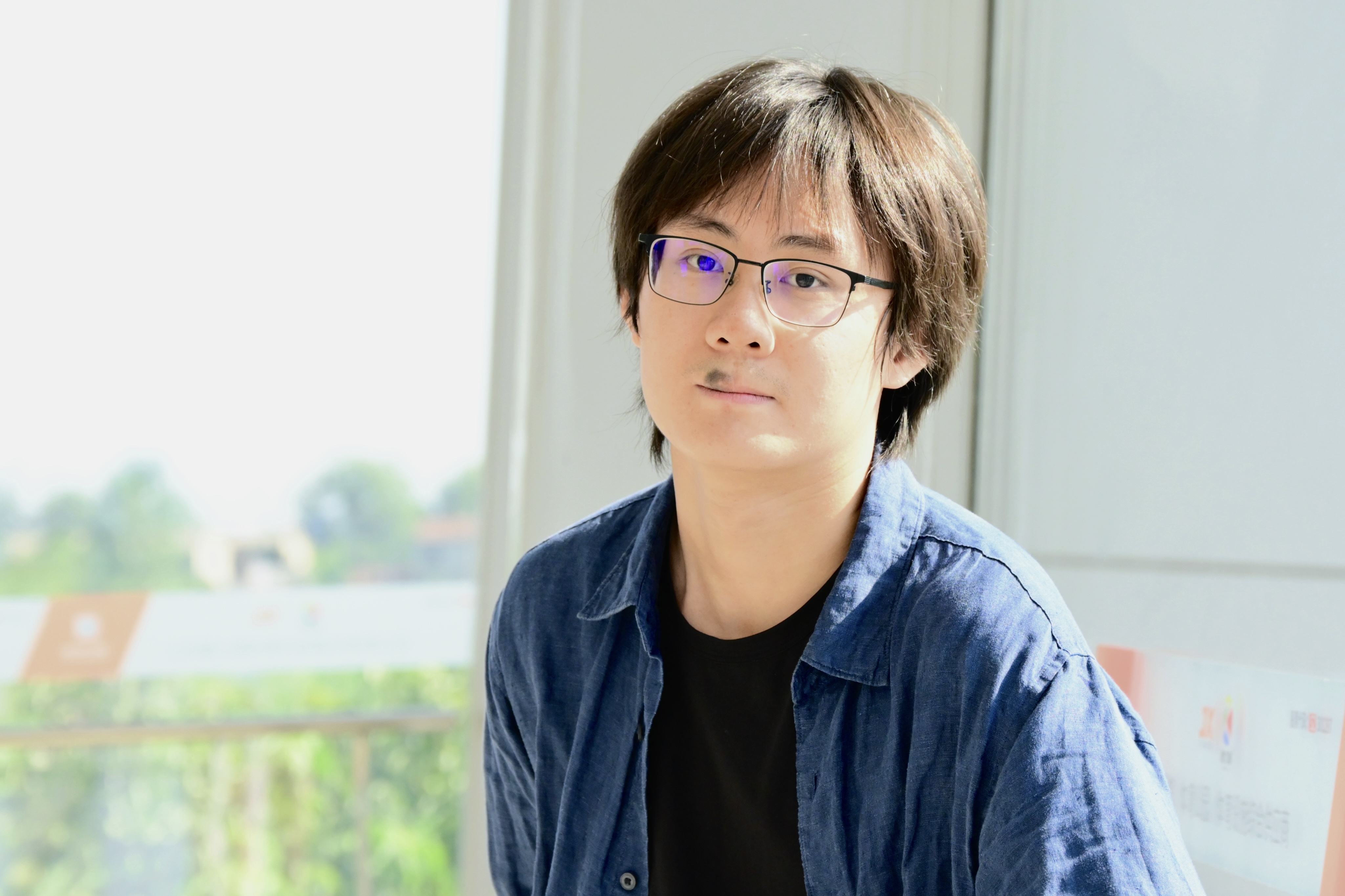
 Chenbo Jiang
· 4 previous affiliations
- Westlake UniversitySince 2024
- Intern · Since 2024
- McGill UniversitySince 2025
- PhD student · Since 2025
- Chinese Academy of Sciences2022–2024
- Intern · 2022–2024
- Nanjing University of Science and Technology ZiJin College2019–2023
- Undergrad student · 2019–2023
Research Overview
Chenbo Jiang focuses on the intersection of computer vision, computer graphics, and efficient machine learning, with a particular emphasis on 3D geometry reconstruction and neural physical simulation. His work addresses the challenge of balancing computational efficiency with topological and physical fidelity, evolving from the optimization of neural network architectures to the development of novel representations for 3D shapes and their dynamics. By integrating Differentiable Masking for Joint Optimization of Discrete Structures with geometric priors, Jiang’s research seeks to bridge the gap between implicit neural representations and explicit, simulation-ready manifolds.
Research Trajectory
Jiang’s early research focused on the problem of Preserving Model Capabilities Under Aggressive Compression. During this period, his work centered on improving the parameter efficiency of convolutional neural networks (CNNs). A primary challenge in this domain is the trade-off between the performance gains offered by dynamic mechanisms and the significant increase in parameter count they typically require. Jiang addressed this by exploring Generalizing Model Pruning Across Diverse Neural Architectures and CNNs, developing methods to prune redundant weights while maintaining the adaptive capabilities of dynamic convolutions. This work established a foundation in discrete optimization and efficient inference that would later inform his approach to geometric problems.
In 2023, Jiang shifted his focus toward 3D computer vision, specifically the problem of Differentiable Surface Extraction for Mesh Optimization. Traditional 3D reconstruction methods often struggle to reconcile the mathematical elegance of implicit functions, such as Signed Distance Fields (SDFs), with the practical utility of explicit polygonal meshes. Jiang’s work in this area introduced a novel "uplifting" strategy, representing 3D shapes as slices of higher-dimensional structures. This approach was designed to achieve Watertight Manifold Reconstruction for Physical Simulation, ensuring that reconstructed meshes possess the topological integrity required for engineering and scientific applications rather than just visual plausibility.
More recently, Jiang has extended these geometric insights into the realm of neural physical simulation. His current work addresses the complexities of modeling deformable object collisions and multi-body interactions. This trajectory represents a move from static shape reconstruction to the modeling of dynamic, time-evolving systems. By incorporating physical symmetries and equivariance into neural architectures, Jiang aims to develop simulators that are both robust to coordinate transformations and capable of handling complex solid mechanics.
Current Directions
Jiang’s current research is characterized by three primary themes:
Equivariant Neural Simulation Building on his background in efficient architectures, Jiang is developing simulators that respect physical symmetries. This involves the use of equivariant encoders and Graph Neural Ordinary Differential Equations (ODEs) to model the interactions of deformable objects. The goal is to create simulators that remain robust under rotation and translation while accurately capturing the nuances of collision dynamics.
High-Fidelity 3D Refinement Jiang continues to work on the Geometric Initialization Constraints for High Fidelity 3D Refinement. This involves using segmentation-guided optimization to improve the quality of 3D Gaussian Splatting and other novel view synthesis techniques. By moving away from "from-scratch" optimization and toward a coarse-to-fine paradigm, this work seeks to produce high-fidelity 3D assets that are both efficient to render and accurate in their geometry.
Topologically Flexible Representations A recurring challenge in Jiang's work is the representation of complex, varying topologies. He continues to explore methods that combine the flexibility of implicit neural fields with the speed and editability of explicit meshes. This research is particularly relevant for reconstructing objects with complex genus (e.g., objects with multiple holes or interconnected parts) where standard mesh deformation techniques often fail.
Representative Work
NeuralSlice: Neural 3D Triangle Mesh Reconstruction via Slicing 4D Tetrahedral Meshes As the lead author of this work, Jiang introduced a method for 3D shape reconstruction that represents objects as the intersection of a deformable 4D tetrahedral mesh and a learnable 4D hyperplane. This "NeuralSlice" approach allows for the reconstruction of complex and varying topologies in a purely explicit fashion. By uplifting the problem to a higher dimension, the method avoids the limitations of traditional mesh deformation while maintaining a computational speed significantly faster than state-of-the-art implicit methods. The resulting meshes are direct manifolds, making them suitable for downstream applications in physical simulation.
SD-Conv: Towards the Parameter-Efficiency of Dynamic Convolution In this work, Jiang served as a primary contributor to the development of Sparse Dynamic Convolution (SD-Conv). The framework integrates mask-based unstructured pruning with dynamic convolution mechanisms. By designing a binary mask derived from a learnable threshold, the method prunes static kernels to reduce redundancy while retaining the performance benefits of dynamic inference. This research addressed the "parameter wall" in efficient CNN design, providing a path toward deploying sophisticated dynamic models on resource-constrained hardware.
EqCollide: Equivariant and Collision-Aware Deformable Objects Neural Simulator Jiang contributed to the development of EqCollide, an end-to-end equivariant neural simulator for deformable object collisions. The system utilizes an equivariant encoder to map object geometry and velocity into latent control points, which are then processed by a collision-aware Graph Neural Network-based Neural ODE. This architecture ensures that the simulation remains perfectly robust to physical symmetries like rotation and translation. The work demonstrates a significant reduction in error compared to non-equivariant baselines, particularly in complex multi-body interaction scenarios.
SeG-Gaussian: Segmentation-Guided 3D Gaussian Optimization for Novel View Synthesis In this research, Jiang participated in the development of segmentation-guided techniques for 3D Gaussian Splatting. The work focuses on using semantic information to guide the optimization of 3D Gaussians, leading to more accurate geometry and better-defined boundaries in novel view synthesis. This approach aligns with the broader trend of using coarse-to-fine refinement strategies to achieve high-fidelity 3D assets from limited input data.
Profile updated
Loading new papers…
Other researchers whose papers cluster into the same research directions — a proxy for overlapping technical interests and shared intellectual neighborhoods.
See something wrong? Report a mistake