

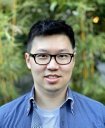
 Chen-Yu Yen
· 2 previous affiliations
- ByteDance (China)Current
- Researcher · Current
- New York University2018–2024
- PhD student · 2018–2024
Research Overview
Chen-Yu Yen focuses on the intersection of reinforcement learning, network optimization, and adaptive signal acquisition. His work explores how machine learning can replace or augment traditional heuristics in complex, high-dimensional systems, ranging from Internet congestion control and software-defined networking to medical imaging and AI infrastructure. By moving away from static, human-designed rules toward dynamic, task-driven strategies, his research addresses fundamental trade-offs between throughput, latency, and acquisition speed.
Research Trajectory
Yen’s research trajectory is characterized by a transition from classical computer graphics toward the application of reinforcement learning (RL) in systems optimization and signal processing. His early work in 2014, such as Visibility Filtering for Producing Indirect Illumination, addressed visibility filtering in the context of rendering, a problem rooted in efficient spatial sampling. This early interest in sampling and filtering provided a foundation for his later, more complex work in adaptive data acquisition.
Between 2019 and 2023, Yen’s focus shifted significantly toward Balancing Throughput and Latency in Stochastic Networks. This period of his career was dedicated to solving the "bufferbloat" problem—the high latency caused by excessive buffering in cellular and wide-area networks. Traditional Transmission Control Protocol (TCP) algorithms often struggle in the volatile environments of cellular networks, where bandwidth fluctuates rapidly. Yen developed a series of learning-based approaches that treat congestion control as a sequential decision-making problem. Rather than proposing a total protocol redesign, he introduced RL-based "plug-ins" that could dynamically cap the congestion windows of existing schemes like TCP Cubic or BBR. This pragmatic approach allowed for significant reductions in queuing delay with minimal impact on throughput, demonstrating that machines could learn to master Internet congestion control by observing and adapting to network heuristics.
In 2024, Yen’s research expanded into the domain of Task Driven Signal Acquisition and Compressive Inference. This work challenges the traditional "reconstruction-first" philosophy of signal processing, which typically requires full data acquisition at the Nyquist rate before any analysis can occur. In the context of Magnetic Resonance Imaging (MRI), this traditional approach leads to long scan times that are uncomfortable for patients and costly for healthcare systems. Yen proposed Sequential Adaptive Strategies for Optimal Data Acquisition, where the acquisition process is optimized for specific downstream tasks, such as pathology detection, rather than general image quality. By Jointly Learning Sampling and Reconstruction for Fast MRI, his methods allow scanners to adaptively sample the frequency domain (k-space) based on the information already gathered, drastically reducing the amount of data needed for an accurate diagnosis.
Most recently, Yen has applied these principles of scalable optimization to AI infrastructure. His 2025 work addresses global load balancing in commodity AI clusters, focusing on the robustness and scalability required to manage the massive data flows inherent in modern machine learning workloads. This trajectory reflects a consistent interest in using Reinforcement Learning for Adaptive Data Selection and system control to overcome the limitations of static, human-designed algorithms.
Current Directions
Yen’s current work is centered on Sequential Experimental Design for Active Sensing and Exploration. This research direction seeks to unify his previous findings in network optimization and medical imaging into a broader framework for active sensing. The core objective is to move beyond "measure then look" paradigms toward "look while measuring" systems. In these systems, every new data point collected informs the decision of where to sample next, maximizing the information gain per measurement.
In the medical domain, this involves refining adaptive sampling techniques to enable rapid population screening. By focusing on the most informative parts of the k-space, these techniques can identify pathologies in a fraction of the time required for a standard scan. In the networking and infrastructure domain, Yen is exploring how these same principles of adaptive selection can be used to manage the complexity of AI clusters, where the dynamic nature of distributed training requires highly responsive and scalable load-balancing strategies.
Representative Work
Computers Can Learn from the Heuristic Designs and Master Internet Congestion Control In this first-author paper, Yen explores the potential for machine learning models to internalize and improve upon the logic found in traditional, human-designed congestion control heuristics. The work demonstrates that by training on the behaviors of various existing protocols, an RL agent can develop a more robust and flexible control policy that outperforms any single traditional scheme across diverse network conditions.
Adaptive Sampling of k-Space in Magnetic Resonance for Rapid Pathology Prediction As the lead author of this study, Yen introduced ASMR (Adaptive Sampling for Magnetic Resonance), a reinforcement learning approach designed to accelerate MRI scans. Unlike traditional methods that aim for high-fidelity image reconstruction, ASMR adaptively samples raw MRI frequencies to directly predict pathologies. The study found that by optimizing for diagnostic accuracy rather than visual aesthetics, the system could achieve near-perfect performance using only 8% of the standard scan data, potentially enabling scans that are over 12 times faster than current clinical standards.
SGLB: Scalable and Robust Global Load Balancing in Commodity AI Clusters In this senior-author (PI) paper, Yen addresses the challenges of managing traffic in large-scale AI clusters. The research presents SGLB, a global load-balancing framework designed for robustness and scalability. The work focuses on the unique traffic patterns of AI workloads, which often involve massive, synchronized data transfers that can easily overwhelm standard load-balancing techniques.
CFR-RL: Traffic Engineering With Reinforcement Learning in SDN Serving as the senior author, Yen oversaw the development of CFR-RL, a traffic engineering solution for Software-Defined Networks (SDN). This work applies reinforcement learning to the problem of routing and resource allocation, allowing the network to automatically adapt to changing traffic demands and topology shifts without manual intervention.
Make TCP Great (again?!) in Cellular Networks: A Deep Reinforcement Learning Approach As the second author, Yen contributed to the development of DeepCC, a deep reinforcement learning "plug-in" for cellular networks. DeepCC was designed to address the specific challenges of cellular environments, such as rapid signal fading and handovers, by dynamically adjusting the congestion window of standard TCP algorithms. The approach successfully reduced queuing delays by up to 300% in experimental settings, providing a practical path for integrating RL into existing network stacks.
Classic Meets Modern: a Pragmatic Learning-Based Congestion Control for the Internet In this second-author paper, Yen participated in the design of a hybrid congestion control framework that combines the reliability of classical control theory with the adaptability of modern machine learning. The work emphasizes a pragmatic approach to deployment, ensuring that learning-based components can coexist with and enhance established Internet protocols.
Profile updated
Loading new papers…
Other researchers whose papers cluster into the same research directions — a proxy for overlapping technical interests and shared intellectual neighborhoods.
See something wrong? Report a mistake