

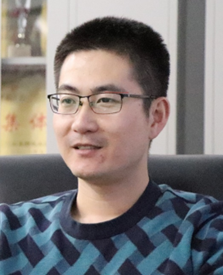
 Chen Lyu
· 2 previous affiliations
- Shandong Normal UniversityCurrent
- Current
- Associate Professor · 2015–2026
- Chinese Academy of Sciences2010–2015
- PhD student · 2010–2015
1 other author named Chen Lyu: Chen Lyu (Shanghai University of Finance and Economics · 8 papers)
Research Overview
Chen Lyu focuses on neural representations of source code and deep learning architectures for computer vision. Early work emphasizes embedding abstract syntax trees and API dependency graphs to improve automated code generation and summarization. More recently, the research trajectory includes senior contributions to image enhancement and salient object detection using frequency-domain analysis and multi-modal fusion.
Research Trajectory
The available evidence spans a concentrated period from 2021 to 2022, revealing a dual focus on deep learning for software engineering and computer vision.
In the domain of software engineering, Lyu's primary contributions center on improving how neural networks understand and generate source code. A significant first-author contribution during this period is Embedding API Dependency Graph for Neural Code Generation (2021), which addresses the limitations of treating code generation purely as a sequence-to-sequence translation problem. By modeling the global relationships among API methods as an API Dependency Graph (ADG), this work provides a more structured approach to capturing the semantic usage of APIs in automated code generation. Alongside this primary research, Lyu participated as a collaborative author in several projects exploring Abstract Syntax Tree (AST) representations. This includes work on TreeBERT: A tree-based pre-trained model for programming language, which incorporates tree structures into pre-training objectives, and Code Representation Based on Hybrid Graph Modelling, which extracts both structural and execution data flow graphs from ASTs to capture deeper semantic information.
Parallel to the work in code representation, Lyu has directed research in computer vision, frequently serving in a senior or principal investigator capacity. In 2021, this included the development of a Saliency Detection Framework Based on Deep Enhanced Attention Network. This research tackles the challenges of RGB-D salient object detection by employing Siamese networks to extract features in a shared-weight manner, utilizing a novel Channel-Spatial Fusion block to prevent information loss during modal fusion.
Moving into 2022, the vision research expanded into image restoration. As senior author, Lyu guided the development of DPFNet: A Dual-branch Dilated Network with Phase-aware Fourier Convolution for Low-light Image Enhancement. This work addresses the tendency of standard convolutional networks to lose high-frequency texture details in low-light conditions by incorporating Fourier coefficients to constrain semantics in the frequency phase, alongside dilated convolutions in the spatial domain. During the same year, Lyu continued to participate in software engineering research, contributing to HELoC: hierarchical contrastive learning of source code representation, a model designed to capture the deep hierarchical relationships within ASTs using self-supervised contrastive learning.
Current Directions
The most recent papers in the available evidence date to 2022, indicating ongoing interests in both hierarchical code representation and frequency-aware computer vision models. In the software engineering domain, recent collaborative work investigates contrastive learning techniques to better capture the complex, multi-level structures of abstract syntax trees. Simultaneously, in computer vision, the focus has shifted toward low-light image enhancement, specifically exploring how frequency-domain transformations—such as phase-aware Fourier convolutions—can be combined with spatial-domain networks to recover fine texture details that are typically lost in standard convolutional approaches.
Profile updated
Loading new papers…
Loading research neighbors…
See something wrong? Report a mistake