

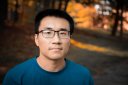
 Chen Li
· 2 previous affiliations
- Stony Brook UniversitySince 2018
- PhD student · Since 2020
- Current
- MS student · 2018–2020
- Jilin University2014–2018
- Undergrad student · 2014–2018
19 other authors named Chen Li: Chen Li (Xi'an Jiaotong University · 200 papers), Chen Li (Tencent (China) · WeChat · 52 papers), Chen Li (Tencent (China) · 33 papers), Chen Li (Agency for Science, Technology and Research · 28 papers), Chen Li (Tianjin University of Technology · 28 papers), and 14 more
Research Overview
Chen Li focuses on uncertainty estimation, semi-supervised learning, and generative modeling, with a primary application in computer vision and medical image analysis. His work addresses the challenges of model reliability and data scarcity, particularly in complex domains such as crowd counting and histopathology. By developing methods to quantify and calibrate model confidence without extensive manual labeling, Li contributes to the deployment of deep learning systems in high-stakes environments where ground-truth data is difficult to obtain.
Research Trajectory
Li’s research trajectory began with a focus on the fundamental problem of overconfidence in deep neural networks. In early work, he investigated how models often produce high-probability predictions even when they are incorrect, a significant barrier to their use in real-world applications. This led to the development of confidence estimation techniques that do not rely on fully supervised datasets. By leveraging unlabeled data and observing prediction consistency during the training process, Li established a framework for approximating model confidence through surrogate functions.
This foundational work in uncertainty estimation was subsequently applied to the domain of crowd counting. In this context, Li addressed the limitations of semi-supervised learning, where pseudo-labels generated for unlabeled images are often noisy. By integrating uncertainty calibration into the training loop, he developed methods to filter and select reliable pseudo-labels, thereby improving the robustness of crowd density estimation. This period of his work is characterized by a shift from general algorithmic improvements to domain-specific applications where spatial distribution and density are critical factors.
More recently, Li has expanded his research into generative modeling and medical image analysis. He has explored the use of diffusion models to address data augmentation and domain adaptation challenges. This work involves generating realistic cell layouts and pathology images to boost the performance of downstream detection and segmentation tasks. His current research directions emphasize the intersection of geometric modeling—specifically using Bézier curves—and diffusion processes to bridge the domain gap between different medical imaging modalities. This evolution reflects a broader interest in how structural and topological priors can be integrated into generative frameworks to ensure biological and physical plausibility in synthetic data.
Methodological Focus
A recurring theme in Li’s research is the use of consistency as a proxy for reliability. Whether in the context of semi-supervised classification or histopathology segmentation, his methods often involve enforcing agreement across different model snapshots, perturbations, or architectural facets. This approach allows for the discovery of stable features and structures—such as the connectivity of glands or nuclei—without requiring exhaustive manual annotation.
Furthermore, Li’s work frequently employs surrogate functions to manage uncertainty. In tasks like crowd counting, where traditional uncertainty metrics may fail to capture the nuances of patch-wise density, he has proposed matching-based surrogates that better align with the task's requirements. This methodological preference for task-specific calibration ensures that uncertainty estimates are not only statistically sound but also practically useful for improving model performance in specialized domains.
Representative Work
In Confidence Estimation Using Unlabeled Data, Li addressed the issue of overconfidence in deep learning models within semi-supervised settings. Recognizing that existing confidence estimation methods typically require large labeled datasets, he proposed a method that utilizes training consistency as a surrogate for confidence. By introducing a consistency ranking loss, the framework allows models to learn to rank their own predictions by reliability based on how stable those predictions remain throughout the training process. This work provided a novel pathway for deploying models in scenarios where labeled data is scarce but reliability is paramount.
Li applied these principles to the specific challenge of density estimation in Calibrating Uncertainty for Semi-Supervised Crowd Counting. Semi-supervised crowd counting often relies on an iterative process of pseudo-labeling, which is highly sensitive to the quality of the initial model predictions. Li introduced a supervised uncertainty estimation strategy that uses a matching-based patch-wise surrogate function. This approach ensures that the model's uncertainty is well-controlled and calibrated, allowing for the selection of high-quality pseudo-labels that significantly enhance the training of crowd counting networks.
In the field of generative modeling for pathology, Li developed Spatial Diffusion for Cell Layout Generation. This research addresses the need for high-quality synthetic data in cell detection tasks. While traditional generative adversarial networks (GANs) have been used for image augmentation, they often fail to capture the complex spatial patterns of cellular structures. Li proposed a diffusion model guided by spatial features, exploring various density models to ensure that the generated cell layouts are biologically realistic. The synthetic data produced by this method was shown to improve the performance of downstream cell detection algorithms.
Li’s work in medical imaging also extends to tumor prediction, as seen in Uncertainty Estimation for Tumor Prediction with Unlabeled Data. This research continues his investigation into how unlabeled samples can be leveraged to improve the diagnostic reliability of deep learning models in oncology. By quantifying the uncertainty associated with tumor boundary and presence predictions, the method aims to provide clinicians with a clearer understanding of when a model's output should be scrutinized more closely.
In the area of histopathology segmentation, Li participated in the development of MATCH: Multi-faceted Adaptive Topo-Consistency for Semi-Supervised Histopathology Segmentation. This collaborative effort focused on maintaining topological consistency—the structural "connectedness" of biological objects—across multiple model predictions. The framework identifies stable structures like glands and nuclei by enforcing consistency across different training snapshots, moving away from the manual thresholds that characterized previous segmentation methods. This work highlights the importance of structural priors in medical image analysis.
Addressing the problem of domain shift in medical imaging, Li proposed Bézier Meets Diffusion: Robust Generation Across Domains for Medical Image Segmentation. Training robust algorithms across different modalities (e.g., MRI to CT) is often hindered by large domain gaps. Li introduced a unified framework that combines Bézier-curve-based style transfer with diffusion models. The Bézier-curve strategy is designed to effectively reduce the domain gap in regions with high variability, while the diffusion process ensures the generation of high-fidelity images that preserve the underlying anatomy. This approach offers a more robust alternative to traditional GAN-based style transfer for unsupervised domain adaptation.
Profile updated
Loading new papers…
Other researchers whose papers cluster into the same research directions — a proxy for overlapping technical interests and shared intellectual neighborhoods.
See something wrong? Report a mistake