

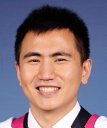
 Chen Jin
· 4 previous affiliations
- AstraZenecaSince 2022
- Researcher · Since 2022
- University College London2019–2022
- Research Associate · 2019–2022
- Heriot-Watt University2013–2018
- Researcher · 2017–2018
- PhD student · 2013–2017
- Canadian Natural Resources2013–2014
- Engineer Internship · 2013–2014
1 other author named Chen Jin: Chen Jin (National University of Singapore · 10 papers)
Research Overview
Chen Jin focuses on medical image analysis, efficient computer vision architectures, and generative modeling. His early trajectory addresses the computational challenges of gigapixel histology and semi-supervised segmentation, evolving toward advanced diffusion models and vision-language alignment. Most recently, he investigates high-fidelity generative control, open-set segmentation, and efficient decoding strategies for diffusion language models.
Research Trajectory
Initial work tackled the computational bottlenecks of processing massive medical images. He introduced Foveation for Segmentation of Mega-Pixel Histology Images, addressing the memory constraints of gigapixel histology data. Expanding on this foundation, he developed a learnable downsampling module in Learning to Downsample for Segmentation of Ultra-High Resolution Images. This work contributed to the research direction of Adaptive Spatial Sampling for Efficient Computer Vision and the broader area of Memory Efficient Architectures for Ultra High Resolution Vision. By demonstrating that optimizing spatial sampling end-to-end improves segmentation performance compared to uniform downsampling, the research also intersected with the field of Joint Optimization of Data Acquisition and Signal Reconstruction. Concurrently, he participated in efforts to improve semi-supervised learning in medical contexts, contributing to Bayesian Pseudo Labels: Expectation Maximization for Robust and Efficient Semi-supervised Segmentation and MisMatch: Calibrated Segmentation via Consistency on Differential Morphological Feature Perturbations With Limited Labels, which utilized learnable morphological perturbations to improve model calibration with limited labeled data.
Returning to whole slide images in 2024, he designed CAMIL: Context-Aware Multiple Instance Learning for Cancer Detection and Subtyping in Whole Slide Images. This architecture advanced the area of Spatial Context Preservation in Multiple Instance Learning by incorporating neighbor-constrained attention mechanisms, pushing forward the domain of Efficient Global Context Modeling via Sparse Attention to produce highly interpretable heatmaps for cancer diagnosis. His focus also expanded into generative modeling and multimodal understanding. He developed An Image is Worth Multiple Words: Discovering Object Level Concepts using Multi-Concept Prompt Learning, enabling the extraction of multiple visual concepts from a single image-caption pair with minimal storage overhead. In the medical domain, he helped address out-of-distribution errors in diffusion models, contributing to Tackling Structural Hallucination in Image Translation with Local Diffusion to improve diagnostic reliability by separately processing in-distribution and out-of-distribution regions.
By 2025, his research increasingly bridged vision and language through diffusion models. He introduced Diffusion Instruction Tuning, a highly efficient fine-tuning method that distills spatial grounding expertise from image generators to boost vision-language model performance, particularly on out-of-distribution medical tasks. He also directed the development of Segment Anyword: Mask Prompt Inversion for Open-Set Grounded Segmentation, a training-free framework that leverages linguistic rules and inverted diffusion processes to achieve high-precision open-set segmentation. Additionally, he explored large language model reasoning, contributing to Balancing Act: Diversity and Consistency in Large Language Model Ensembles, which proposed a dynamic mixture of agents and a novel divergence metric to filter inconsistent outputs.
Moving into 2026, his work emphasizes precise control and efficiency in generative architectures. He guided the development of Causal-Adapter: Taming Text-to-Image Diffusion for Faithful Counterfactual Generation, a modular approach using structural causal modeling to ensure identity-preserving edits in text-to-image models. He also participated in optimizing diffusion language models, contributing to Stop the Flip-Flop: Context-Preserving Verification for Fast Revocable Diffusion Decoding, which mitigates token oscillation to accelerate decoding while preserving sequence context. Expanding generative techniques to biological domains, he collaborated on Protein generation with embedding learning for motif diversification, leveraging learned embeddings to design diverse and functional protein structures.
Current Directions
The most recent work in the evidence addresses the intersection of causal reasoning, generative control, and biological sequence design. A primary focus is on taming diffusion models for faithful counterfactual generation, ensuring that targeted edits in visual media preserve core identities and structural integrity through causal modeling. Concurrently, research investigates the computational efficiency of diffusion-based language models, specifically targeting decoding bottlenecks and token oscillation to enable faster, context-preserving generation. Finally, these generative priors are being adapted for scientific discovery, exploring how embedding learning can navigate the trade-offs between structural novelty and functional viability in protein generation.
Profile updated
Loading new papers…
Other researchers whose papers cluster into the same research directions — a proxy for overlapping technical interests and shared intellectual neighborhoods.
See something wrong? Report a mistake