

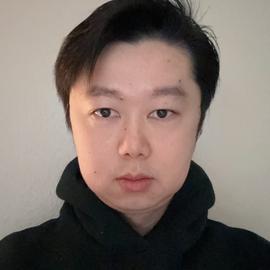
 Chen Huang
· 4 previous affiliations
- Apple (United States)Since 2016
- Senior Deep Learning Research Engineer, Video Computer Vision · Since 2020
- Current
- Researcher · 2017–2020
- Deep Learning Research Intern, Video Computer Vision · 2016
- Computer Vision Research Intern, MSR Applied Sciences Group · 2017
- University of Missouri2011–2017
- PhD student · 2011–2017
- Doctor of Philosophy (Ph.D.), Electrical and Computer Engineering
- Beihang University2006–2010
- Undergrad student · 2006–2010
- Bachelor's Degree, Electrical and Electronics Engineering
4 other authors named Chen Huang: Chen Huang (Singapore University of Technology and Design · 80 papers), Chen Huang (Apple (United States) · 56 papers), Chen Huang (National University of Singapore · 51 papers), Chen Huang (9 papers)
Research Overview
Chen Huang focuses on computer vision, generative modeling, and the application of high-dimensional data analysis to medical and biological systems. Huang’s research trajectory reflects an evolution from fundamental geometric descriptors and part-based object recognition to the development of sophisticated diffusion frameworks for camera-controllable video synthesis. Parallel to these developments in visual computing, Huang has contributed to research involving the decoding of complex biological signals, particularly in the context of Restoring Angiogenesis in Ischemic and Diabetic Microenvironments and the use of radiomics to identify sub-visual patterns in medical imaging. This dual focus suggests a broader interest in how computational representations can extract meaningful structure from noisy, high-dimensional datasets across both synthetic and organic domains.
Research Trajectory
Huang’s early work, spanning approximately 2014 to 2016, was primarily concerned with the challenges of shape representation and object recognition under deformation. During this period, Huang developed methods to improve the robustness of shape descriptors, moving away from rigid matching toward more flexible, multi-scale approaches. This phase was characterized by a focus on the geometric properties of contours and the spatial relationships between object parts. By treating shape classification as a problem of capturing both global structure and local detail, Huang addressed the limitations of then-standard descriptors that often failed when faced with significant intra-class variation or non-rigid transformations.
In the mid-2010s, this interest in spatial structure transitioned into the domain of fine-grained recognition and object tracking. Huang’s work during this time emphasized the necessity of joint optimization between part localization and object classification. Rather than treating these as independent stages, Huang’s research argued for a progressive refinement process where the identification of salient regions is driven by the specific requirements of the classification task. This period also saw Huang’s participation in the integration of recurrent neural networks with convolutional architectures to handle the temporal dependencies inherent in visual object tracking, marking an early shift toward video-based analysis.
Between 2020 and 2022, the research focus expanded significantly into the medical and biological sciences. This work involved Decoding Tumor Phenotypes with High-Dimensional Radiomics, where the objective was to move beyond visual inspection of medical scans to extract quantitative features that correlate with underlying biological states. This period also included contributions to the study of Paracrine Signaling and Extracellular Vesicles in Tissue Reprogramming, exploring how cell-free mechanisms can be leveraged for regenerative medicine. These efforts reflect a consistent methodological theme: the use of computational frameworks to identify and interpret patterns that are otherwise inaccessible to human perception, whether they are "hidden" textures in a CT scan or the complex cargo of stem cell exosomes.
Most recently, from 2024 to 2025, Huang has focused on the frontiers of generative AI, specifically in the area of image-to-video generation. This work addresses the critical problems of 3D consistency and precise camera control in diffusion models. By developing frameworks that can generate multiple, spatiotemporally consistent views from a single input, Huang’s recent research seeks to overcome the "uncanny valley" of flickering and morphing artifacts that have historically plagued AI-generated video. This current phase aligns with broader trends in Latent Space Masked Prediction for Robust Representation Learning, emphasizing the efficiency and stability of models that operate on compressed latent representations rather than raw pixel data.
Current Directions
Huang’s current research is centered on enhancing the controllability and physical plausibility of generative models. A primary focus is the "Cavia" framework, which introduces view-integrated attention mechanisms to maintain consistency across different camera trajectories. This work is motivated by the need for generative tools that can be used in professional contexts—such as cinematography or virtual reality—where exact control over the "virtual camera" is as important as the quality of the generated content itself.
Furthermore, Huang continues to explore the intersection of AI and clinical medicine. This includes the ongoing refinement of Decoding Sub-Visual Patterns in Medical Image Radiomics, aiming to bridge the gap between high-dimensional data extraction and practical diagnostic utility. There is also a continued interest in Bypassing Stem Cell Transplantation Risks via Cell-Free Signaling, investigating how computational modeling of the secretome can accelerate the development of therapies for ischemic and diabetic conditions.
Representative Work
In Multi-scale embedded descriptor for shape classification, Huang (as first author) introduced a novel shape descriptor designed to be robust against deformation. The method utilizes a running angle to transform 2D shapes into a description image in position and scale space, followed by a circular wavelet-like sub-band decomposition. This approach allowed for the capture of part-level details while maintaining a global context, outperforming contemporary methods in standard shape classification benchmarks.
Huang’s first-author work on Task-Driven Progressive Part Localization for Fine-Grained Object Recognition addressed the subtle visual differences that distinguish categories in fine-grained recognition. The paper proposed a "Task-Driven Progressive Part Localization" (TPPL) approach, which challenged the traditional two-step pipeline of independent part detection and classification. By jointly designing the detector and classifier, the model could progressively refine its focus on the most discriminative regions of an object, suppressing background interference more effectively than static methods.
In Constellational contour parsing for deformable object detection, Huang (as first author) further explored the parsing of object boundaries. This work focused on the detection of deformable objects by treating their contours as a constellation of parts, allowing the model to account for significant structural changes while maintaining a coherent object identity. This research contributed to the foundational understanding of how flexible geometric models can be integrated into standard detection pipelines.
Huang participated as a third author in the development of Spatially supervised recurrent convolutional neural networks for visual object tracking. This work integrated spatial supervision into a recurrent framework, allowing the model to better maintain the identity of a target object across successive video frames. By combining the feature extraction capabilities of CNNs with the temporal memory of RNNs, the research addressed common tracking failures caused by occlusion and rapid motion.
The recent framework Cavia: Camera-controllable Multi-view Video Diffusion with View-Integrated Attention, where Huang served as a third author, represents a significant contribution to generative video synthesis. Cavia addresses the lack of 3D consistency in image-to-video models by introducing a joint training strategy across static and dynamic datasets. The core innovation, "view-integrated attention," enables the generation of multiple videos from the same scene using different camera paths, ensuring that the scene remains stable and consistent across all views. This work moves the field toward more reliable and controllable AI-driven content creation.
Profile updated
Loading new papers…
Other researchers whose papers cluster into the same research directions — a proxy for overlapping technical interests and shared intellectual neighborhoods.
See something wrong? Report a mistake