

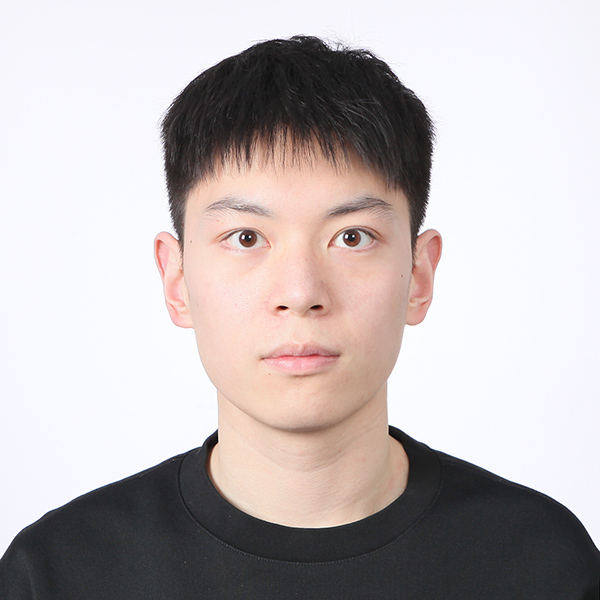
 Chen Gong
· 1 previous affiliation
- Shanghai Jiao Tong UniversitySince 2018
- PhD student · 2022–2027
- Current
- Undergrad student · 2018–2022
4 other authors named Chen Gong: Chen Gong (Shanghai Jiao Tong University · 251 papers), Chen GONG (University of Virginia · 101 papers), Chen Gong (14 papers), Chen Gong (Nanjing University of Science and Technology · 1 paper)
Research Overview
Chen Gong focuses on distributed machine learning, federated learning, and on-device continual learning, with a particular emphasis on optimizing models for resource-constrained mobile environments. Early work involved applied machine learning for multimedia analysis, but the primary trajectory has centered on data selection strategies for federated systems. Recent research investigates device-cloud collaboration frameworks to enable efficient and real-time continual learning on mobile devices.
Research Trajectory
Chen Gong’s early published work includes participation in applied machine learning research. In 2021, Gong was a co-author on Music Plagiarism Detection via Bipartite Graph Matching, which addressed the lack of fine-grained plagiarism detection in music production by establishing a large-scale simulated dataset and applying graph matching techniques to melodic and rhythmic features.
Following this, Gong’s research focus shifted decisively toward the systems and networking challenges of distributed machine learning, specifically federated learning (FL) in mobile environments. A central problem in deploying FL on mobile networks is that devices generate massive amounts of streaming data but possess strictly limited storage and computational buffers. Without a way to filter this data, FL systems suffer from prolonged training times and degraded model performance. Gong led a multi-year effort to address this bottleneck, contributing significantly to the research direction of Gradient Based Data Selection for Efficient Learning.
This effort centered on the development of the "ODE" framework, an online data selection policy designed for federated learning with limited storage. The foundational concepts were introduced in the 2022 preprint ODE: A Data Sampling Method for Practical Federated Learning with Streaming Data and Limited Buffer. Gong, as first author, demonstrated how intelligent data sampling could mitigate the impact of on-device storage constraints. This work was subsequently formalized and expanded in the 2023 conference publication To Store or Not? Online Data Selection for Federated Learning with Limited Storage, which detailed how filtering streaming networked data on devices could prevent the severe training delays typical of classical FL under resource constraints. The culmination of this research arc was published in a 2024 journal article, ODE: An Online Data Selection Framework for Federated Learning With Limited Storage, which provided a comprehensive evaluation of the framework's ability to manage massive data from different network layers while preserving the privacy benefits of decentralized learning.
By 2024, Gong’s research expanded from static federated learning to the more dynamic challenge of on-device continual learning (CL). As mobile applications encounter shifting contexts, models must adapt incrementally without forgetting previously learned knowledge. However, Gong identified that data scarcity on individual devices is a critical bottleneck for effective CL. As first author of Delta: A Cloud-assisted Data Enrichment Framework for On-Device Continual Learning, Gong proposed a privacy-preserving architecture that leverages abundant cloud-side data to enrich scarce on-device data. By introducing a directory dataset, the Delta framework decomposes the enrichment problem into separate device-side and cloud-side tasks, avoiding the direct sharing of sensitive user data.
This interest in device-cloud collaboration continued into 2025, focusing on the operational requirements of deploying these models in production. Gong co-authored Enabling Real-Time Inference in Online Continual Learning via Device-Cloud Collaboration, which addressed a critical gap in the CL literature: the degradation of real-time inference performance during time-consuming incremental model adaptations. The proposed ELITE framework guarantees inference performance even as the model updates on time-varying task streams.
Current Directions
The most recent papers in the evidence indicate a strong ongoing focus on online continual learning within mobile and edge computing environments. Gong’s current work investigates how to balance the competing demands of model adaptation, data privacy, and strict latency requirements.
A major theme in this recent research is the use of device-cloud collaboration to overcome the inherent limitations of edge devices. Rather than relying solely on local computation or fully centralized processing, this approach seeks to partition tasks intelligently. Open problems being addressed in this line of work include mitigating data scarcity on the edge through privacy-preserving cloud enrichment, and ensuring that the computational overhead of continuous model updates does not interrupt or degrade the real-time inference capabilities required by modern mobile applications.
Profile updated
Loading new papers…
Other researchers whose papers cluster into the same research directions — a proxy for overlapping technical interests and shared intellectual neighborhoods.
See something wrong? Report a mistake