

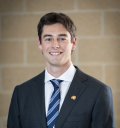
 Charles O'Neill
· 7 previous affiliations
- Australian National UniversitySince 2019
- Researcher · Since 2025
- Tuckwell Scholar · 2019–2024
- Sessional Academic · 2022–2023
- Bachelor of Economics / Bachelor of Science (Mathematical Modelling, Applied Statistics) · 2019–2023
- Summer Research Scholar · 2021–2022
- BasetenSince 2025
- Co-Head of Model Training · Since 2026
- Research Scientist · Since 2025
- University of Oxford2025–2026
- Doctor of Philosophy - PhD, Machine Learning · 2025–2026
- Parsed2024–2026
- Co-Founder · 2024–2026
- Rake2023–2024
- Co-Founder · 2023–2024
- Research Intern · 2024
- Undergrad student · 2022
Research Overview
Charles O'Neill focuses on mechanistic interpretability, the specialization of large language models for scientific domains, and the mathematical foundations of neural representations. His early work explored adversarial safety alignment and domain-specific foundation models for astronomy. Recently, his research centers on using sparse autoencoders to disentangle complex neural activations and improve the transparency of AI systems.
Research Trajectory
O'Neill, whose academic background includes research at the University of Oxford and the Australian National University, began his published trajectory in 2023 with work spanning several foundational aspects of machine learning, from safety alignment to domain specialization. He developed a dual-stage adversarial framework for detecting harmful content in Adversarial Fine-Tuning of Language Models: An Iterative Optimisation Approach for the Generation and Detection of Problematic Content, contributing to the area of Diverse Adversarial Search for Robust Safety Alignment. In the realm of synthetic data, he introduced STEER (Semantic Text Enhancement via Embedding Repositioning) in Steering Language Generation: Harnessing Contrastive Expert Guidance and Negative Prompting for Coherent and Diverse Synthetic Data Generation, a technique using contrastive guidance to balance fidelity and diversity during inference.
His work also extended to specialized foundation models, participating in the development of AstroLLaMA: Towards Specialized Foundation Models in Astronomy, a 7-billion-parameter model fine-tuned on hundreds of thousands of arXiv abstracts to generate domain-specific scientific content. Exploring the theoretical properties of neural networks, O'Neill collaborated on Eigenvalue Initialisation and Regularisation for Koopman Autoencoders, which introduced novel spectral techniques to improve training speed and prediction accuracy for physics-based problems. With collaborators, he also investigated the phenomenon of delayed generalization in Grokking Beyond Neural Networks: An Empirical Exploration with Model Complexity, demonstrating that grokking occurs across various model types, including Gaussian Processes and linear regression.
By 2024, O'Neill's focus shifted heavily toward mechanistic interpretability and the application of Sparse Autoencoders (SAEs) to scientific discovery. He introduced methods to disentangle dense scientific concept embeddings from large language models in Towards Interpretable Scientific Foundation Models: Sparse Autoencoders for Disentangling Dense Embeddings of Scientific Concepts. This work on dense text embeddings was further expanded in Disentangling Dense Embeddings with Sparse Autoencoders, where he demonstrated that semantic search results could be steered by adjusting conceptual parameters, advancing the research direction of Untangling Polysemantic Neurons with Sparse Autoencoders and the broader area of Top-k Sparsity for Mechanistic Interpretability.
Alongside these interpretability efforts, his team developed pathfinder: A Semantic Framework for Literature Review and Knowledge Discovery in Astronomy, an open-source tool utilizing Retrieval-Augmented Generation to help researchers navigate vast amounts of astronomical literature. He also applied SAEs to accelerate mechanistic interpretability itself, introducing a method for rapid subgraph discovery in Sparse Autoencoders Enable Scalable and Reliable Circuit Identification in Language Models.
In 2025, O'Neill's research deepened its theoretical rigor, addressing the mathematical limits of interpretability tools and formalizing neural architectures. He investigated the persistent reconstruction errors, or "dark matter," in scaled SAEs in Resurrecting the Salmon: Rethinking Mechanistic Interpretability with Domain-Specific Sparse Autoencoders. Providing a formal proof of these limitations, he showed that standard simple encoders are mathematically incapable of perfect feature recovery in Compute Optimal Inference and Provable Amortisation Gap in Sparse Autoencoders, a key contribution to the area of Closing the Amortisation Gap in Sparse Autoencoders. He further explored the theoretical bridge between dense activations and human-understandable concepts, collaborating on From superposition to sparse codes: interpretable representations in neural networks.
Beyond interpretability, O'Neill proposed a rigorous mathematical framework for Transformers using category theory in Self-Attention as a Parametric Endofunctor: A Categorical Framework for Transformer Architectures. His recent work also emphasizes rigorous scientific reasoning in AI. He introduced a novel dataset of structured scientific hypotheses in Sparks of Science: Hypothesis Generation Using Structured Paper Data, advancing work in the direction of Reasoning Path Supervision for Large Language Models. Finally, he developed techniques to detect and steer contextual contradictions using linear residual probes in A Single Direction of Truth: An Observer Model's Linear Residual Probe Exposes and Steers Contextual Hallucinations.
Current Directions
Recent work investigates the theoretical limits and practical applications of mechanistic interpretability. The most recent papers in the evidence address the mathematical constraints of Sparse Autoencoders, specifically focusing on the amortisation gap and the unlearned "dark matter" in dense activations. Additionally, O'Neill is exploring formal mathematical frameworks for neural architectures, such as applying category theory to Transformers, and developing methods to ground AI in rigorous scientific reasoning through structured hypothesis generation and linear probing for hallucination detection.
Profile updated
Loading new papers…
Other researchers whose papers cluster into the same research directions — a proxy for overlapping technical interests and shared intellectual neighborhoods.
See something wrong? Report a mistake