

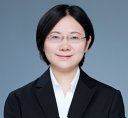
 Chaoxu Mu
· 2 previous affiliations
- Tianjin UniversitySince 2012
- Full Professor · Since 2019
- Associate Professor · 2016–2019
- Assistant Professor · 2012–2016
- Southeast University2009–2012
- PhD student · 2009–2012
Research Overview
Chaoxu Mu focuses on nonlinear control theory, intelligent adaptive control, and reinforcement learning for complex systems. His trajectory spans from early work in adaptive dynamic programming and terminal sliding mode control for aerospace applications to recent advances in automated heuristic design and energy-efficient 3D perception. Currently, his research emphasizes integrating large language models with strategic search and developing lightweight spiking neural networks.
Research Trajectory
The early phase of Mu's research concentrated on the identification and control of complex nonlinear systems. In 2008, he explored data-driven modeling techniques, applying least square support vector machines and fuzzy c-means clustering to the Inverse system identification of nonlinear systems using least square support vector machine based on FCM clustering. This interest in handling nonlinear dynamics evolved into a sustained focus on adaptive dynamic programming (ADP) and optimal control. By 2017, he was developing sophisticated control frameworks for highly demanding aerospace applications, notably introducing an ADP-based tracking control method to manage the complex, coupled dynamics of flight in Air-Breathing Hypersonic Vehicle Tracking Control Based on Adaptive Dynamic Programming. During this period, he also advanced the theoretical underpinnings of ADP, proposing a Novel iterative neural dynamic programming for data-based approximate optimal control design and extending these methods to continuous-time systems in Data-Driven Tracking Control With Adaptive Dynamic Programming for a Class of Continuous-Time Nonlinear Systems. Alongside his work in ADP, he investigated the fundamental properties of robust control strategies, detailing the Dynamic Behavior of Terminal Sliding Mode Control in 2018.
Moving into the 2020s, Mu expanded his control methodologies to multiagent and autonomous systems. He addressed the challenges of coordinating diverse systems under changing communication networks in Optimal Model-Free Output Synchronization of Heterogeneous Multiagent Systems Under Switching Topologies. Concurrently, he applied learning-based robust control to unmanned aerial vehicles, tackling time-varying and coupling uncertainties in Learning-Based Robust Tracking Control of Quadrotor With Time-Varying and Coupling Uncertainties.
In recent years, Mu's trajectory has shifted toward the intersection of deep reinforcement learning, large language models (LLMs), and advanced 3D perception. In 2025, he contributed to the research area of Action Space Pruning via Causal Structural Models by participating in work on Reducing Action Space for Deep Reinforcement Learning via Causal Effect Estimation, which improves training efficiency by eliminating redundant actions. He also drove significant advancements in the broader area of Automated Heuristic Design with Large Language Models. He developed a framework that treats heuristic design as a planning problem in Planning of Heuristics: Strategic Planning on Large Language Models with Monte Carlo Tree Search for Automating Heuristic Optimization, achieving strong results on complex combinatorial problems like the Traveling Salesman Problem. Building on this, he and his collaborators introduced CogMCTS: A Novel Cognitive-Guided Monte Carlo Tree Search Framework for Iterative Heuristic Evolution with Large Language Models, which utilizes a dual-track expansion strategy and cognitive feedback to avoid local optima in NP-hard optimization tasks.
By 2026, Mu's collaborative work expanded significantly into the domain of energy-efficient deep learning and 3D point cloud processing. He contributed to QPoint: End-to-End Lightweight Point Cloud Processing via Robust Quaternion Feature Learning, a framework that leverages quaternion algebra to stabilize local features and achieve rotation invariance with minimal computational overhead. Further advancing the research direction of Spike-Driven Computation for Energy-Efficient Deep Learning, he participated in the development of novel spiking neural network (SNN) architectures for 3D perception. This includes 3DSMT: A Hybrid Spiking Mamba-Transformer for Point Cloud Analysis, which bridges the performance gap in SNNs by combining spiking mechanisms with state space models, and SpikeNet: Sparse Spike-Driven Mask Vector Transformer for Energy-Efficient and Stable Spiking Point Cloud Processing, which introduces a multiplication-free attention mechanism to drastically reduce energy consumption while maintaining high accuracy on benchmark datasets.
Current Directions
The most recent papers in the evidence indicate a dual focus on intelligent optimization and energy-efficient 3D perception. In the realm of optimization, recent work investigates the synergy between large language models and Monte Carlo Tree Search to automate the design of heuristic algorithms for complex, NP-hard combinatorial problems. This involves framing program synthesis as a strategic planning task to navigate the vast space of possible code structures effectively.
Simultaneously, in the domain of computer vision, current efforts address the computational bottlenecks of processing 3D point clouds. This research emphasizes the development of lightweight, multiplierless architectures—specifically hybrid spiking neural networks and quaternion-based feature learning—to enable highly accurate, rotation-invariant, and energy-efficient 3D perception suitable for resource-constrained environments.
Profile updated
Loading new papers…
Other researchers whose papers cluster into the same research directions — a proxy for overlapping technical interests and shared intellectual neighborhoods.
See something wrong? Report a mistake