

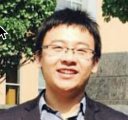
 Chaowei Xiao
· 6 previous affiliations
- Nvidia (United States)Since 2020
- Researcher · Since 2020
- Johns Hopkins UniversitySince 2025
- Assistant Professor · Since 2025
- University of Wisconsin–Madison2023–2025
- Assistant Professor · 2023–2025
- Arizona State University2022–2023
- Assistant Professor · 2022–2023
- University of Michigan2015–2020
- PhD student · 2015–2020
- Tsinghua University2011–2015
- Undergrad student · 2011–2015
Research Overview
Chaowei Xiao focuses on adversarial machine learning, the security of autonomous systems, and the safety alignment of large language models. His trajectory spans from early work on physical-world adversarial attacks and diffusion-based purification to recent frameworks for securing multimodal agents against jailbreaks and privacy leaks. Currently, he investigates robust reasoning mechanisms and unlearning protocols for generative AI.
Research Trajectory
Xiao's early research systematically explored the vulnerabilities of deep neural networks to adversarial examples, expanding the scope of attacks beyond simple digital pixel perturbations. In Generating Adversarial Examples with Adversarial Networks, he introduced AdvGAN, a framework utilizing generative adversarial networks to efficiently model and produce high-quality adversarial perturbations. Expanding on the nature of these perturbations, he developed Spatially Transformed Adversarial Examples, which bypassed contemporary defenses by subtly shifting pixel positions rather than altering their colors, creating perceptually natural images that deceive classifiers. This work naturally extended into the physical world, contributing to the research direction of Overcoming the Digital to Physical Domain Gap. As part of a collaborative effort, he helped design RP2 in Robust Physical-World Attacks on Deep Learning Visual Classification, an algorithm that generates robust visual perturbations capable of misleading systems under varying physical conditions, such as altering road signs.
Moving beyond static image classification, Xiao investigated the security of sequential decision-making and complex perception systems. In the area of Adversarial Perturbations on Reinforcement Learning Observations, he co-authored Robust Deep Reinforcement Learning against Adversarial Perturbations on State Observations. This work demonstrated that standard adversarial training is often ineffective for reinforcement learning and proposed the state-adversarial Markov decision process (SA-MDP) to formalize and improve agent robustness. He subsequently examined the vulnerabilities of autonomous driving perception in Invisible for both Camera and LiDAR: Security of Multi-Sensor Fusion based Perception in Autonomous Driving Under Physical-World Attacks. By optimizing the physical shape of 3D-printed objects, this research revealed that industry-standard multi-sensor fusion systems could be fundamentally compromised in end-to-end simulations.
To defend against these pervasive vulnerabilities, Xiao's trajectory shifted toward generative purification techniques, specifically contributing to the direction of Projecting Adversarial Inputs onto the Clean Data Manifold. He participated in the development of DiffPure, detailed in Diffusion Models for Adversarial Purification, which leverages generative diffusion models to cleanse malicious perturbations from images. This approach advanced the broader field of Generative Adversarial Purification and the Semantic Drift Problem. To establish theoretical guarantees for these empirical defenses, he led the research in DensePure: Understanding Diffusion Models for Adversarial Robustness, analyzing the conditions under which denoising enhances certified robustness for pretrained classifiers. This line of inquiry, which supports the broader goal of Decoupled and Model Agnostic Adversarial Defenses, culminated in Consistency Purification: Effective and Efficient Diffusion Purification towards Certified Robustness, a method that significantly accelerates the purification process while maintaining mathematical guarantees of stability.
As large language models (LLMs) and multimodal systems became central to AI, Xiao focused on their unique security and alignment challenges. He oversaw the creation of JailBreakV: A Benchmark for Assessing the Robustness of MultiModal Large Language Models against Jailbreak Attacks, which demonstrated that text-based jailbreaks remain highly effective against multimodal models. To automate the discovery of such vulnerabilities, his group developed AutoDAN-Turbo: A Lifelong Agent for Strategy Self-Exploration to Jailbreak LLMs, a multi-agent framework that autonomously evolves attack strategies. Concurrently, he explored defenses to protect model alignment, contributing to the area of Mitigating the Alignment Tax in Large Language Models. In BackdoorAlign: Mitigating Fine-tuning based Jailbreak Attack with Backdoor Enhanced Safety Alignment, he introduced a defense mechanism that repurposes backdoor logic to prevent models from being corrupted during malicious fine-tuning. He also addressed the security of autonomous agents interacting with untrusted environments in DRIFT: Dynamic Rule-Based Defense with Injection Isolation for Securing LLM Agents, a framework that enforces adaptable constraints to isolate malicious prompt injections.
In his most recent work, Xiao has expanded his focus to encompass privacy, intellectual property, and advanced reasoning safeguards in generative AI. He addressed the complexities of machine unlearning in Benchmarking Vision Language Model Unlearning via Fictitious Facial Identity Dataset, evaluating how models can forget sensitive personal data without requiring complete retraining. To protect proprietary models, his lab proposed LIDet in Can Watermarks be Used to Detect LLM IP Infringement For Free?, a framework for identifying illegal fine-tuning via watermarked outputs. Investigating the privacy risks of highly capable multimodal systems, he co-authored Doxing via the Lens: Revealing Location-related Privacy Leakage on Multi-modal Large Reasoning Models, which quantifies the ability of reasoning models to infer sensitive geolocations from everyday images. Finally, in ARMOR: Aligning Secure and Safe Large Language Models via Meticulous Reasoning, he introduced a "System-2" safety framework that explicitly reverse-engineers attacker intent, decoupling safety reasoning from general tasks to drastically reduce jailbreak success rates while preserving model utility.
Continuing this focus on language model systems and red teaming, Xiao investigated vulnerabilities arising from model evolution and specialized architectures. In Appreciation Teaches Unauthorized Execution: Self-Evolution Degrades the Robustness of Personal Agents to Indirect Prompt Injection, their group demonstrated that personal agents self-improving from user feedback suffer heightened susceptibility to indirect prompt injections. Addressing typed decision models, Xiao led the development of FlipJev: Fast Black-Box Red Teaming Finds Universal Adversarial Suffixes for Typed Decision Models, demonstrating that query-based black-box attacks can generate universal, transferable adversarial suffixes that flip decisions across diverse tasks. Shifting to test-time enhancement for scientific workflows, they also directed the design of HarnessTTT: Learn to Optimize Harness at Test-Time for Scientific Discovery, training a proposer to optimize execution harnesses and improve discovery performance while keeping the base executor frozen. At the infrastructure level, Xiao studied timing side channels in LLM serving architectures, contributing to Where the Savings Go: The Limits of Hiding Cross-Tenant Cache Hits in LLM Serving by analyzing how scheduler shifts expose prefix cache hits to cross-tenant probes, and co-authoring Isonomy: Isolating Every Request from Timing Side Channels at Nearly Full-Sharing Throughput in Multi-Instance LLM Prefill to isolate request timing while preserving cache reuse throughput across distributed instances.
Current Directions
Recent work investigates the intersection of privacy, intellectual property, and advanced safety reasoning in large multimodal and reasoning models. The most recent papers in the evidence address the challenge of machine unlearning in vision-language models, specifically focusing on how to erase sensitive facial identity data without degrading overall performance. Additionally, current research explores the detection of intellectual property infringement through watermarking and quantifies severe privacy leakage risks, such as geolocation inference, in multi-modal large reasoning models. To secure these advanced systems, ongoing efforts emphasize "System-2" reasoning frameworks that explicitly model and neutralize malicious intent, while also examining the security boundaries of agentic self-evolution, universal adversarial attacks on typed models, and timing side channels in multi-tenant serving infrastructure.
Profile updated
Loading new papers…
Other researchers whose papers cluster into the same research directions — a proxy for overlapping technical interests and shared intellectual neighborhoods.
See something wrong? Report a mistake