

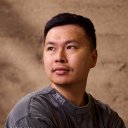
 Chao-Yuan Wu
· 4 previous affiliations
- Meta (United States)Since 2021
- Researcher · Since 2022
- Researcher · Since 2021
- The University of Texas at Austin2015–2021
- PhD student · 2015–2021
- Carnegie Mellon University2013–2015
- MS student · 2013–2015
- National Taiwan University2007–2012
- Undergrad student · 2007–2012
Research Overview
Chao-Yuan Wu focuses on video understanding, efficient neural network architectures, and visual representation learning. His early work addressed deep metric learning and end-to-end video compression before shifting toward long-term video modeling and computational efficiency in computer vision. Recently, his research has expanded to include 3D reconstruction, point cloud diffusion, and foundational models for visual segmentation.
Research Trajectory
Chao-Yuan Wu’s early research addressed challenges in recommender systems, contributing to the research direction of Transparent Reasoning for Personalized Recommendation. In 2016, he introduced Explaining Reviews and Ratings with PACO: Poisson Additive Co-Clustering, which proposed an interpretable additive co-clustering model to jointly analyze user ratings and review texts. He continued exploring temporal dynamics in this domain with Recurrent Recommender Networks (2017). Concurrently, his work spanned machine learning optimization and metric learning. He and his collaborators proposed distance-weighted sampling in Sampling Matters in Deep Embedding Learning (2017) to select more informative training examples, intersecting with the area of Why Prioritizing High Loss Samples Backfires under Noise. That same year, he participated in work on Doubly Greedy Primal-Dual Coordinate Descent for Sparse Empirical Risk Minimization, advancing the research direction of Step-Size Sensitivity in Primal-Dual Optimization.
By 2018, his focus shifted significantly toward video processing, specifically targeting the computational bottlenecks of high-dimensional visual data. He framed video compression as a repeated image interpolation task in Video Compression Through Image Interpolation (2018), utilizing deep learning to match traditional codecs. This work contributed to the broader area of End to End Differentiable Video Compression and the area of Overcoming Computational Overhead in Neural Video Codecs. Recognizing that raw video streams contain massive temporal redundancy, he also developed Compressed Video Action Recognition (2018), which trained deep networks directly on compressed video bitstreams to exploit higher information density and extract free motion signals. He later applied similar principles to static images in Lossless Image Compression through Super-Resolution (2020), framing lossless compression as an iterative super-resolution task.
A major theme in Wu's subsequent work is enabling neural networks to reason over extended temporal contexts without succumbing to memory or computational limits. In Long-Term Feature Banks for Detailed Video Understanding (2019), he augmented 3D convolutional networks with supportive information extracted over an entire video span, allowing models to relate present events to past context. He expanded on this in Towards Long-Form Video Understanding (2021), introducing Object Transformers to reason about the long-term interactions of tracked entities over minutes of footage, alongside a new benchmark for long-form tasks. To make such long-term modeling computationally viable, he developed MeMViT: Memory-Augmented Multiscale Vision Transformer for Efficient Long-Term Video Recognition (2022). MeMViT processes videos in an online fashion, caching representations at each iteration so the model can reference prior context at a marginal cost.
Parallel to his architectural innovations in video, Wu addressed the fundamental efficiency of training deep networks. Inspired by numerical optimization, he introduced A Multigrid Method for Efficiently Training Video Models (2020), which varied mini-batch shapes and spatial-temporal resolutions during training to accelerate research cycles. He also developed Memory Optimization for Deep Networks (2020), an automated framework that jointly optimizes global checkpointing schedules and local operator implementations to significantly reduce memory footprints. His interest in efficient, modernized architectures is further reflected in his participation in A ConvNet for the 2020s (2022), which redesigned standard convolutional networks to compete with Vision Transformers, contributing to the broader area of Efficient Receptive Field Expansion via Convolutional Kernel Decomposition.
More recently, Wu has explored 3D visual representations and foundational segmentation models. He investigated single-view 3D reconstruction in Multiview Compressive Coding for 3D Reconstruction (2023), learning generalizable representations inspired by self-supervised learning to overcome occlusions. He also participated in the development of PointInfinity: Resolution-Invariant Point Diffusion Models (2024), which utilized a transformer-based architecture with a fixed-size latent representation for efficient point cloud generation. In 2025, he contributed to SAM 2: Segment Anything in Images and Videos, extending promptable visual segmentation to video via a novel streaming memory architecture.
Current Directions
The most recent papers in the evidence indicate a focus on scalable, resolution-invariant generative models and unified foundation models for complex visual tasks. Recent work investigates 3D reconstruction from single views using compressive coding, as well as the generation of high-fidelity point clouds and surfaces through resolution-invariant diffusion models. Additionally, his participation in the development of SAM 2 highlights an ongoing interest in extending promptable, zero-shot segmentation capabilities from static images to complex, long-form video streams using efficient memory architectures.
Profile updated
| Paper | Venue | Year |
|---|---|---|
| Memory Optimization for Deep NetworksGitHubutsaslab/ | ICLR | 2021 |
Loading new papers…
Other researchers whose papers cluster into the same research directions — a proxy for overlapping technical interests and shared intellectual neighborhoods.
See something wrong? Report a mistake