

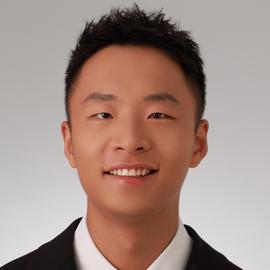
 Chao Peng
· 3 previous affiliations
- Tencent (China)Since 2026
- Researcher · Since 2026
- University of EdinburghCurrent
- Current
- PhD student · 2017–2021
- ByteDance (China)2021–2026
- Researcher · 2021–2026
3 other authors named Chao Peng: Chao Peng (East China Normal University · 40 papers), Chao Peng (6 papers), Chao Peng (1 paper)
Research Overview
Chao Peng focuses on software testing, automated program repair, and the development of artificial intelligence agents for software engineering. His early work addressed graphical user interface testing and formal verification, while his recent trajectory emphasizes large language model integration for repository-level code intelligence. He currently investigates autonomous coding agents, focusing on efficient reasoning, environment orchestration, and verifiable code generation.
Research Trajectory
Peng’s early research focused on program correctness and formal analysis. In 2019, he investigated the reliability of parallel computing in On the correctness of GPU programs. That same year, he developed tools for smart contract verification, introducing a C++-based intermediate representation framework in SIF: A Framework for Solidity Contract Instrumentation and Analysis to enable developers to build custom analysis and transformation tools at the source level.
Moving into the early 2020s, his focus expanded to automated software testing, particularly for mobile applications, where he contributed significantly to the research direction of Mapping Android UI Widgets to Backend Logic. In CAT: Change-focused Android GUI Testing, he introduced a framework that uses change impact analysis to identify GUI elements affected by code updates, generating targeted event sequences to uncover bugs. He further explored human-like interaction strategies in MUBot: Learning to Test Large-Scale Commercial Android Apps like a Human, utilizing deep learning to imitate user actions rather than relying on predefined exploration strategies. With collaborators, he also advanced model-based testing through reinforcement learning in Fastbot2: Reusable Automated Model-based GUI Testing for Android Enhanced by Reinforcement Learning, and later applied deep reinforcement learning to change-targeted testing in Hawkeye: Change-targeted Testing for Android Apps based on Deep Reinforcement Learning.
Around 2024, Peng’s work increasingly integrated large language models (LLMs) to address complex software engineering tasks. He applied Transformer-based neural networks to the test oracle problem in Go-Oracle: Automated Test Oracle for Go Concurrency Bugs, enabling automated distinction between passing and failing execution traces without manual inspection. Concurrently, he addressed the evaluation gap in code generation. He developed RepoMasterEval: Evaluating Code Completion via Real-World Repositories, a benchmark utilizing cross-file context and mutation testing to better correlate with developer acceptance rates, and explored prompt strategies through user simulation in RepoSim: Evaluating Prompt Strategies for Code Completion via User Behavior Simulation. As a principal investigator at ByteDance, he led the development of MarsCode Agent: AI-native Automated Bug Fixing, a framework combining LLMs with static analysis to systematically localize faults and generate patches.
In 2025, his research trajectory deepened into the mechanics and optimization of autonomous coding agents. He advanced the broader area of Repository Level Fault Localization for Autonomous Agents by introducing a two-stage training framework in Tool-integrated Reinforcement Learning for Repo Deep Search, which combines rejection-sampled supervised fine-tuning with reinforcement learning to navigate complex codebases. He extended this approach to issue resolution in SoRFT: Issue Resolving with Subtask-oriented Reinforced Fine-Tuning, decomposing tasks into structured steps like file localization and code edit generation, thereby contributing to the research direction of Surgical Code Transformation with Structured Edit Representations.
Peng also tackled the infrastructure challenges of agentic workflows. With collaborators, he addressed the creation of reproducible execution contexts in Repo2Run: Automated Building Executable Environment for Code Repository at Scale and An LLM-based Agent for Reliable Docker Environment Configuration. These works utilize dual-environment architectures and adaptive rollback mechanisms, advancing the area of Backtracking and State Reversion in Autonomous Agent Workflows. To optimize the operational costs of these systems, he investigated the area of Multi-turn Iterative Code Generation and Refinement in More with Less: An Empirical Study of Turn-Control Strategies for Efficient Coding Agents, identifying dynamic extension strategies that maintain success rates while limiting iterations. Finally, he synthesized the field's rapid evolution in From Code Foundation Models to Agents and Applications: A Comprehensive Survey and Practical Guide to Code Intelligence, providing a roadmap for the broader area of Closing the Loop in LLM Code Generation.
Current Directions
The most recent papers in the evidence indicate a strong focus on autonomous software engineering agents and reinforcement learning for code intelligence. Current work investigates how to improve the reliability, efficiency, and verifiable reasoning of LLM-based agents operating at the repository level. This includes developing subtask-oriented fine-tuning methods for complex issue resolution, orchestrating executable Docker environments to verify agent actions dynamically, and optimizing multi-turn reasoning to reduce computational costs. A central theme in this recent work is moving beyond isolated code completion toward end-to-end, automated bug fixing and repository maintenance that can be rigorously evaluated in real-world environments.
Profile updated
| Paper | Venue | Year |
|---|---|---|
| Automated test generation for OpenCL kernels using fuzzing and constraint solvingGitHubchao-peng/ | Gpgpu@ppopp | 2020 |
Loading new papers…
Other researchers whose papers cluster into the same research directions — a proxy for overlapping technical interests and shared intellectual neighborhoods.
See something wrong? Report a mistake