

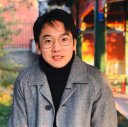
 Chao Huang
· 2 previous affiliations
- University of Hong KongSince 2021
- Assistant Professor · Since 2021
- University of Notre Dame2014–2019
- PhD student · 2014–2019
8 other authors named Chao Huang: Chao Huang (Sun Yat-sen University · Harbin Institute of Technology · 67 papers), Chao Huang (University of Southampton · 66 papers), Chao Huang (Montclair State University · 28 papers), Chao Huang (27 papers), Chao Huang (Tencent (China) · University of Rochester · 19 papers), and 3 more
Research Overview
Chao Huang focuses on graph neural networks, recommender systems, and spatio-temporal modeling, with an emphasis on improving model robustness and computational efficiency. His trajectory spans from foundational work in graph contrastive learning and dynamic behavior modeling to the integration of large language models into recommendation and urban prediction frameworks. Most recently, his research addresses the acceleration of large language models and the development of autonomous agents for scientific discovery.
Research Trajectory
Chao Huang’s early work addressed the fundamental challenges of learning from non-Euclidean data structures. In 2022, he collaborated to address the computational costs and class-imbalance issues inherent in graph neural networks through Diving into Unified Data-Model Sparsity for Class-Imbalanced Graph Representation Learning. This work explored how network compression and sparsity could be leveraged to improve generalization on irregular graph data.
In 2023, his research expanded significantly into recommender systems, particularly focusing on dynamic user behavior and contrastive learning. He introduced Online purchase prediction via multi-scale modeling of behavior dynamics, a framework designed to capture hierarchical temporal patterns and category dependencies in e-commerce platforms. To further capture complex user-item interactions, he developed Knowledge-aware coupled graph neural network for social recommendation, which jointly models social connections and temporal dynamics to improve recommendation accuracy. With collaborators, he contributed to the area of Preserving Semantic Identity in Graph Contrastive Learning through LightGCL: Simple Yet Effective Graph Contrastive Learning for Recommendation. This method avoids the semantic distortion often caused by heuristic data augmentation, providing a more robust approach to handling highly sparse interaction data. He also participated in developing Multi-Behavior Dynamic Contrastive Learning for Recommendation, which models heterogeneous user-item relationships—such as clicks, reviews, and purchases—over time.
As foundation models became more prominent, he began integrating large language models (LLMs) and prompt-tuning techniques into recommendation architectures. He led the development of Representation Learning with Large Language Models for Recommendation, which incorporates textual data alongside traditional ID-based features to enrich user and item representations. To handle dynamic user preferences without the need for continuous model retraining, his group proposed Graph Pretraining and Prompt Learning for Recommendation, leveraging temporal and structural prompts to adapt to evolving behaviors.
Concurrently, he applied advanced graph learning techniques to urban and spatio-temporal data. He contributed to Spatial-Temporal Graph Learning with Adversarial Contrastive Adaptation, a framework that automatically identifies difficult samples to train robust region representations, effectively handling noisy sensor readings and incomplete mobility traces. Advancing the research direction of Generalizing Spatio-Temporal Models to Unseen Cities, he directed the work on GPT-ST: Generative Pre-Training of Spatio-Temporal Graph Neural Networks. By combining masked autoencoders with hierarchical spatial clustering, this framework captures complex urban relationships that standard end-to-end models often miss.
In 2024, his recommendation research broadened into multi-modal domains. He oversaw PromptMM: Multi-Modal Knowledge Distillation for Recommendation with Prompt-Tuning, which mitigates the overfitting that typically occurs when using high-dimensional extractors like ViT and BERT in recommendation systems. He also led Multi-Modal Diffusion Model for Recommendation, leveraging diffusion models to generate modality-aware user-item graphs and address data sparsity through cross-modal contrastive learning. In the spatio-temporal domain, he addressed the area of Robust Spatiotemporal Prediction Under Distribution Shifts by developing FlashST: A Simple and Universal Prompt-Tuning Framework for Traffic Prediction. This lightweight prompt-tuning framework enables pre-trained traffic models to adapt to new urban environments with significantly reduced training time.
Moving into 2025, his focus expanded to the fundamental efficiency of large language models and their application in automated research. Contributing to the broader area of Overcoming the Information Bottleneck in Text Embeddings, his lab introduced SepLLM: Accelerate Large Language Models by Compressing One Segment into One Separator. This method compresses text segments into natural information hubs, such as punctuation separators, drastically reducing memory usage and enabling the processing of sequences up to 4 million tokens. Finally, he directed the creation of AI-Researcher: Autonomous Scientific Innovation, a multi-agent system designed to autonomously execute the entire scientific discovery pipeline, from reading literature and generating hypotheses to writing code and drafting manuscripts.
Current Directions
Based on his most recent work, Chao Huang is currently investigating the efficiency of large language models and their potential to drive autonomous scientific discovery. A major focus is on compressing long-context information in LLMs, reducing computational overhead and memory bottlenecks to enable the processing of massive text sequences without sacrificing performance.
Additionally, recent papers address the automation of the research process itself, exploring how multi-agent systems can independently review literature, formulate novel hypotheses, execute experimental code, and draft scientific manuscripts. In parallel, he continues to refine multi-modal recommendation systems and spatio-temporal forecasting, focusing on parameter-efficient adaptation techniques—such as prompt-tuning and knowledge distillation—to help foundation models generalize across diverse environments and modalities.
Profile updated
Loading new papers…
Other researchers whose papers cluster into the same research directions — a proxy for overlapping technical interests and shared intellectual neighborhoods.
See something wrong? Report a mistake