

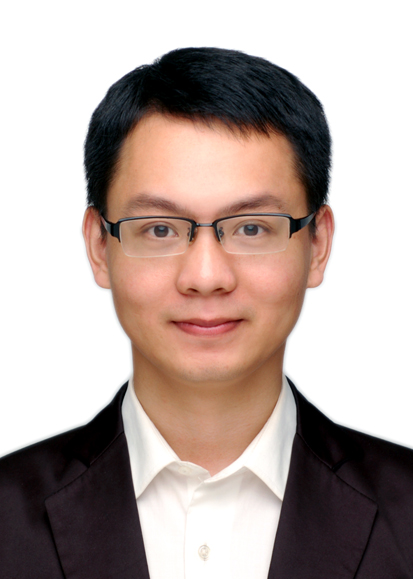
 Chao Gou
· 1 previous affiliation
- Sun Yat-sen UniversityCurrent
- Associate Professor · Current
Research Overview
Chao Gou focuses on computer vision, pattern recognition, and intelligent transportation systems, with an emphasis on driver behavior monitoring and scene understanding. His research trajectory spans from early work in vehicle license plate recognition and facial landmark detection to advanced generative models and scene graph generation. Currently, his work addresses complex human-object interactions, logical reasoning in vision-language models, and foundation models for neural signal decoding.
Research Trajectory
His early research focused on computer vision applications for intelligent transportation and facial analysis. He introduced methods for Vehicle license plate recognition based on class-specific ERs and SaE-ELM, utilizing Extremal Regions and Self-adaptive Evolutionary Extreme Learning Machines to accurately segment and recognize characters. This approach was subsequently expanded in Vehicle License Plate Recognition Based on Extremal Regions and Restricted Boltzmann Machines, which employed hybrid discriminative restricted Boltzmann machines to maintain robustness under varying illumination conditions. Concurrently, he addressed the challenge of geometric correspondence in 2D annotations under large head poses by developing Shape Augmented Regression for 3D Face Alignment, estimating consistent 3D face shapes from 2D images.
Expanding into facial behavior analysis and generative models, he contributed to the area of eliminating sequential fragility in multi stage vision pipelines with Simultaneous Facial Landmark Detection, Pose and Deformation Estimation Under Facial Occlusion. This work proposed a unified framework that iteratively updates facial parameters to handle occlusions robustly. Around this time, he also explored broader scene perception frameworks, co-authoring Parallel vision for perception and understanding of complex scenes: methods, framework, and perspectives. His research extended into generative architectures, providing a comprehensive overview in Generative adversarial networks: introduction and outlook. He later applied evolutionary optimization to these architectures in Differential-Evolution-Based Generative Adversarial Networks for Edge Detection, aiming to capture rich edge information in natural scenarios while mitigating model collapse.
Moving into the 2020s, a major theme emerged around scene understanding, relational reasoning, and driver monitoring. In the broader area of structured scene graphs for spatial reasoning and planning, his group developed Progressive Knowledge-Embedded Unified Perceptual Parsing for Scene Understanding, which utilizes gated graph neural networks to propagate node messages across different levels of visual concepts. He also participated in research on high order relational learning with hypergraph neural networks, contributing to Two Heads are Better Than One: Hypergraph-Enhanced Graph Reasoning for Visual Event Ratiocination, a project tackling the challenge of reasoning about the past, present, and future states of still images.
Concurrently, he advanced driver facial monitoring by unifying disparate tracking tasks to reduce model redundancy for real-time intelligent vehicle applications. He guided the development of A Joint Cascaded Framework for Simultaneous Eye State, Eye Center, and Gaze Estimation and subsequently published Cascade Learning for Driver Facial Monitoring, which simultaneously handles facial landmark detection, head pose, and gaze estimation. This focus on precise ocular tracking continued with the introduction of MAL-Net: Multiscale Attention Link Network for accurate eye center detection.
His research on interaction modeling also extended to complex traffic and human-object scenarios. He directed work on Learning From Interaction-Enhanced Scene Graph for Pedestrian Collision Risk Assessment, which captures the intricate relations between pedestrians and ego-vehicles in critical driving situations to assess collision risks. Similarly, he oversaw Learning from Easy to Hard Pairs: Multi-step Reasoning Network for Human-Object Interaction Detection, proposing a progressive learning block that prioritizes difficult interaction samples only after inferring easier ones.
Most recently, his work has broadened into vision-language models, reinforcement learning for image editing, and foundation models for neural signals. He participated in research addressing domain-specific alignment for vision-language models in Logic Unseen: Revealing the Logical Blindspots of Vision-Language Models, which introduces a benchmark and fine-tuning framework to improve a model's sensitivity to logical connectives like causality and negation. He also led research on mitigating hallucinations in generative object removal with RePainter: Empowering E-commerce Object Removal via Spatial-matting Reinforcement Learning, combining Group Relative Policy Optimization with spatial-matting attention to guide diffusion models. Furthermore, his group contributed to the area of self supervised foundation models for neural decoding by introducing CSBrain: A Cross-scale Spatiotemporal Brain Foundation Model for EEG Decoding, an architecture that explicitly models brain activity across different temporal scales to achieve robust performance across diverse EEG tasks. In addition, Gou oversaw the creation of LookAnything: A Foundation Model for Holistic Gaze Following, which introduces learnable gaze-prior queries and cross-domain training to support holistic gaze following across localization, description, and reasoning tasks without auxiliary inputs.
Current Directions
Recent work investigates the robustness and logical reasoning capabilities of large- scale models across multiple modalities. The most recent papers in the evidence address the logical blindspots of vision-language models, proposing fine-tuning frameworks to improve comprehension of causality and conditionality without degrading general performance. Concurrently, his research explores the intersection of reinforcement learning and diffusion models to achieve precise, artifact-free generative object removal in e-commerce imagery. Finally, he is advancing foundation models for neural signal decoding as well as holistic gaze following models capable of multi-task gaze localization and reasoning across diverse interactive scenarios.
Profile updated
Loading new papers…
Other researchers whose papers cluster into the same research directions — a proxy for overlapping technical interests and shared intellectual neighborhoods.
See something wrong? Report a mistake