

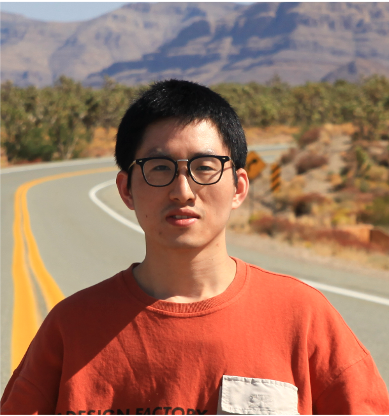
 Chao Chen
· 3 previous affiliations
- Alibaba Group (China)Since 2021
- Researcher · Since 2021
- Zhejiang University2016–2021
- PhD student · 2016–2021
- Discover2019–2020
- PhD student · 2019–2020
12 other authors named Chao Chen: Chao Chen (Stony Brook University · 153 papers), Chao Chen (20 papers), Chao Chen (Lehigh University · Harbin Institute of Technology · Harbin Institute of Technology Shenzhen (HITSZ) · 15 papers), Chao Chen (13 papers), Chao Chen (5 papers), and 7 more
Research Overview
Chao Chen focuses on the intersection of machine learning and natural language processing, with a specific emphasis on large language model (LLM) agents, robust preference optimization, and unsupervised domain adaptation. Currently an Algorithm Expert at Alibaba Group, Chen’s work has evolved from foundational computer vision and distribution matching to the development of autonomous agents and noise-tolerant alignment for generative models. This trajectory reflects a broader shift from learning shared representations in static datasets to engineering interactive, reasoning-capable systems that can navigate complex, real-world information environments.
Research Trajectory
The early phase of Chen’s research, spanning roughly 2018 to 2021, was primarily concerned with unsupervised domain adaptation (UDA) and computer vision. During this period, the work addressed the fundamental challenge of distribution discrepancy—the "domain shift" that occurs when a model trained on one dataset (the source) is applied to a different but related dataset (the target). Chen’s contributions focused on moving beyond simple distribution alignment by integrating discriminative feature learning. This approach sought to ensure that while domains were being aligned, the underlying class structures remained separable and compact, thereby reducing misclassifications at the boundaries of target-domain clusters.
A significant methodological contribution during this period was the exploration of higher-order statistics for domain matching. While standard methods often relied on matching first-order (mean) or second-order (covariance) statistics, Chen investigated the utility of third- and fourth-order moments to capture the characteristics of non-Gaussian distributions. This work extended into reproducing kernel Hilbert spaces (RKHS), providing a more granular framework for aligning complex feature distributions in deep networks. Concurrently, Chen participated in research involving Differentiable Persistent Homology for Structural Deep Learning, which addressed the preservation of global topological structures in tasks like semantic segmentation, where local pixel accuracy often fails to capture essential connectivity.
Between 2022 and 2023, Chen’s focus transitioned toward vision-language integration and the robustness of recognition systems. This period involved work on zero-shot detection and out-of-distribution (OOD) detection. By leveraging massive vision-language models such as CLIP, Chen contributed to frameworks that could identify novel human-object interactions and unseen categories without explicit supervision. This phase marked a shift toward "category-extensible" systems, where the goal was not just to classify known entities but to reliably flag unknown or out-of-distribution samples using hierarchical context descriptions.
From 2024 onward, Chen’s research has pivoted toward the post-training and alignment of Large Language Models. This current phase addresses the limitations of standard preference optimization and the passivity of traditional retrieval-augmented generation (RAG). A central theme in this work is the development of noise-tolerant alignment frameworks that can handle imperfect human preference data without relying on expensive external "teacher" models. Furthermore, Chen has moved toward the development of LLM agents that act as active manipulators of their environment rather than passive recipients of retrieved data. This includes research into Difficulty-Adaptive Test-Time Scaling for Reasoning Models and Steering Language Model Activations during Inference, reflecting a focus on the internal "thinking" processes and control mechanisms of modern generative AI.
Current Directions
Chen’s current research is concentrated on three primary pillars: robust preference alignment, structured cognition for long-context processing, and interactive retrieval agents.
In the domain of preference alignment, the work addresses the sensitivity of models to noisy training data. Standard methods like Direct Preference Optimization (DPO) often struggle when preference labels are inconsistent or erroneous. Chen’s recent contributions involve iterative "train-then-filter" approaches that identify and ignore suspicious gradients, allowing models to align with human values more reliably.
In the area of model cognition, Chen has explored "context structurization." This involves reorganizing sequential input text into hierarchical knowledge trees before it is processed by the LLM. By mimicking human cognitive structures (moving from broad scopes to specific aspects and descriptions), this method aims to improve performance on long-context tasks and reduce hallucinations without altering the underlying model weights.
Finally, the development of "Interact-RAG" represents a move toward more autonomous AI agents. Rather than treating a retriever as a "black box," this research proposes a Corpus Interaction Engine that allows agents to reason about and manipulate the retrieval process itself. This shift is intended to solve complex information-seeking tasks where simple query-response cycles are insufficient.
Representative Work
Joint Domain Alignment and Discriminative Feature Learning for Unsupervised Deep Domain Adaptation As the first author, Chen introduced the Joint Domain Adaptation (JDDA) framework to address the limitations of alignment-only methods in UDA. The paper argues that reducing distribution discrepancy is insufficient if the resulting features are not discriminative enough for the target domain. By enforcing intra-class compactness and inter-class separability within a shared feature space, the work demonstrated that models could become more robust to residual domain shifts, particularly for samples located near cluster edges.
HoMM: Higher-order Moment Matching for Unsupervised Domain Adaptation In this first-author paper, Chen proposed the Higher-order Moment Matching (HoMM) method. The research identifies a gap in existing discrepancy-based methods, which typically match only lower-order statistics. By matching third- and fourth-order moments, HoMM provides a more expressive statistical representation for non-Gaussian distributions. The work also demonstrated that first-order HoMM is equivalent to Maximum Mean Discrepancy (MMD), positioning HoMM as a generalized framework for arbitrary-order moment matching in both standard and kernel-based spaces.
ROPO: Robust Preference Optimization for Large Language Models Serving as the second author, Chen contributed to the development of the Robust Preference Optimization (ROPO) framework. This work addresses the prevalence of noise in human preference datasets, which can degrade the performance of LLM alignment. ROPO utilizes an iterative alignment approach that integrates noise-tolerance and sample filtering without requiring external teacher models. The framework's ability to ignore suspicious gradients during training allows for more stable and effective alignment in the presence of imperfect data.
Interact-RAG: Reason and Interact with the Corpus, Beyond Black-Box Retrieval In this second-author paper, Chen helped develop a new paradigm for Retrieval-Augmented Generation. Interact-RAG moves away from the traditional model where an LLM issues a query to a static retriever. Instead, it introduces a Corpus Interaction Engine that enables the agent to actively manipulate the retrieval process. This approach was shown to significantly improve performance on complex information-seeking tasks by allowing the model to reason about the corpus structure and refine its search strategy dynamically.
Enhancing LLM’s Cognition via Structurization As a third author, Chen participated in research regarding context structurization for LLMs. The study proposes transforming sequential text into a hierarchical "knowledge tree" (Scope → Aspects → Descriptions). This structural intervention is designed to assist the model in long-context reasoning and hallucination detection. The work suggests that by aligning the input format with human-like cognitive hierarchies, the model's retrieval and reasoning capabilities can be enhanced without the need for additional fine-tuning.
End-to-End Zero-Shot HOI Detection via Vision and Language Knowledge Distillation In this fourth-author contribution, Chen was part of the team that developed the EoID framework for zero-shot Human-Object Interaction (HOI) detection. The method distills knowledge from the CLIP vision-language model to enable the detection of unseen interaction combinations. By using a two-stage matching algorithm, the framework allows for the identification of novel actions and objects in complex scenes, representing a significant step toward open-vocabulary scene understanding.
Profile updated
Loading new papers…
Other researchers whose papers cluster into the same research directions — a proxy for overlapping technical interests and shared intellectual neighborhoods.
See something wrong? Report a mistake