

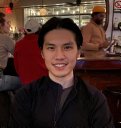
 Chanwoo Chun
· 4 previous affiliations
- Harvard UniversitySince 2025
- Postdoc · Since 2025
- Cornell University2019–2025
- PhD student · 2019–2025
- Cornell Tech2019–2025
- PhD student · 2019–2025
- Intern · 2022
Research Overview
Chanwoo Chun focuses on the intersection of high-dimensional statistics, theoretical machine learning, and computational neuroscience. His work primarily addresses the challenges of characterizing neural representations in both biological and artificial systems, with a specific emphasis on developing unbiased estimators for dimensionality and similarity when working with finite, noisy datasets. By applying tools from random matrix theory and signal processing, Chun investigates how the geometric properties of neural manifolds can be accurately recovered despite the inherent limitations of sparse sampling in experimental and computational contexts.
Research Trajectory
Chun’s early research focused on the theoretical properties of deep neural networks in the infinite-width limit. In 2023, he examined the Sparsity-depth Tradeoff in Infinitely Wide Deep Neural Networks, deriving a "sparse" Neural Network Gaussian Process (NNGP) kernel. This work demonstrated that the computational benefits of sparsity are depth-dependent: while sparse networks can perform efficiently at shallow depths, they require increased depth to match the generalization capabilities of dense architectures. During this period, he also participated in research regarding the Hierarchical Concept Emergence in Deep Neural Networks, contributing to a second-author study on Comparing neural models using their perceptual discriminability predictions. This work utilized metric tensors to characterize a model's sensitivity to stimulus perturbations, providing a more robust framework for model comparison than standard representational similarity measures.
In 2024, Chun’s focus shifted toward biologically inspired constraints within machine learning models. He addressed a known limitation in sparse NNGP models—the collapse of input pattern similarities—by introducing Sparse Activations with Correlated Weights in Cortex-Inspired Neural Networks. By incorporating weak correlations in synaptic weights via a convolutional model, he demonstrated how to maintain representational diversity even in highly sparse regimes. This period marked a transition toward a more rigorous treatment of Systematic Bias from Nonlinear Transformations of Noisy Data, as he began to explore how the interaction between noise and nonlinearity affects statistical estimates in high-dimensional spaces.
From 2025 onward, Chun’s work has been increasingly defined by the problem of Spectral Bias Correction in High-Dimensional Statistics. He identified that standard metrics used to describe neural activity, such as the Participation Ratio for dimensionality or Centered Kernel Alignment (CKA) for similarity, are heavily biased when the number of samples or features is limited. His recent contributions involve the development of analytical corrections for these biases, ensuring that measurements of neural manifolds remain stable across different experimental scales. This line of inquiry also touches upon Individual Variability in the Functional Brain Hierarchy, particularly in how debiased alignment metrics can better isolate true biological differences from sampling noise.
Current Directions
Chun’s current research is centered on Debiasing Representational Similarity for High Dimensional Neural Data. A major component of this work is the development of algorithms that provide unbiased estimates of the spectral moments of kernel integral operators. This is particularly relevant for Spectral Bias Correction in High Dimensional Covariance Estimation, where the sample covariance matrix often fails to reflect the true underlying population structure in the "high-dimensional" regime (where the number of variables is comparable to the number of samples).
His recent work on the Participation Ratio provides a robust solution for Estimating Dimensionality of Neural Representations from Finite Samples. By correcting for finite-sample bias, this estimator allows researchers to characterize the complexity of neural activity even when recording from only a small subset of neurons or using a limited number of stimuli. This methodological advancement is critical for both neuroscience, where recording capacity is physically constrained, and machine learning, where understanding the intrinsic dimensionality of hidden layers is essential for model interpretability.
Representative Work
Sparsity-depth Tradeoff in Infinitely Wide Deep Neural Networks This paper investigates the relationship between activation sparsity and network depth in the context of NNGP kernels. Chun demonstrates that while sparsity can reduce computational overhead, it necessitates a corresponding increase in depth to maintain the generalization performance seen in dense networks. The work provides a theoretical framework for understanding how sparse architectures should be scaled.
Comparing neural models using their perceptual discriminability predictions As a second author, Chun contributed to the development of a method for comparing neural representations based on their metric tensors. The study argues that internal representations are not uniquely identifiable from perceptual measurements alone and proposes "eigendistortions" as a way to compare models based on their sensitivity to stimulus perturbations, accounting for both geometric and stochastic properties.
Sparse Activations with Correlated Weights in Cortex-Inspired Neural Networks In this work, Chun addresses the "identity collapse" problem in sparse infinitely wide networks, where Gram matrices approach the identity matrix as sparsity increases. He shows that introducing weak correlations in synaptic weights, inspired by cortical circuits, prevents this collapse and allows the network to maintain meaningful representational similarities.
Estimating the Spectral Moments of the Kernel Integral Operator from Finite Sample Matrices Chun introduces an efficient algorithm based on dynamic programming to provide unbiased estimates of the spectral moments of kernel integral operators. This method is designed to work in the limit of infinite inputs and features while using only finitely sampled measurement matrices, overcoming the sensitivity of traditional sample covariance spectra to matrix size.
Estimating Neural Representation Alignment from Sparsely Sampled Inputs and Features This research focuses on the Centered Kernel Alignment (CKA) metric, a standard tool for quantifying similarity between neural representations. Chun provides a theoretical analysis of how sampling a subset of neurons introduces bias and proposes a novel estimator that corrects for both input and feature sampling. The method is validated through brain-to-brain and model-to-brain alignment tasks.
Estimating Dimensionality of Neural Representations from Finite Samples Addressing the challenge of measuring the complexity of large-scale neural populations, Chun introduces a bias-corrected estimator for the Participation Ratio. The paper demonstrates that this estimator remains accurate even with small, noisy datasets, providing a reliable metric for characterizing neural manifolds across biological and artificial systems.
Profile updated
Loading new papers…
Other researchers whose papers cluster into the same research directions — a proxy for overlapping technical interests and shared intellectual neighborhoods.
See something wrong? Report a mistake