

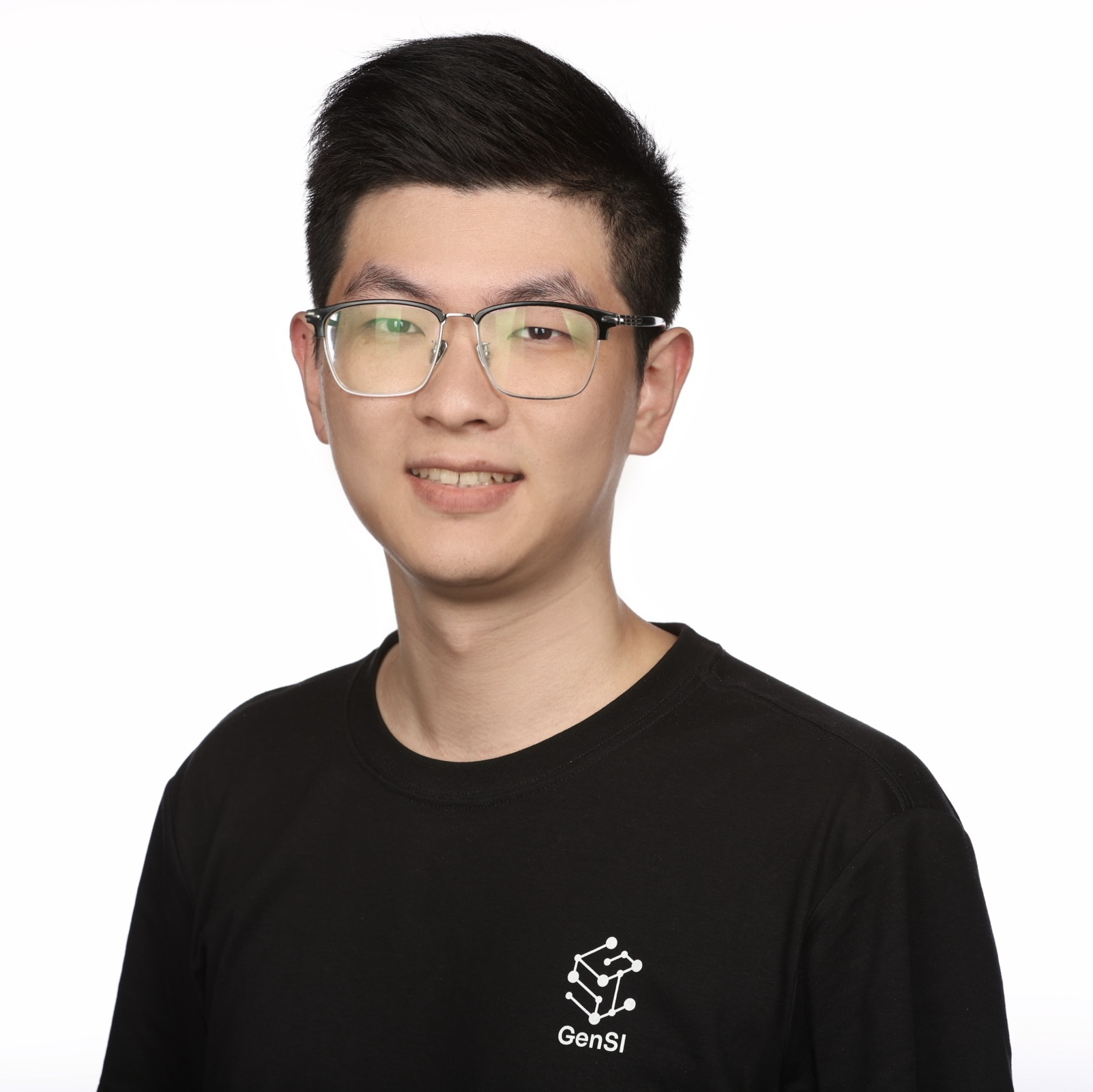
 Changze Lv
· 1 previous affiliation
- Fudan UniversitySince 2018
- PhD student · 2022–2027
- Current
- Undergrad student · 2018–2022
Research Overview
Changze Lv focuses on brain-inspired computing, biologically plausible learning algorithms, and the application of spiking neural networks to sequential modeling. His work initially explored energy-efficient text classification and time-series forecasting using spike-driven architectures. More recently, his research investigates localized credit assignment mechanisms and the integration of relative positional encoding to scale biologically constrained models.
Research Trajectory
Changze Lv’s research initially centered on adapting Spiking Neural Networks (SNNs) for complex sequential and language tasks, contributing to the broader area of Energy Efficient Computing with Spiking Neural Networks. Because SNNs rely on sparse, event-driven activations, representing variable-length text and continuous word embeddings as discrete spikes presents a significant challenge. In 2023, he addressed this in Spiking Convolutional Neural Networks for Text Classification, introducing a two-step conversion and fine-tuning method to encode pre-trained word embeddings into spike trains, demonstrating the viability of SNNs for natural language processing.
In 2024, he expanded this event-driven approach to temporal data with Efficient and Effective Time-Series Forecasting with Spiking Neural Networks. By designing specialized spike encoders and spiking variants of Temporal Convolutional Networks, Recurrent Neural Networks, and Transformers, this work established a unified framework that achieved accuracy comparable to artificial neural networks while substantially reducing energy consumption. To further resolve the difficulty SNNs face in tracking the position of information within a sequence, he developed Advancing Spiking Neural Networks for Sequential Modeling with Central Pattern Generators, drawing inspiration from biological rhythm generators to improve sequential modeling.
Parallel to his work on SNN architectures, Lv began investigating the fundamental learning rules that govern them, moving away from biologically incompatible backpropagation. He led a comprehensive evaluation in Towards Biologically Plausible Computing: A Comprehensive Comparison, which established a rigorous criteria framework to benchmark alternative learning algorithms against actual human brain activity using fMRI data. Building on these biological constraints, he proposed a novel training algorithm in the 2025 paper Dendritic Localized Learning: Toward Biologically Plausible Algorithm. This algorithm mimics the three-compartment structure of biological pyramidal neurons to satisfy key criteria such as weight asymmetry and local error representation, advancing the research direction of Credit Assignment without Weight Transport.
Returning to the challenge of scaling sequence models, he introduced a systematic framework for the area of Positional Encoding for Permutation Invariant Transformers with Toward Relative Positional Encoding in Spiking Transformers. By leveraging Gray Codes and logarithmic biases, this work enabled SNNs to capture complex sequential relationships without sacrificing their binary efficiency. In 2026, his research continued to bridge the capacity gap between large language models and spiking networks. He contributed to SpikeBERT: A language spikformer learned from BERT with knowledge distillation, which adapted the Spikformer architecture using a two-stage distillation strategy to achieve BERT-like performance on text classification with drastically lower energy costs.
Lv has also participated in collaborative efforts applying these efficient architectures to constrained and noisy environments. In SAFA-SNN: Sparsity-Aware On-Device Few-Shot Class-Incremental Learning with Fast-Adaptive Structure of Spiking Neural Network, he helped develop a framework that combines SNNs with dynamic neuron stability, allowing edge devices to learn new categories dynamically with minimal power. Additionally, he contributed to Frequency Matching in Spiking Neural Networks for mmWave Sensing, which treated the Leaky Integrate-and-Fire neuron as a tunable low-pass filter to align neuronal dynamics with messy mmWave signals. Furthering his work on learning rules, he collaborated on Biologically Plausible Learning via Bidirectional Spike-Based Distillation, exploring the joint training of feedforward and backward pathways using local, unsigned spiking signals to mimic the brain's interplay between perception and recall.
Also in 2026, Lv advanced spatiotemporal modeling in SNNs by co-developing SpikeSTAG: A Dendritic Compartmental Spiking Graph Network for Multivariate Time-Series Forecasting, which uses biological dendritic integration and competitive gating to capture spatial dependencies across variables alongside temporal dynamics. Expanding into broader agent architectures and code analysis, Lv also contributed to From Raw Experience to Skill Consumption: A Systematic Study of Model-Generated Agent Skills, examining the full lifecycle of language agent skills and addressing negative transfer, as well as CSSG: Measuring Code Similarity with Semantic Graphs.
Current Directions
The most recent papers in the evidence address the scaling of biologically plausible learning mechanisms and the adaptation of complex architectures into energy-efficient spiking formats. Recent work investigates how to replace backpropagation with local, spike-based distillation and dendritic learning rules that adhere to strict biological constraints, such as weight asymmetry and simultaneous inference. Concurrently, efforts are directed toward bridging the capacity gap between traditional deep learning and spiking networks, specifically by integrating relative positional encoding into Spiking Transformers and distilling large language models into event-driven equivalents. This dual focus aims to maintain the high performance of modern sequence models while leveraging the inherent energy efficiency and noise-filtering properties of brain-inspired computation for edge devices and sensing applications.
Profile updated
Loading new papers…
Other researchers whose papers cluster into the same research directions — a proxy for overlapping technical interests and shared intellectual neighborhoods.
See something wrong? Report a mistake