

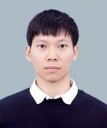
 Changxin Huang
· 4 previous affiliations
- Shenzhen UniversitySince 2023
- Assistant Professor · Since 2023
- Sun Yat-sen University2018–2023
- PhD student · 2018–2023
- Sichuan University2015–2018
- MS student · 2015–2018
- South China University of Technology2011–2015
- Undergrad student · 2011–2015
Research Overview
Changxin Huang focuses on deep reinforcement learning, robotic control, and automated reward synthesis. His early work addressed unmanned aerial vehicle surveillance and autonomous navigation before shifting toward complex bipedal locomotion and skill acquisition. Currently, he investigates the use of large language models and multimodal world models to automate reward design and bridge the sim-to-real gap in robotics.
Research Trajectory
In his early research between 2017 and 2018, Huang focused on spatial coverage and computer vision, particularly in the context of unmanned aerial vehicles (UAVs). He investigated methods for optimizing UAV swarm surveillance, participating in the design of a deployment entropy metric to evaluate and maximize wide-area coverage in A Quantitative Evaluation Method of Surveillance Coverage of UAVs Swarm. Building on this spatial reasoning, he introduced a potential field method to enable continuous, persistent monitoring by multiple sensors in Potential field method for persistent surveillance of multiple unmanned aerial vehicle sensors. Concurrently, he addressed foundational computer vision challenges, proposing an image dehazing algorithm utilizing dual-tree complex wavelet transforms in A Novel Image Dehazing Algorithm Based on Dual-tree Complex Wavelet Transform.
Transitioning toward reinforcement learning (RL) and autonomous agents, Huang began addressing the fundamental exploration-exploitation trade-off. He contributed to CAT-SAC: Soft Actor-Critic with Curiosity-Aware Entropy Temperature in 2020, which dynamically adjusts an agent's exploration based on state familiarity, encouraging greater curiosity in unknown environments. Applying RL to complex, high-stakes environments, he developed a deductive reasoning framework for vision-based autonomous driving in Deductive Reinforcement Learning for Visual Autonomous Urban Driving Navigation. This work introduced a deduction reasoner that allowed agents to foresee future states, promoting safer and more robust policy learning in unpredictable urban settings.
By 2023, his focus expanded to the physical dynamics of robotics, specifically the multi-criterion optimization challenges of non-statically stable robots. He addressed this in Reward-Adaptive Reinforcement Learning: Dynamic Policy Gradient Optimization for Bipedal Locomotion, introducing a dynamic policy gradient method to handle complex hybrid rewards without relying on simple scalar summation. Recognizing the bottleneck of manual reward engineering in robot learning, he collaborated on Video2Reward: Generating Reward Function from Videos for Legged Robot Behavior Learning, a framework that extracts reward functions directly from video demonstrations to guide legged robot behavior.
In his most recent work (2025–2026), Huang has heavily emphasized the integration of foundation models into robotic control and learning pipelines. He explored the use of large language models (LLMs) for robotic skill learning in Automated Hybrid Reward Scheduling Via Large Language Models for Robotic Skill Learning. This focus on the area of The Reward Engineering Bottleneck in Reinforcement Learning continued with Efficient Language-instructed Skill Acquisition via Reward-Policy Co-Evolution, where he introduced a co-evolutionary approach to language-instructed tasks. This work also contributed to the broader direction of Closing the Sim-to-Real Gap in Robotics and the area of Maintaining Plasticity in Deep Reinforcement Learning. Further advancing automated reward design, he participated in developing the PoRSE framework in Master Skill Learning with Policy-Grounded Synergy of LLM-based Reward Shaping and Exploring, which uses LLMs to dynamically balance goal-seeking and curiosity-driven exploration for high-dimensional manipulation tasks.
Alongside his work in reward synthesis, Huang has expanded his focus on embodied AI and vision models. He designed UNeMo, a multimodal world model for vision-and-language navigation, in UNeMo: Collaborative Visual-Language Reasoning and Navigation via a Multimodal World Model. By enabling agents to predict future visual states before acting via a hierarchical "predict-then-act" mechanism, this work advanced the research direction of Sensor Noise Robustness for Sim-to-Real Transfer. Additionally, he contributed to efficient video action recognition in Revisiting Cross-Architecture Distillation: Adaptive Dual-Teacher Transfer for Lightweight Video Models, proposing a dual-teacher knowledge distillation framework that leverages both Vision Transformers and convolutional neural networks to train highly efficient lightweight models.
Current Directions
The most recent papers in the evidence address the scalability and efficiency of robotic learning through advanced foundation models. Recent work investigates the use of large language models to automate reward shaping and exploration strategies, enabling robots to master complex, high-dimensional manipulation tasks without manual reward engineering. Additionally, Huang is exploring multimodal world models that grant embodied agents visual foresight, allowing them to "imagine" the outcomes of actions to improve reasoning and navigation efficiency. A persistent theme across these recent efforts is the development of robust control policies that can successfully transfer from simulation to real-world environments, utilizing reward-policy co-evolution and dynamic exploration to overcome the limitations of traditional reinforcement learning.
Profile updated
Loading new papers…
Other researchers whose papers cluster into the same research directions — a proxy for overlapping technical interests and shared intellectual neighborhoods.
See something wrong? Report a mistake