

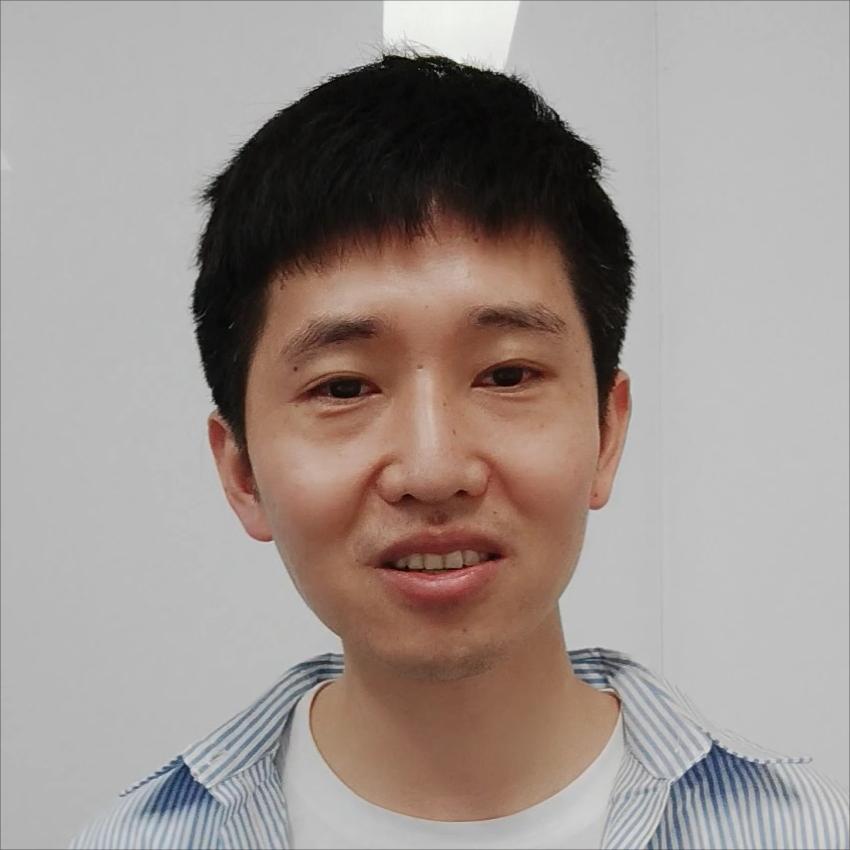
 Changwang Zhang
· 7 previous affiliations
- Cleveland ClinicSince 2024
- Principal Researcher · Since 2024
- Oppo AI centerSince 2024
- Principal Researcher · Since 2024
- Current
- Huawei Technologies (China)2022–2024
- Researcher · 2022–2024
- Tencent (China)2018–2022
- Researcher · 2018–2022
- Alibaba Group (China)2016–2017
- Researcher · 2016–2017
- University College London2010–2015
- PhD student · 2011–2015
- MS student · 2010–2011
Research Overview
Changwang Zhang focuses on information retrieval, large language model reasoning, and multimodal representation learning. His early trajectory explored network security and epidemic modeling before shifting toward scalable clustering and click-through rate prediction for recommendation systems. His current work investigates dynamic reinforcement learning and adaptive reasoning frameworks to improve the efficiency and generalization of large AI models.
Research Trajectory
Changwang Zhang's early research focused on network security and the dynamics of complex spreading mechanisms. In his initial work, he developed algorithms to detect and filter malicious network traffic, introducing methods to counter low-rate denial-of-service attacks in RRED: robust RED algorithm to counter low-rate denial-of-service attacks (2010) and Flow level detection and filtering of low-rate DDoS (2012). This interest in network vulnerabilities extended to modeling the propagation of computer worms; he participated in research analyzing the Conficker worm as a critically hybrid epidemic that balanced multiple weak spreading mechanisms to achieve global reach in Hybrid Epidemics—A Case Study on Computer Worm Conficker (2015). Applying similar mathematical modeling to biological systems, he investigated how hybrid spreading mechanisms and T cell activation shape the in vivo progression of HIV-1 in Hybrid Spreading Mechanisms and T Cell Activation Shape the Dynamics of HIV-1 Infection (2015). Concurrently, he contributed to the research direction of Automated Parallelization of Sequential Code by co-developing LeoTask: a fast, flexible and reliable framework for computational research (2015), a Java-based system designed to automate parallel task execution and parameter space exploration.
Following a transition into applied machine learning and data mining, Zhang's focus shifted toward scalable clustering and recommendation systems. He guided research on representation learning, proposing a framework to improve data partitioning in Multi-view Clustering via Deep Matrix Factorization and Partition Alignment (2021). He also participated in developing flexible anchor graph fusion techniques to reduce manual tuning and maintain linear scalability for massive datasets in Let the Data Choose: Flexible and Diverse Anchor Graph Fusion for Scalable Multi-View Clustering (2023), contributing to the broader areas of Linear Time Multi View Clustering via Anchor Graphs and Linear Time Multi-View Clustering with Anchor Graphs. In the domain of recommendation systems, he introduced methods to explicitly model structural dependencies between item attributes and user intents in HIEN: Hierarchical Intention Embedding Network for Click-Through Rate Prediction (2022). He subsequently expanded this work to multi-domain contexts, leveraging large language models to encode raw features into a shared semantic space for cross-domain knowledge transfer in UFIN: Universal Feature Interaction Network for Multi-Domain Click-Through Rate Prediction (2023).
In recent years, while serving as the Head of AI Agentic Information Retrieval Technology at the OPPO Research Institute, Zhang has increasingly focused on the reasoning capabilities and alignment of large AI models. He developed a framework to allow language model-based agents to dynamically evolve internal preferences through simulated social interaction in AFSPP: Agent Framework for Shaping Preference and Personality with Large Language Models (2024). Advancing multimodal applications, he oversaw the development of a dynamic reinforcement learning framework designed to improve cross-task generalization and prevent pattern memorization in OThink-MR1: Stimulating multimodal generalized reasoning capabilities via dynamic reinforcement learning (2025). He also collaborated on reinforcement learning approaches for search query rewriting in SAGE: Strategy-Adaptive Generation Engine for Query Rewriting (2025), a project situated within the research area of Proxy Objective Exploitation in Language Model Alignment. Addressing inference efficiency, he participated in designing a hybrid framework that enables models to switch between intuitive responses and deliberate reasoning in OThink-R1: Intrinsic Fast/Slow Thinking Mode Switching for Over-Reasoning Mitigation (2025), advancing the direction of Mitigating Computational Overthinking in Large Reasoning Models. Alongside these advancements in foundation models, he has continued to refine personalized recommendation architectures, recently guiding the development of MGIPF: Multi-Granularity Interest Prediction Framework for Personalized Recommendation (2025). Expanding further into embodied perception, Zhang also contributed to HumanoidPose: Monocular 3D Pose Estimation for Humanoid Robots (2026), which introduced a benchmark and framework combining articulation modeling with kinematic grounding to recover 3D whole-body humanoid poses from monocular images. In multimodal hallucination mitigation, Zhang collaborated on Where Are MLLMs Looking When They Hallucinate? Mitigating Visual Hallucination via Gaze Steering (2026), which analyzed visual attention locking and collapse during hallucinated generation and introduced ReGaze to steer attention toward a healthy equilibrium between dominant cues and peripheral visual exploration.
Current Directions
The most recent papers in the evidence indicate a strong focus on the reasoning efficiency and generalization of large language and multimodal models. Recent work investigates dynamic reinforcement learning techniques to stimulate generalized reasoning capabilities across diverse multimodal tasks, moving beyond superficial pattern mimicry. Additionally, Zhang is actively exploring methods to optimize inference compute, particularly through hybrid frameworks that allow large reasoning models to dynamically switch between fast, intuitive generation and slow, deliberate reasoning. This work intersects with embodied perception such as monocular 3D humanoid robot pose estimation, gaze-steering interventions to mitigate visual hallucination in multimodal models, the development of autonomous agents capable of shaping their own preferences through interaction, and the ongoing refinement of multi-granularity frameworks for personalized recommendation and information retrieval.
Profile updated
Loading new papers…
Other researchers whose papers cluster into the same research directions — a proxy for overlapping technical interests and shared intellectual neighborhoods.
See something wrong? Report a mistake