

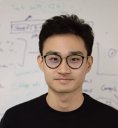
 Changran Hu
· 6 previous affiliations
- xAI (United States)Since 2025
- Member of Technical Staff · Since 2025
- Sambanova Systems2021–2025
- Senior Manager, Post-Training · 2023–2025
- Researcher · 2021–2023
- MS student · 2019–2021
- DeepMusic2017–2020
- Co-Founder & CTO · 2017–2020
- Tsinghua University2014–2018
- Undergrad student · 2014–2018
- Bachelor's degree, Electronic Engineering
- Master's degree, Information Management and Systems
Research Overview
Changran Hu focuses on large language model inference efficiency, tool-augmented reasoning, and test-time adaptation for autonomous agents. His early work explored retrieval-augmented code generation and cross-language representations, gradually shifting toward enhancing the reasoning capabilities of open-weight models. Currently, he investigates methods for optimizing test-time learning and context engineering to build self-improving language agents.
Research Trajectory
Hu’s early research concentrated on software engineering applications, specifically improving how machine learning models generate and understand code. In 2021, he participated in developing a system that transformed code autocompletion from a closed-book task into an open-domain one. Detailed in Generating Code with the Help of Retrieved Template Functions and Stack Overflow Answers, this approach combined a fusion representation retrieval model with a BART-based generator to search for and reference existing code from GitHub and Stack Overflow, significantly improving function generation accuracy. Building on this focus, he introduced a novel method for automatically mining pairs of natural language and programming language from community forums. In Programming Language Agnostic Mining of Code and Language Pairs with Sequence Labeling Based Question Answering, he and his collaborators developed SLQA (Sequence Labeling based Question Answering). By treating code blocks as text and applying a language-agnostic tagging scheme, they created Lang2Code, a massive dataset of 1.4 million pairs across six programming languages, advancing the broader area of language-agnostic representations for cross-language portability.
By 2023, Hu’s focus shifted toward the capabilities of large language models (LLMs), particularly addressing the performance gap between open-weight models and proprietary systems. He oversaw research investigating why open-source LLMs struggle to use software APIs effectively. The resulting paper, On the Tool Manipulation Capability of Open-source Large Language Models, proposed a practical recipe combining programmatic data alignment, in-context demonstration retrieval, and system prompts. This methodology dramatically boosted the success rates of open-source models on real-world tasks, contributing directly to the research direction of Enforcing Structural Constraints on Language Model Outputs.
In 2024, Hu expanded his work into formal reasoning and mathematics. He collaborated on SubgoalXL: Subgoal-based Expert Learning for Theorem Proving, which explored the intersection of LLMs and the Isabelle theorem-proving environment. SubgoalXL addressed the scarcity of specialized mathematical data by employing subgoal-level supervision to extract richer information from limited human-generated proofs. This work enhanced the multi-step reasoning abilities of LLMs, advancing the areas of Expert Iteration for Formal Theorem Proving and Hierarchical Decomposition in Formal Theorem Proving.
Throughout 2025, Hu’s trajectory broadened to tackle the computational bottlenecks of deploying large foundation models, focusing heavily on inference efficiency and knowledge distillation. He led research on adapting LLMs to specific domains without sacrificing the speed benefits of speculative decoding. In Training Domain Draft Models for Speculative Decoding: Best Practices and Insights, his team demonstrated that offline, white-box distillation using synthetic data offers a robust solution for training domain-specific draft models, a significant contribution to the area of Compressing Large Foundation Models via Knowledge Distillation. Concurrently, he participated in efforts to optimize long-context inference memory usage. The paper LLMs Know What to Drop: Self-Attention Guided KV Cache Eviction for Efficient Long-Context Inference introduced SAGE-KV, a method that leverages the inherent sparsity of self-attention to intelligently evict less important tokens, achieving substantial memory savings and speedups.
During this period, Hu also continued to refine tool-augmented reasoning. While external execution environments improve mathematical accuracy, they introduce heavy dependencies during inference. To resolve this, he and his co-authors developed a multi-agent pipeline in Distilling Tool Knowledge into Language Models via Back-Translated Traces. By converting tool-augmented execution traces into pure natural language reasoning paths and fine-tuning a model on these traces, they enabled the model to internalize symbolic tool knowledge and perform complex mathematical reasoning without requiring inference-time tool access.
Most recently, in 2026, Hu’s research has centered on test-time adaptation and the engineering of autonomous language agents. He co-developed a novel framework detailed in Agentic Context Engineering: Evolving Contexts for Self-Improving Language Models. The ACE framework transitions LLM contexts from static prompts into evolving "playbooks" through a modular system of generation, reflection, and incremental updates, effectively mitigating context collapse and brevity bias. He further investigated the mechanics of inference-time learning in Test-Time Adaptation via Many-Shot Prompting: Benefits, Limits, and Pitfalls, analyzing how the reliability of many-shot prompting is highly sensitive to example selection and ordering. Building on these insights, he contributed to Learning What to Learn: Curriculum Curation for Test-Time Agent Learning. This work demonstrated that treating all test-time experience equally yields diminishing returns; instead, carefully curating a curriculum of tasks can match full-dataset performance using only a fraction of the data, significantly improving the sample efficiency of tool-use and coding agents.
Current Directions
Recent work investigates test-time adaptation and the development of self-improving language agents. The most recent papers in the evidence address how models can learn and adapt during inference without costly weight updates. This includes designing frameworks for evolving context playbooks, curating optimal curricula for test-time learning, and analyzing the limits of many-shot prompting for structured and open-ended tasks. Additionally, ongoing research explores inference efficiency, focusing on techniques like self-attention guided KV cache eviction and domain-specific speculative decoding to reduce the computational overhead and memory footprint of deploying large foundation models in complex reasoning scenarios.
Profile updated
Loading new papers…
Other researchers whose papers cluster into the same research directions — a proxy for overlapping technical interests and shared intellectual neighborhoods.
See something wrong? Report a mistake