

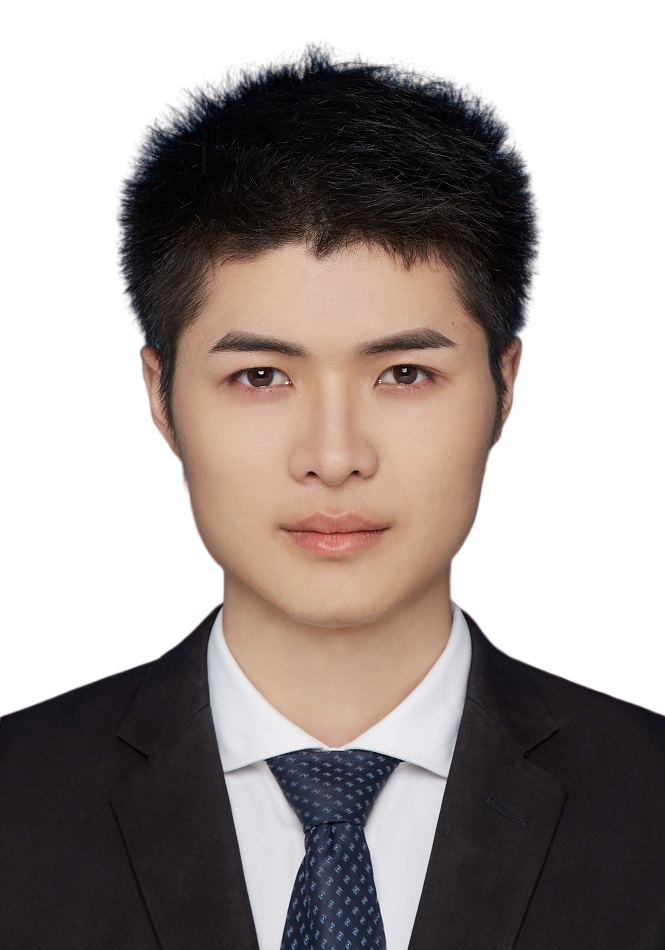
 Changjian Chen
· 1 previous affiliation
- Hunan UniversitySince 2023
- Associate Professor · Since 2023
Research Overview
Changjian Chen focuses on visual analytics, interactive machine learning, and model evaluation in computer vision. His work develops interactive systems that help researchers diagnose model failures, refine training data, and guide generative processes. Recently, he has expanded these visual diagnostic techniques to address domain-specific challenges such as agricultural breeding and large-scale data visualization.
Research Trajectory
Changjian Chen’s early research explored foundational neural network architectures before shifting toward human-in-the-loop systems and visual analytics. In 2018, he contributed to the development of Quaternion Convolutional Neural Networks, which redesigned fundamental modules—such as convolution and fully-connected layers—in the quaternion domain to better capture representative features in color images. Following this architectural work, his focus transitioned to the intersection of machine learning and human expertise. He collaborated on An Interactive Method to Improve Crowdsourced Annotations (2019), introducing a system that selects candidate instances and workers for expert validation. This approach helps experts verify uncertain labels and unreliable annotators, subsequently propagating these corrections through a learning-from-crowds model.
By 2021, Chen had established a comprehensive research agenda around visual analytics for machine learning, co-authoring A survey of visual analytics techniques for machine learning, which categorized methods across the pre-, during-, and post-model building stages. In parallel, he developed specific interactive systems to diagnose and improve models. He introduced OoDAnalyzer: Interactive Analysis of Out-of-Distribution Samples, a visual tool combining an improved ensemble-based detection method with grid-based visualization. This system helps practitioners understand the underlying reasons for model failures on shifted data distributions, directly advancing the research direction of Interpretable Anomaly Detection. That same year, he proposed Interactive Graph Construction for Graph-Based Semi-Supervised Learning, utilizing a large margin principle alongside novel river and hybrid visualizations to help users construct high-quality graphs that improve semi-supervised classifier performance.
Chen subsequently applied these interactive paradigms to complex computer vision tasks. To address the high cost of bounding box annotations, he developed Towards Better Caption Supervision for Object Detection (2022), a visual analysis method that creates a feedback loop between noisy image captions and object detectors. In this system, labels extracted from captions are used to train detectors, while the resulting detected objects are fed back to refine the caption supervision. He later expanded his evaluation frameworks to handle diverse vision tasks simultaneously. With A Unified Interactive Model Evaluation for Classification, Object Detection, and Instance Segmentation in Computer Vision (2024), he formulated discrete and continuous predictions as unified probability distributions. This theoretical framing enabled the creation of the Uni-Evaluator tool, which uses matrix and table visualizations to identify problematic data subsets across different model types. Continuing his work on annotation efficiency, he introduced Enhancing Single-Frame Supervision for Better Temporal Action Localization (2024). This work models action alignment as a heaviest path problem, allowing the system to propagate sparse, user-provided boundary annotations across similar video segments.
In his most recent work, Chen has focused on large-scale data visualization and human-guided generative processes. He contributed to Hierarchical Fuzzy-Cluster-Aware Grid Layout for Large-Scale Data (2025), addressing the ambiguity of fuzzy clusters in machine learning diagnostics through space-efficient, hierarchical grid visualizations. He also developed Human-Guided Image Generation for Expanding Small-Scale Training Image Datasets (2025), proposing a multi-modal projection method with theoretical guarantees that allows users to control and diversify images generated by pre-trained models for domains with scarce data. Expanding his visual analytics expertise into novel applied domains, he introduced Interactive Hybrid Rice Breeding with Parametric Dual Projection (2025). This visual analysis tool, HybridLens, integrates genomic data with breeder experience via an interactive dual projection method, helping researchers identify regulatory genes and select hybrid candidates without relying solely on extensive field trials.
Current Directions
Chen’s most recent research investigates the integration of human expertise with generative models and large-scale data visualization. A primary focus is on expanding small-scale training datasets through human-guided image generation, utilizing multi-modal projection methods to ensure the diversity and relevance of synthetic data in constrained domains. Additionally, his work addresses the visualization of complex, ambiguous data structures, such as hierarchical fuzzy clusters, to improve the diagnosis of machine learning models. He is also actively applying these interactive visual analytics frameworks to specialized, high-impact domains, such as agricultural genomics, where interactive dual projection techniques are used to streamline hybrid rice breeding and reduce the dependency on costly physical trials.
Profile updated
Loading new papers…
Other researchers whose papers cluster into the same research directions — a proxy for overlapping technical interests and shared intellectual neighborhoods.
See something wrong? Report a mistake