

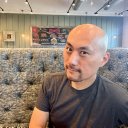
 Changhyun Kwon
· 5 previous affiliations
- OmeletSince 2023
- Researcher · Since 2023
- Full Professor · Since 2026
- Associate Professor · 2023–2026
- Visiting Professor · 2021–2022
- Undergrad student · 1996–2000
- University of South Florida2015–2023
- Associate Professor · 2015–2023
- Assistant Professor · 2008–2015
- Pennsylvania State University2003–2008
- Research Assistant · 2003–2008
- PhD student · 2005–2008
- Ph.D., Industrial Engineering · 2003–2005
Research Overview
Changhyun Kwon focuses on computational optimization methods, transportation logistics, and the integration of machine learning with operations research. His early work addressed network design and hazardous materials transport under uncertainty, while his recent research develops neural heuristics and exact algorithms to solve large-scale vehicle routing and mobility service operations problems.
Research Trajectory
Kwon’s early research primarily addressed traditional operations research challenges, with a strong emphasis on transportation networks, robust optimization, and game theory. In 2009, he explored demand learning in competitive environments with Non-cooperative competition among revenue maximizing service providers with demand learning, modeling demand dynamics through differential variational inequalities. His subsequent work heavily emphasized robust network design, particularly for the safe routing of hazardous materials. He investigated pricing mechanisms in Dual Toll Pricing for Hazardous Materials Transport with Linear Delay and addressed risk uncertainty in Robust Hazmat Network Design Problems Considering Risk Uncertainty. Expanding on robust optimization principles, he also developed models for multicommodity flows in Generalized Bounded Rationality and Robust Multicommodity Network Design.
Moving into the 2020s, Kwon's focus expanded to modern mobility services, specifically the operational challenges of electric vehicle (EV) sharing systems. He tackled the nightly offline rebalancing of free-floating EV fleets, proposing a central controller framework in A Reinforcement Learning Approach for Rebalancing Electric Vehicle Sharing Systems. To solve these joint relocation and shuttle routing problems efficiently at scale, his group developed specialized algorithms, detailed in An adaptive large neighborhood search method for rebalancing free-floating electric vehicle sharing systems.
Concurrently, Kwon began integrating deep learning into traditional operations research pipelines, contributing to the growing area of Neural Heuristics for Combinatorial Optimization. With collaborators, he introduced the Neural Coarsening Process for Multi-level Graph Combinatorial Optimization, a graph learning method that accelerates multi-level combinatorial problems by iteratively reducing the graph size and minimizing neural network inferences. He continued to advance exact algorithms and heuristic searches for complex routing, enhancing mathematical programming techniques in A Neural Separation Algorithm for the Rounded Capacity Inequalities, and addressing emerging logistics paradigms like drone delivery in An adaptive large neighborhood search method for the drone-truck arc routing problem.
By 2025, a major theme of his research became the refinement of neural network-based solvers at inference time. He investigated methods to improve solution quality without retraining underlying models, such as injecting randomness into graph coarsening to generate tighter mathematical bounds in Test-Time Search in Neural Graph Coarsening Procedures for the Capacitated Vehicle Routing Problem. Similarly, he explored the integration of evolutionary mechanisms into deep generative models with Neural Genetic Search in Discrete Spaces, demonstrating its utility across routing and adversarial generation tasks.
His work has also addressed multi-agent coordination through parallelization. Participating in the development of the PARCO framework, detailed in PARCO: Parallel AutoRegressive Models for Multi-Agent Combinatorial Optimization, he helped advance the research direction of Non-Autoregressive Modeling for Parallel Sequence Generation. This approach replaces slow sequential construction with parallel decision-making, contributing significantly to the broader area of Zero Shot Scale Generalization in Neural Combinatorial Optimization.
Most recently, Kwon has focused on bridging the gap between theoretical neural solvers and messy, operational realities, aligning with the research direction of Scaling Neural Combinatorial Optimization to Real World Instances. He contributed to RRNCO: Towards Real-World Routing with Neural Combinatorial Optimization, an architecture designed to handle actual city road data and asymmetric travel times rather than simplified geometric assumptions. He also addressed the Profiled Vehicle Routing Problem in USPR: Learning a Unified Solver for Profiled Routing, which models complex logistical constraints such as driver familiarity, vehicle weight limits, and strict service-level agreements.
Current Directions
Recent work investigates the deployment of neural combinatorial optimization in highly realistic logistics environments. Rather than relying on simplified Euclidean planes, Kwon's latest research models actual city road networks, asymmetric travel times, and complex operational constraints—such as driver familiarity profiles and vehicle-specific zoning restrictions.
A parallel focus involves improving the test-time performance of deep generative models for routing. By incorporating evolutionary algorithms and randomized graph coarsening procedures directly into the inference phase, his research aims to generate tighter mathematical bounds and higher-quality solutions without the computational overhead of retraining large models. Additionally, he continues to explore parallel autoregressive architectures that allow multiple agents to make routing and scheduling decisions simultaneously, pushing the boundaries of zero-shot generalization in large-scale combinatorial optimization.
Profile updated
Loading new papers…
Other researchers whose papers cluster into the same research directions — a proxy for overlapping technical interests and shared intellectual neighborhoods.
See something wrong? Report a mistake